

3.3.5 Metal–Organic Gels as Catalyst
Metal–organic gels are characteristic of finite short-ranged order with periodically
disordered arrangement of the building units [129–131]. When catalytically active
motifs are incorporated, they have advantages such as efficient and readily accessible active centres, easy recovery, well-defined nanoscale objects (fibres), dynamic
supramolecular interactions and easy modification. Metal–organic gels have been
applied for various catalytic reactions with three strategies (Fig. 3.39), (a) coordination polymer gels with catalytically active centres; (b) post-modification of coordination polymer gels with catalytically active centres; (c) post-modified
organogels with catalytically active centres.
The metal centres of the gel matrix may be employed as catalytically active
centre. For example, The 59-Cu
+ gels exhibit a high copper loading capacity and
can be regarded as efficient heterogeneous catalysts for click reactions (e.g. between
phenylacetylene and benzylazide) [80], and they have biodegradability and biocompatibility. The gels of Zr
4+ and 2-aminoterephthalic acid show activity as a
heterogeneous catalyst in the chemical fixation of CO 2 and an excellent catalytic
performance was achieved for the cycloaddition of atmospheric pressure of CO 2 to
epoxides at 373 K [52]. The gels of dirhodium(II) are effective in the coupling
reaction of CO 2 and epoxides as well as intramolecular C–H amination of vinyl
azides [132]. The gel of Pd
2+ and tripodal triphosphine efficiently catalyses the
Suzuki–Miyaura coupling of aryl halides and boronic acids in water [133].
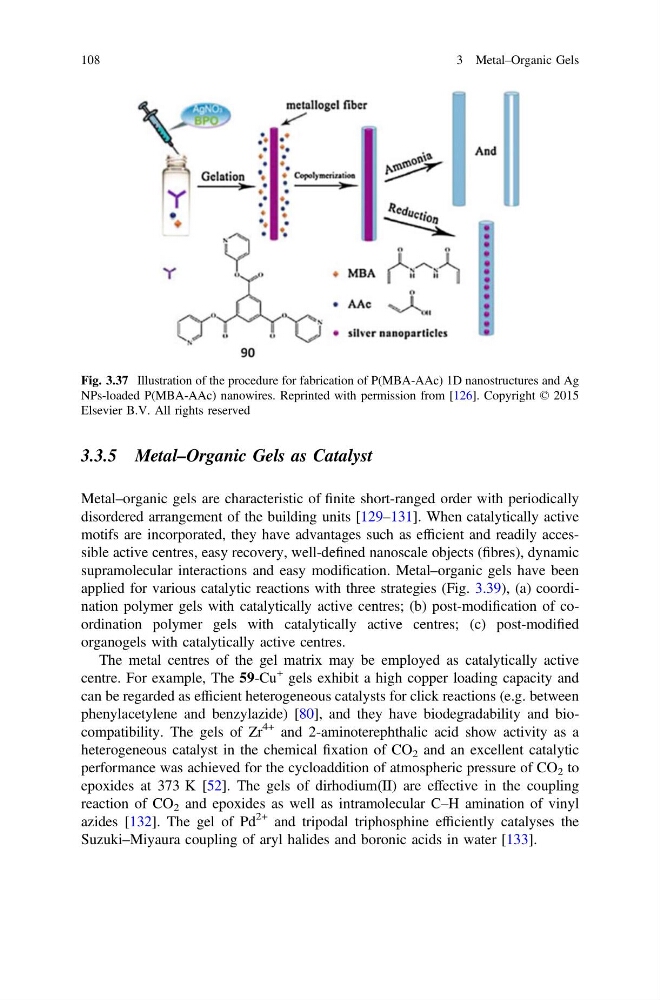
Fig. 3.37 Illustration of the procedure for fabrication of P(MBA-AAc) 1D nanostructures and Ag
NPs-loaded P(MBA-AAc) nanowires. Reprinted with permission from [126]. Copyright © 2015
Elsevier B.V. All rights reserved
108
3 Metal–Organic Gels
Metal–organic gels are characteristic of finite short-ranged order with periodically
disordered arrangement of the building units [129–131]. When catalytically active
motifs are incorporated, they have advantages such as efficient and readily accessible active centres, easy recovery, well-defined nanoscale objects (fibres), dynamic
supramolecular interactions and easy modification. Metal–organic gels have been
applied for various catalytic reactions with three strategies (Fig. 3.39), (a) coordination polymer gels with catalytically active centres; (b) post-modification of coordination polymer gels with catalytically active centres; (c) post-modified
organogels with catalytically active centres.
The metal centres of the gel matrix may be employed as catalytically active
centre. For example, The 59-Cu
+ gels exhibit a high copper loading capacity and
can be regarded as efficient heterogeneous catalysts for click reactions (e.g. between
phenylacetylene and benzylazide) [80], and they have biodegradability and biocompatibility. The gels of Zr
4+ and 2-aminoterephthalic acid show activity as a
heterogeneous catalyst in the chemical fixation of CO 2 and an excellent catalytic
performance was achieved for the cycloaddition of atmospheric pressure of CO 2 to
epoxides at 373 K [52]. The gels of dirhodium(II) are effective in the coupling
reaction of CO 2 and epoxides as well as intramolecular C–H amination of vinyl
azides [132]. The gel of Pd
2+ and tripodal triphosphine efficiently catalyses the
Suzuki–Miyaura coupling of aryl halides and boronic acids in water [133].
Fig. 3.37 Illustration of the procedure for fabrication of P(MBA-AAc) 1D nanostructures and Ag
NPs-loaded P(MBA-AAc) nanowires. Reprinted with permission from [126]. Copyright © 2015
Elsevier B.V. All rights reserved
108
3 Metal–Organic Gels