

surface area, pore volume, and C/N ratio of the MCN product by simply adjusting
the adding ratio of silica to GndCl.
The sol–gel method is a simple, efficient, and viable approach to the large-scale
production of MCN materials. This proposed method also allows to develop and
design the controllable pore structures, which is of crucial importance for the
applications of MCN materials. Meanwhile, some shortcomings have to be overcome for this method, for example, it is usually time-consuming in the whole sol–gel
process. Moreover, the removal of the silica template makes the overall preparation
procedure become relatively tedious and may cause the risk of environmental
pollution.
Carbon nitride, as a new kind of environment-friendly catalyst, is in the rapid
development period. Many researchers are doing comprehensive study from all
aspects. With time goes by and the development of new technologies, it is believed
that more excellent methods for the synthesis of MCN will appear in the near future.
14.3 The Modifications of MCN
The unique electronic structure and the advantages from the mesoporous texture
make MCN be widely recognized as efficient heterogeneous catalysts for many
reaction systems. In situ or post-modifications to the MCN can further enhance the
catalytic performance or broaden the application scope of the material. For instance,
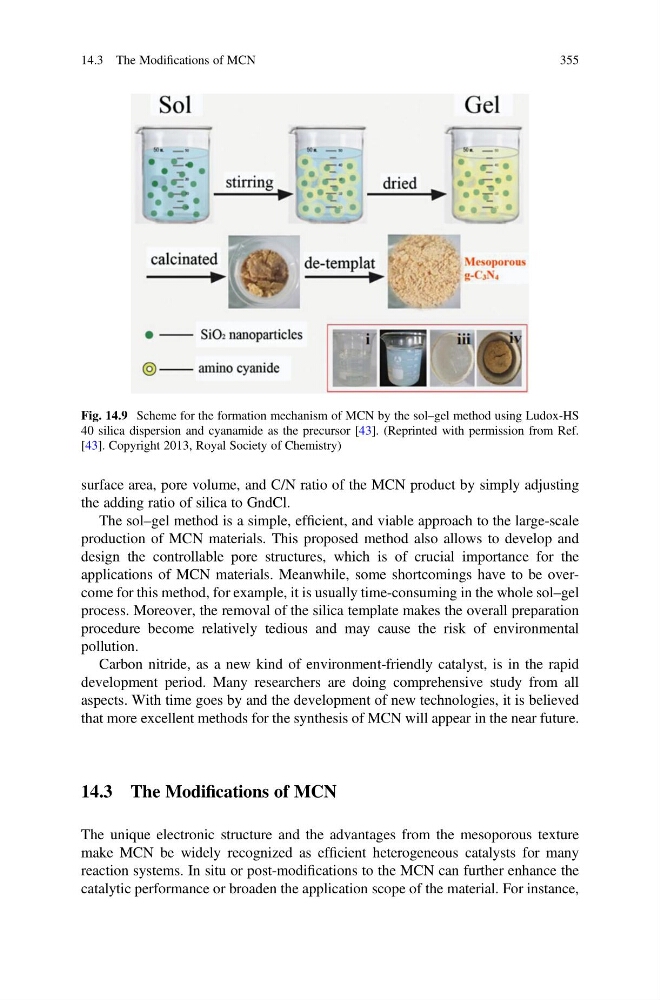
Fig. 14.9 Scheme for the formation mechanism of MCN by the sol–gel method using Ludox-HS
40 silica dispersion and cyanamide as the precursor [43]. (Reprinted with permission from Ref.
[43]. Copyright 2013, Royal Society of Chemistry)
14.3 The Modifications of MCN
355
the adding ratio of silica to GndCl.
The sol–gel method is a simple, efficient, and viable approach to the large-scale
production of MCN materials. This proposed method also allows to develop and
design the controllable pore structures, which is of crucial importance for the
applications of MCN materials. Meanwhile, some shortcomings have to be overcome for this method, for example, it is usually time-consuming in the whole sol–gel
process. Moreover, the removal of the silica template makes the overall preparation
procedure become relatively tedious and may cause the risk of environmental
pollution.
Carbon nitride, as a new kind of environment-friendly catalyst, is in the rapid
development period. Many researchers are doing comprehensive study from all
aspects. With time goes by and the development of new technologies, it is believed
that more excellent methods for the synthesis of MCN will appear in the near future.
14.3 The Modifications of MCN
The unique electronic structure and the advantages from the mesoporous texture
make MCN be widely recognized as efficient heterogeneous catalysts for many
reaction systems. In situ or post-modifications to the MCN can further enhance the
catalytic performance or broaden the application scope of the material. For instance,
Fig. 14.9 Scheme for the formation mechanism of MCN by the sol–gel method using Ludox-HS
40 silica dispersion and cyanamide as the precursor [43]. (Reprinted with permission from Ref.
[43]. Copyright 2013, Royal Society of Chemistry)
14.3 The Modifications of MCN
355