

carbonization method is applied to retain the ordered mesostructure during the hightemperature crystallization (550, 650
C), while the PS spheres can generate amorphous carbon by heating treatment under an inert environment, which can support
the inverse opal macrostructure from collapse. The hierarchically porous TiO 2 films
present high surface areas of up to 240 m
2 g
À1 and huge pore volume of ca. 1.2 cm
3 g
À1 . The photoelectrocatalytic water splitting performance of the hierarchical porous
TiO 2 films is excellent and is much higher than that of pristine mesoporous TiO 2
films. The photoconversion efficiency is up to 5.23% for the N-doped hierarchically
porous TiO 2 films.
9.2 Spatial Arrangement of Different Functions
The fabrication of yolk–shell structure allows the spatial arrangement of different
functions. The Ostwald ripening process depicted in Fig. 9.1 can be used to
encapsulate the metal core into the interior cavity. For example, Au/TiO 2 was
fabricated through the following steps [11]: (1) formation of metallic cores, (2) aggregation of TiO 2 nanocrystallites around a single metallic core, (3) evacuation of
central TiO 2 crystallites by Ostwald ripening, and (4) manipulation of the metal
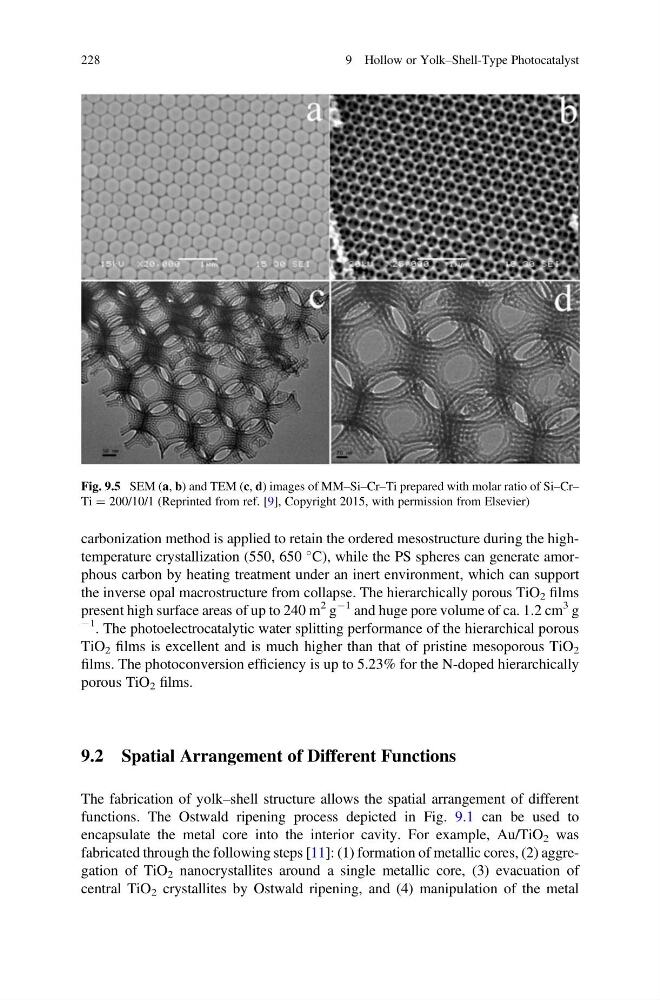
Fig. 9.5 SEM (a, b) and TEM (c, d) images of MM–Si–Cr–Ti prepared with molar ratio of Si–Cr–
Ti ¼ 200/10/1 (Reprinted from ref. [9], Copyright 2015, with permission from Elsevier)
228
9 Hollow or Yolk–Shell-Type Photocatalyst
C), while the PS spheres can generate amorphous carbon by heating treatment under an inert environment, which can support
the inverse opal macrostructure from collapse. The hierarchically porous TiO 2 films
present high surface areas of up to 240 m
2 g
À1 and huge pore volume of ca. 1.2 cm
3 g
À1 . The photoelectrocatalytic water splitting performance of the hierarchical porous
TiO 2 films is excellent and is much higher than that of pristine mesoporous TiO 2
films. The photoconversion efficiency is up to 5.23% for the N-doped hierarchically
porous TiO 2 films.
9.2 Spatial Arrangement of Different Functions
The fabrication of yolk–shell structure allows the spatial arrangement of different
functions. The Ostwald ripening process depicted in Fig. 9.1 can be used to
encapsulate the metal core into the interior cavity. For example, Au/TiO 2 was
fabricated through the following steps [11]: (1) formation of metallic cores, (2) aggregation of TiO 2 nanocrystallites around a single metallic core, (3) evacuation of
central TiO 2 crystallites by Ostwald ripening, and (4) manipulation of the metal
Fig. 9.5 SEM (a, b) and TEM (c, d) images of MM–Si–Cr–Ti prepared with molar ratio of Si–Cr–
Ti ¼ 200/10/1 (Reprinted from ref. [9], Copyright 2015, with permission from Elsevier)
228
9 Hollow or Yolk–Shell-Type Photocatalyst