

22-3
Reactions of O2 with Fe(II) Porphyrin Complexes
289
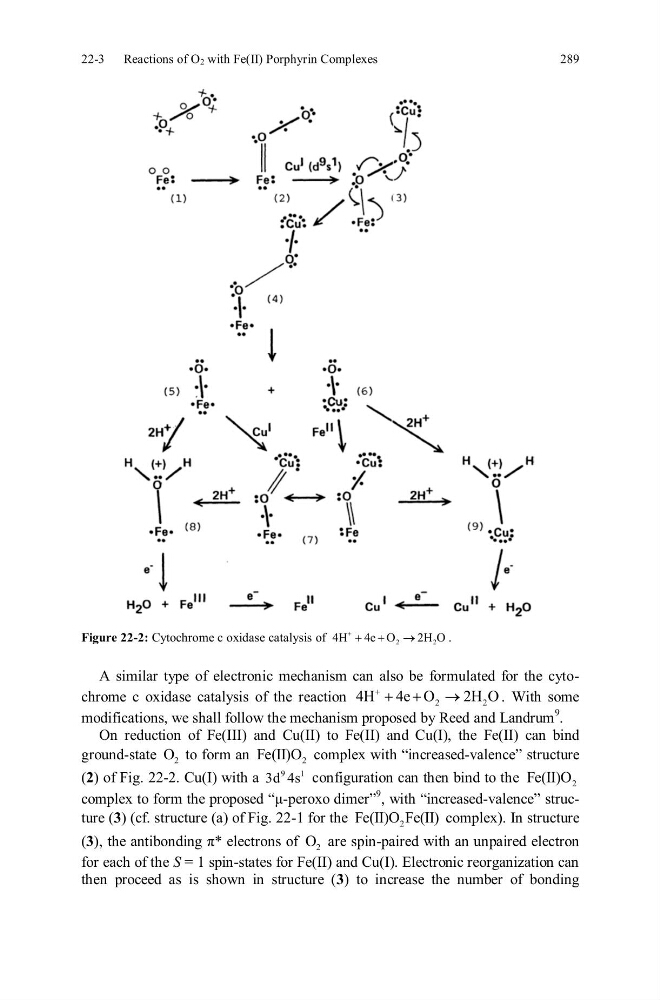
Figure 22-2: Cytochrome c oxidase catalysis of
2
2
4H 4e O
2H O
.
A similar type of electronic mechanism can also be formulated for the cytochrome c oxidase catalysis of the reaction
2
2
4H 4e O
2H O
. With some
modifications, we shall follow the mechanism proposed by Reed and Landrum
9
.
On reduction of Fe(III) and Cu(II) to Fe(II) and Cu(I), the Fe(II) can bind
ground-state 2
O to form an
2
Fe(II)O complex with “increased-valence” structure
(2) of Fig. 22-2. Cu(I) with a
9
1
3d 4s configuration can then bind to the
2
Fe(II)O
complex to form the proposed “μ-peroxo dimer”
9 , with “increased-valence” structure (3) (cf. structure (a) of Fig. 22-1 for the
2
Fe(II)O Fe(II) complex). In structure
(3), the antibonding π* electrons of 2
O are spin-paired with an unpaired electron
for each of the S = 1 spin-states for Fe(II) and Cu(I). Electronic reorganization can
then proceed as is shown in structure (3) to increase the number of bonding
Reactions of O2 with Fe(II) Porphyrin Complexes
289
Figure 22-2: Cytochrome c oxidase catalysis of
2
2
4H 4e O
2H O
.
A similar type of electronic mechanism can also be formulated for the cytochrome c oxidase catalysis of the reaction
2
2
4H 4e O
2H O
. With some
modifications, we shall follow the mechanism proposed by Reed and Landrum
9
.
On reduction of Fe(III) and Cu(II) to Fe(II) and Cu(I), the Fe(II) can bind
ground-state 2
O to form an
2
Fe(II)O complex with “increased-valence” structure
(2) of Fig. 22-2. Cu(I) with a
9
1
3d 4s configuration can then bind to the
2
Fe(II)O
complex to form the proposed “μ-peroxo dimer”
9 , with “increased-valence” structure (3) (cf. structure (a) of Fig. 22-1 for the
2
Fe(II)O Fe(II) complex). In structure
(3), the antibonding π* electrons of 2
O are spin-paired with an unpaired electron
for each of the S = 1 spin-states for Fe(II) and Cu(I). Electronic reorganization can
then proceed as is shown in structure (3) to increase the number of bonding