

278
Chapter 21 Base-Displacement Reactions and Electron Conduction in Alkali Metals
X + (R Y)
(-)
[X R Y
X
R
Y]
(-)
(Reactants)* Product-like Complex Reactant-like Complex
(X
R)
(-) + Y
(Products)*
X
(-) + R Y
[X
R
Y
X
R
Y]
(-)
X
R + Y
(-)
Reactants
Reactant-like Complex Product-like Complex
Products
x
x
x
x
x
x
x
x
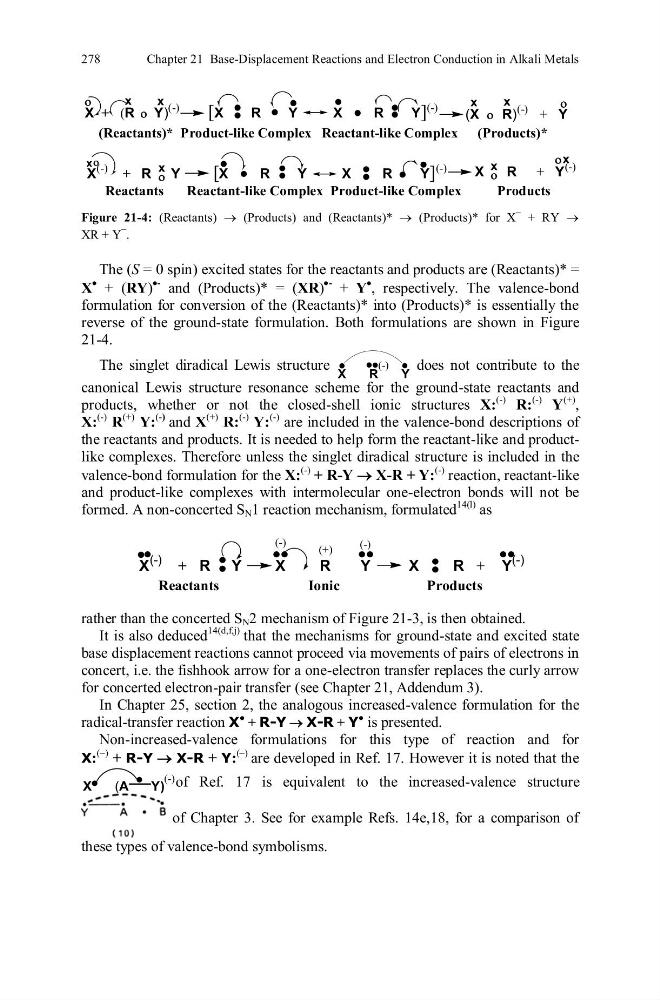
Figure 21-4: (Reactants) (Products) and (Reactants)* (Products)* for X
– + RY
XR + Y
– .
The (S = 0 spin) excited states for the reactants and products are (Reactants)* =
X
+ (RY)
- and (Products)* = (XR)
- + Y
, respectively. The valence-bond
formulation for conversion of the (Reactants)* into (Products)* is essentially the
reverse of the ground-state formulation. Both formulations are shown in Figure
21-4.
The singlet diradical Lewis structure X
R
Y
(-)
does not contribute to the
canonical Lewis structure resonance scheme for the ground-state reactants and
products, whether or not the closed-shell ionic structures X:
(-) R:
(-) Y
(+) ,
X:
(-) R
(+) Y:
(-) and X
(+) R:
(-) Y:
(-) are included in the valence-bond descriptions of
the reactants and products. It is needed to help form the reactant-like and productlike complexes. Therefore unless the singlet diradical structure is included in the
valence-bond formulation for the X:
(-) + R-Y X-R + Y:
(-) reaction, reactant-like
and product-like complexes with intermolecular one-electron bonds will not be
formed. A non-concerted S N 1 reaction mechanism, formulated
14(l) as
X
(-) + R Y
X
R
Y
X
R + Y
(-)
Reactants
Ionic
Products
(-)
(+)
(-)
rather than the concerted S N 2 mechanism of Figure 21-3, is then obtained.
It is also deduced
14(d,f,j) that the mechanisms for ground-state and excited state
base displacement reactions cannot proceed via movements of pairs of electrons in
concert, i.e. the fishhook arrow for a one-electron transfer replaces the curly arrow
for concerted electron-pair transfer (see Chapter 21, Addendum 3).
In Chapter 25, section 2, the analogous increased-valence formulation for the
radical-transfer reaction X
● + R-Y X-R + Y
● is presented.
Non-increased-valence formulations for this type of reaction and for
X:
(–) + R-Y X-R + Y:
(–) are developed in Ref. 17. However it is noted that the
(-)
X
(A
Y) of Ref. 17 is equivalent to the increased-valence structure
of Chapter 3. See for example Refs. 14e,18, for a comparison of
these types of valence-bond symbolisms.
Chapter 21 Base-Displacement Reactions and Electron Conduction in Alkali Metals
X + (R Y)
(-)
[X R Y
X
R
Y]
(-)
(Reactants)* Product-like Complex Reactant-like Complex
(X
R)
(-) + Y
(Products)*
X
(-) + R Y
[X
R
Y
X
R
Y]
(-)
X
R + Y
(-)
Reactants
Reactant-like Complex Product-like Complex
Products
x
x
x
x
x
x
x
x
Figure 21-4: (Reactants) (Products) and (Reactants)* (Products)* for X
– + RY
XR + Y
– .
The (S = 0 spin) excited states for the reactants and products are (Reactants)* =
X
+ (RY)
- and (Products)* = (XR)
- + Y
, respectively. The valence-bond
formulation for conversion of the (Reactants)* into (Products)* is essentially the
reverse of the ground-state formulation. Both formulations are shown in Figure
21-4.
The singlet diradical Lewis structure X
R
Y
(-)
does not contribute to the
canonical Lewis structure resonance scheme for the ground-state reactants and
products, whether or not the closed-shell ionic structures X:
(-) R:
(-) Y
(+) ,
X:
(-) R
(+) Y:
(-) and X
(+) R:
(-) Y:
(-) are included in the valence-bond descriptions of
the reactants and products. It is needed to help form the reactant-like and productlike complexes. Therefore unless the singlet diradical structure is included in the
valence-bond formulation for the X:
(-) + R-Y X-R + Y:
(-) reaction, reactant-like
and product-like complexes with intermolecular one-electron bonds will not be
formed. A non-concerted S N 1 reaction mechanism, formulated
14(l) as
X
(-) + R Y
X
R
Y
X
R + Y
(-)
Reactants
Ionic
Products
(-)
(+)
(-)
rather than the concerted S N 2 mechanism of Figure 21-3, is then obtained.
It is also deduced
14(d,f,j) that the mechanisms for ground-state and excited state
base displacement reactions cannot proceed via movements of pairs of electrons in
concert, i.e. the fishhook arrow for a one-electron transfer replaces the curly arrow
for concerted electron-pair transfer (see Chapter 21, Addendum 3).
In Chapter 25, section 2, the analogous increased-valence formulation for the
radical-transfer reaction X
● + R-Y X-R + Y
● is presented.
Non-increased-valence formulations for this type of reaction and for
X:
(–) + R-Y X-R + Y:
(–) are developed in Ref. 17. However it is noted that the
(-)
X
(A
Y) of Ref. 17 is equivalent to the increased-valence structure
of Chapter 3. See for example Refs. 14e,18, for a comparison of
these types of valence-bond symbolisms.