

19-3
Xe2F3
+ and H2F3
–
253
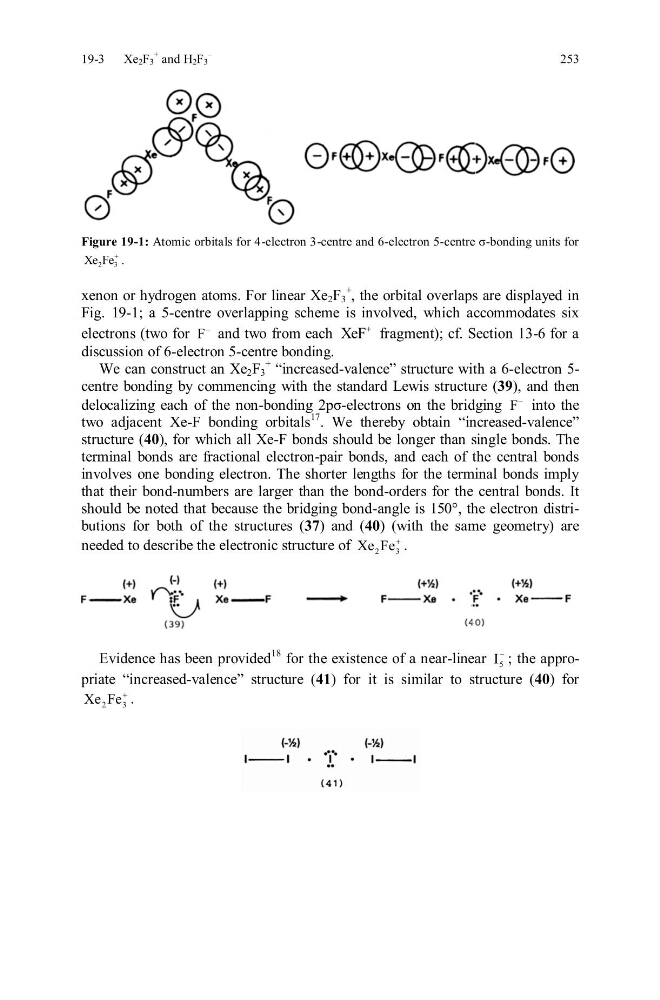
Figure 19-1: Atomic orbitals for 4-electron 3-centre and 6-electron 5-centre σ-bonding units for
2
3
Xe Fe
.
xenon or hydrogen atoms. For linear Xe 2 F 3
+
, the orbital overlaps are displayed in
Fig. 19-1; a 5-centre overlapping scheme is involved, which accommodates six
electrons (two for F
and two from each XeF
fragment); cf. Section 13-6 for a
discussion of 6-electron 5-centre bonding.
We can construct an Xe 2 F 3
+ “increased-valence” structure with a 6-electron 5centre bonding by commencing with the standard Lewis structure (39), and then
delocalizing each of the non-bonding 2pσ-electrons on the bridging F
into the
two adjacent Xe-F bonding orbitals
17 . We thereby obtain “increased-valence”
structure (40), for which all Xe-F bonds should be longer than single bonds. The
terminal bonds are fractional electron-pair bonds, and each of the central bonds
involves one bonding electron. The shorter lengths for the terminal bonds imply
that their bond-numbers are larger than the bond-orders for the central bonds. It
should be noted that because the bridging bond-angle is 150°, the electron distributions for both of the structures (37) and (40) (with the same geometry) are
needed to describe the electronic structure of
2
3
Xe Fe
.
Evidence has been provided
18 for the existence of a near-linear 5
I
; the appropriate “increased-valence” structure (41) for it is similar to structure (40) for
2
3
Xe Fe
.
Xe2F3
+ and H2F3
–
253
Figure 19-1: Atomic orbitals for 4-electron 3-centre and 6-electron 5-centre σ-bonding units for
2
3
Xe Fe
.
xenon or hydrogen atoms. For linear Xe 2 F 3
+
, the orbital overlaps are displayed in
Fig. 19-1; a 5-centre overlapping scheme is involved, which accommodates six
electrons (two for F
and two from each XeF
fragment); cf. Section 13-6 for a
discussion of 6-electron 5-centre bonding.
We can construct an Xe 2 F 3
+ “increased-valence” structure with a 6-electron 5centre bonding by commencing with the standard Lewis structure (39), and then
delocalizing each of the non-bonding 2pσ-electrons on the bridging F
into the
two adjacent Xe-F bonding orbitals
17 . We thereby obtain “increased-valence”
structure (40), for which all Xe-F bonds should be longer than single bonds. The
terminal bonds are fractional electron-pair bonds, and each of the central bonds
involves one bonding electron. The shorter lengths for the terminal bonds imply
that their bond-numbers are larger than the bond-orders for the central bonds. It
should be noted that because the bridging bond-angle is 150°, the electron distributions for both of the structures (37) and (40) (with the same geometry) are
needed to describe the electronic structure of
2
3
Xe Fe
.
Evidence has been provided
18 for the existence of a near-linear 5
I
; the appropriate “increased-valence” structure (41) for it is similar to structure (40) for
2
3
Xe Fe
.