

18.7.5.1 Hg
2+ Complexation
Understanding the complexation of ions and their preferential ligands is of prime
relevance when studying their bioactivity. As an example, their absorbance and
transport through the body is extremely dependent on their complexation. It would
then be extremely interesting to be able to identify the main series as well as the
potential substitution sites. In addition Mercury(II) is a heavy metal cation which is
especially challenging for quantum mechanical treatment as both correlation and
relativistic effects play a crucial role in modeling its complexes.
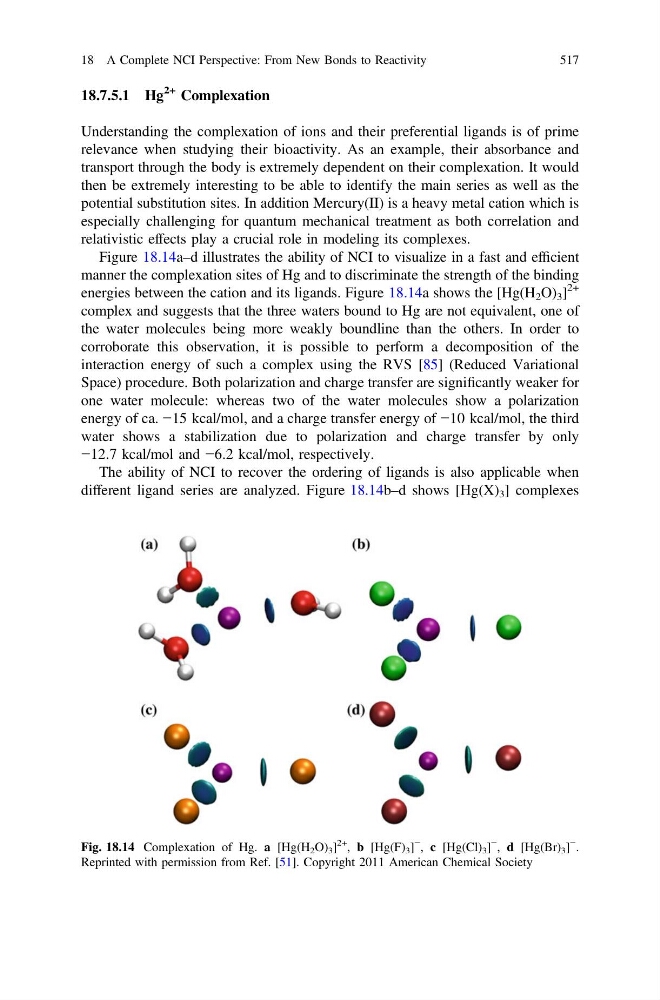
Figure 18.14a–d illustrates the ability of NCI to visualize in a fast and efficient
manner the complexation sites of Hg and to discriminate the strength of the binding
energies between the cation and its ligands. Figure 18.14a shows the [Hg(H 2 O) 3 ]
2+
complex and suggests that the three waters bound to Hg are not equivalent, one of
the water molecules being more weakly boundline than the others. In order to
corroborate this observation, it is possible to perform a decomposition of the
interaction energy of such a complex using the RVS [85] (Reduced Variational
Space) procedure. Both polarization and charge transfer are significantly weaker for
one water molecule: whereas two of the water molecules show a polarization
energy of ca. −15 kcal/mol, and a charge transfer energy of −10 kcal/mol, the third
water shows a stabilization due to polarization and charge transfer by only
−12.7 kcal/mol and −6.2 kcal/mol, respectively.
The ability of NCI to recover the ordering of ligands is also applicable when
different ligand series are analyzed. Figure 18.14b–d shows [Hg(X) 3 ] complexes
Fig. 18.14 Complexation of Hg. a [Hg(H 2 O) 3 ]
2+ , b [Hg(F) 3 ]
−
, c [Hg(Cl) 3 ]
−
, d [Hg(Br) 3 ]
− .
Reprinted with permission from Ref. [51]. Copyright 2011 American Chemical Society
18 A Complete NCI Perspective: From New Bonds to Reactivity
517
2+ Complexation
Understanding the complexation of ions and their preferential ligands is of prime
relevance when studying their bioactivity. As an example, their absorbance and
transport through the body is extremely dependent on their complexation. It would
then be extremely interesting to be able to identify the main series as well as the
potential substitution sites. In addition Mercury(II) is a heavy metal cation which is
especially challenging for quantum mechanical treatment as both correlation and
relativistic effects play a crucial role in modeling its complexes.
Figure 18.14a–d illustrates the ability of NCI to visualize in a fast and efficient
manner the complexation sites of Hg and to discriminate the strength of the binding
energies between the cation and its ligands. Figure 18.14a shows the [Hg(H 2 O) 3 ]
2+
complex and suggests that the three waters bound to Hg are not equivalent, one of
the water molecules being more weakly boundline than the others. In order to
corroborate this observation, it is possible to perform a decomposition of the
interaction energy of such a complex using the RVS [85] (Reduced Variational
Space) procedure. Both polarization and charge transfer are significantly weaker for
one water molecule: whereas two of the water molecules show a polarization
energy of ca. −15 kcal/mol, and a charge transfer energy of −10 kcal/mol, the third
water shows a stabilization due to polarization and charge transfer by only
−12.7 kcal/mol and −6.2 kcal/mol, respectively.
The ability of NCI to recover the ordering of ligands is also applicable when
different ligand series are analyzed. Figure 18.14b–d shows [Hg(X) 3 ] complexes
Fig. 18.14 Complexation of Hg. a [Hg(H 2 O) 3 ]
2+ , b [Hg(F) 3 ]
−
, c [Hg(Cl) 3 ]
−
, d [Hg(Br) 3 ]
− .
Reprinted with permission from Ref. [51]. Copyright 2011 American Chemical Society
18 A Complete NCI Perspective: From New Bonds to Reactivity
517