

(disproportionation) into the Cu(III), which is supported by DFT calculations
(Scheme 5).
6 Conclusion
Over the last decade, the copper-mediated or copper-catalyzed C–H functionalization has been developed rapidly and greatly by significant efforts of many
researchers, and cheap and abundant copper salts now can replace, to some extent,
precedented noble transition metal catalysts such as Pd, Rh, and Ru. Moreover,
some unique features of copper salts and complexes are observed. The
intermolecular dehydrogenative cross-couplings mentioned in this chapter are
such good examples, and they are otherwise challenging even under known noble
transition metal catalysis. However, there is still a large room for further
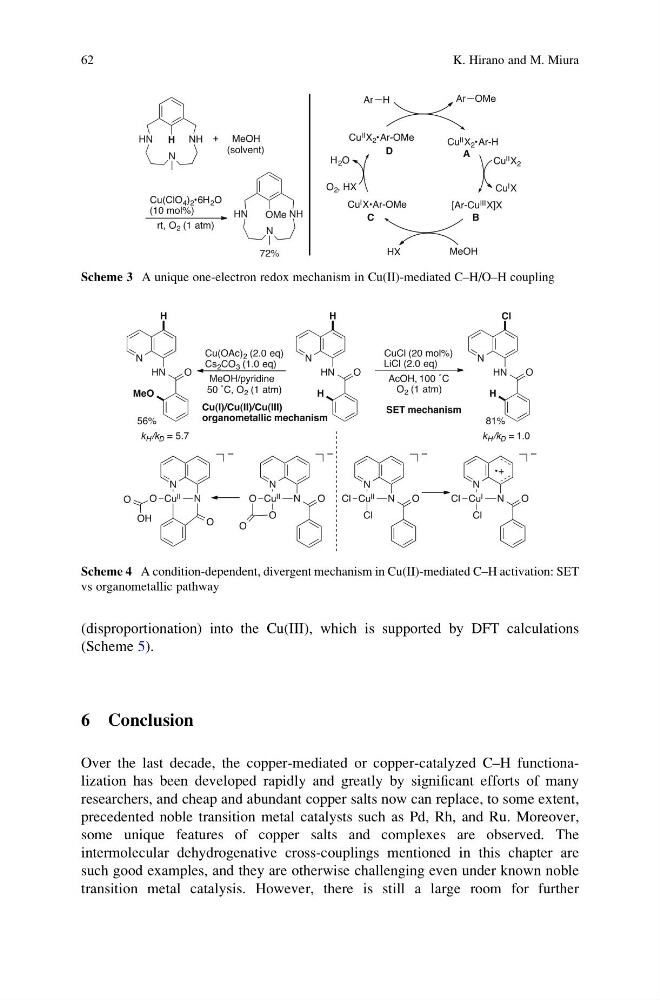
Scheme 3 A unique one-electron redox mechanism in Cu(II)-mediated C–H/O–H coupling
Scheme 4 A condition-dependent, divergent mechanism in Cu(II)-mediated C–H activation: SET
vs organometallic pathway
62
K. Hirano and M. Miura
(Scheme 5).
6 Conclusion
Over the last decade, the copper-mediated or copper-catalyzed C–H functionalization has been developed rapidly and greatly by significant efforts of many
researchers, and cheap and abundant copper salts now can replace, to some extent,
precedented noble transition metal catalysts such as Pd, Rh, and Ru. Moreover,
some unique features of copper salts and complexes are observed. The
intermolecular dehydrogenative cross-couplings mentioned in this chapter are
such good examples, and they are otherwise challenging even under known noble
transition metal catalysis. However, there is still a large room for further
Scheme 3 A unique one-electron redox mechanism in Cu(II)-mediated C–H/O–H coupling
Scheme 4 A condition-dependent, divergent mechanism in Cu(II)-mediated C–H activation: SET
vs organometallic pathway
62
K. Hirano and M. Miura