

On the other hand, recent development of the bidentate coordination strategy
[21, 22] successfully expands the substrate scope into the more general benzene
derivatives. The first applicable directing group is the aminoquinoline-based N,Nbidentate amide, which was originally developed by Daugulis [23]. Although the
dehydrogenative alkynylation occurs smoothly, probably because of the relatively
high acidic nature of the aminoquinoline NH, the in situ generated alkynylated
product spontaneously undergoes the subsequent annulation to provide the methylene isoindolinone skeleton (Eqs. 6 and 7) [24, 25]. More recently, Dai and Yu [26]
and Shi [27] successfully suppress the undesired annulation by the oxazolinylaniline- and pyridinylpropylamine-modified coordinating moieties, respectively,
and the desired alkynylated products were obtained in good yields (Eqs. 8 and 9).
The latter two directing groups are easily removed under base-promoted hydrolysis
conditions after the coupling reaction.
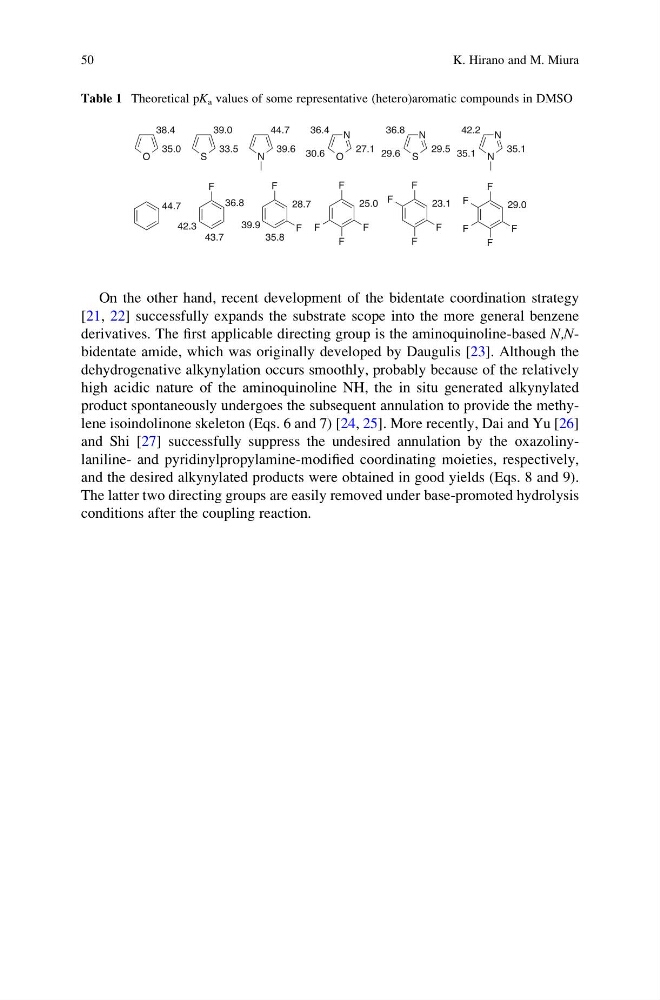
Table 1 Theoretical pK a values of some representative (hetero)aromatic compounds in DMSO
50
K. Hirano and M. Miura
[21, 22] successfully expands the substrate scope into the more general benzene
derivatives. The first applicable directing group is the aminoquinoline-based N,Nbidentate amide, which was originally developed by Daugulis [23]. Although the
dehydrogenative alkynylation occurs smoothly, probably because of the relatively
high acidic nature of the aminoquinoline NH, the in situ generated alkynylated
product spontaneously undergoes the subsequent annulation to provide the methylene isoindolinone skeleton (Eqs. 6 and 7) [24, 25]. More recently, Dai and Yu [26]
and Shi [27] successfully suppress the undesired annulation by the oxazolinylaniline- and pyridinylpropylamine-modified coordinating moieties, respectively,
and the desired alkynylated products were obtained in good yields (Eqs. 8 and 9).
The latter two directing groups are easily removed under base-promoted hydrolysis
conditions after the coupling reaction.
Table 1 Theoretical pK a values of some representative (hetero)aromatic compounds in DMSO
50
K. Hirano and M. Miura