

place, suggesting that the cleavage of C–H bonds is irreversible, which is contrary
to finding reported by Chatani [47].
3.3 Carbonylation of C(sp
3
)–H Bonds
Ge reported on the Ni(II)/Cu(II)-catalyzed carbonylation of C(sp
2 )–H bonds in
aromatic amides containing an 8-aminoquinoline as the directing group with
DMF as the carbonyl source (Scheme 15) [42]. This catalytic system was applicable
to the carbonylation of C(sp
3 )–H bonds (Scheme 25) [42]. A quaternary α-carbon to
the carbonyl group in the substrates is required for the carbonylation to proceed.
Contrary to the carbonylation of C(sp
2 )–H bonds, in which the cleavage of C–H
bonds is reversible, the cleavage of C–H bonds was irreversible in the carbonylation
of C(sp
3 )–H bonds, suggesting that the rate-determining step is the cyclometalation.
3.4 C–S Bond Formation
Zhang reported on the Ni(II)-catalyzed thiolation of C(sp
3 )–H bonds in aliphatic
amides containing an 8-aminoquinoline directing group with diaryl disulfides
(Scheme 26) [53]. All examples involved the use of aliphatic amides having no
hydrogen at the α-position. Diphenyl diselenide was also applicable to the reaction,
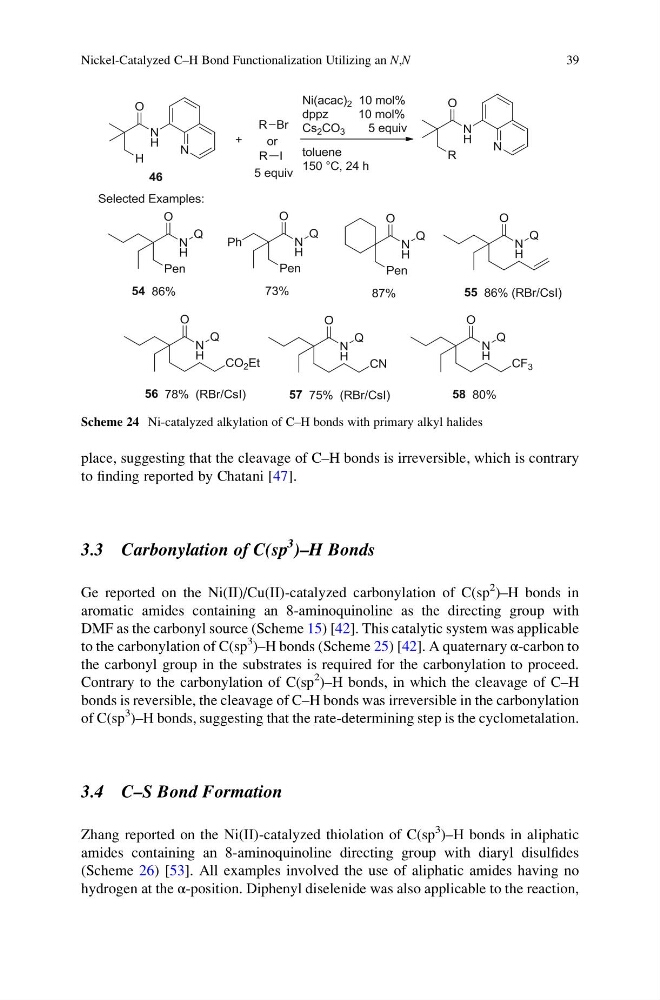
Scheme 24 Ni-catalyzed alkylation of C–H bonds with primary alkyl halides
Nickel-Catalyzed C–H Bond Functionalization Utilizing an N,N
39
to finding reported by Chatani [47].
3.3 Carbonylation of C(sp
3
)–H Bonds
Ge reported on the Ni(II)/Cu(II)-catalyzed carbonylation of C(sp
2 )–H bonds in
aromatic amides containing an 8-aminoquinoline as the directing group with
DMF as the carbonyl source (Scheme 15) [42]. This catalytic system was applicable
to the carbonylation of C(sp
3 )–H bonds (Scheme 25) [42]. A quaternary α-carbon to
the carbonyl group in the substrates is required for the carbonylation to proceed.
Contrary to the carbonylation of C(sp
2 )–H bonds, in which the cleavage of C–H
bonds is reversible, the cleavage of C–H bonds was irreversible in the carbonylation
of C(sp
3 )–H bonds, suggesting that the rate-determining step is the cyclometalation.
3.4 C–S Bond Formation
Zhang reported on the Ni(II)-catalyzed thiolation of C(sp
3 )–H bonds in aliphatic
amides containing an 8-aminoquinoline directing group with diaryl disulfides
(Scheme 26) [53]. All examples involved the use of aliphatic amides having no
hydrogen at the α-position. Diphenyl diselenide was also applicable to the reaction,
Scheme 24 Ni-catalyzed alkylation of C–H bonds with primary alkyl halides
Nickel-Catalyzed C–H Bond Functionalization Utilizing an N,N
39