

generate a
i
C 3 F 7 radical. The radical abstracts a hydrogen from toluene to give a
benzyl radical, which reacts with the cyclometalated complex 35 to generate a Ni
(III) complex 36. Reductive elimination from 36 releases the benzylation product
32 and a Ni(I) complex. The Ni(I) complex abstracts an iodine atom from
i
C 3 F 7 I to
generate Ni(II) complex and a
i
C 3 F 7 radical. In fact, the addition of TEMPO
completely quenched the reaction, suggesting that a free radical species is involved
in the reaction. The generation of benzyl iodide as the electrophilic counter partner
also cannot be excluded.
2.6 Carbonylation of C(sp
2
)–H Bonds
The use of N,N
0 -bidentate directing group in the carbonylation of C–H bonds has
been achieved by the use of carbon monoxide (CO) as the carbonyl source in
conjunction with Ru 3 (CO) 12 [40] or Co(acac) 2 as the catalysts [41]. Ge recently
reported on the Ni(II)/Cu(II)-catalyzed carbonylation of benzamides containing an
8-aminoquinoline as the directing group with DMF as the carbonyl source
(Scheme 15) [42]. The presence of both a Ni and a Cu catalyst was required for
the reaction to proceed. The product yield was improved by the addition of a
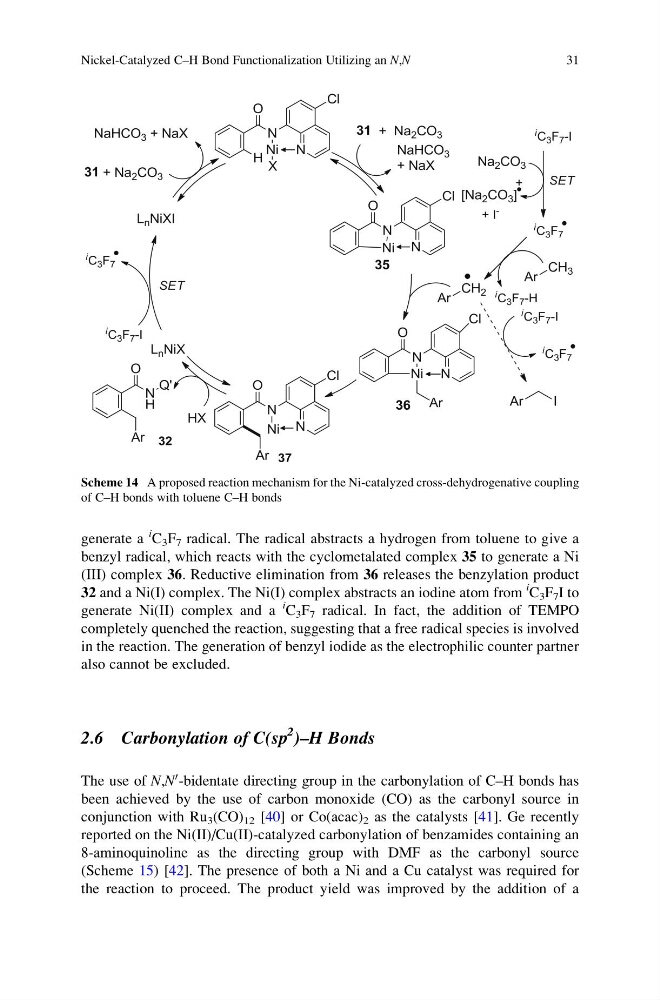
Scheme 14 A proposed reaction mechanism for the Ni-catalyzed cross-dehydrogenative coupling
of C–H bonds with toluene C–H bonds
Nickel-Catalyzed C–H Bond Functionalization Utilizing an N,N
31
i
C 3 F 7 radical. The radical abstracts a hydrogen from toluene to give a
benzyl radical, which reacts with the cyclometalated complex 35 to generate a Ni
(III) complex 36. Reductive elimination from 36 releases the benzylation product
32 and a Ni(I) complex. The Ni(I) complex abstracts an iodine atom from
i
C 3 F 7 I to
generate Ni(II) complex and a
i
C 3 F 7 radical. In fact, the addition of TEMPO
completely quenched the reaction, suggesting that a free radical species is involved
in the reaction. The generation of benzyl iodide as the electrophilic counter partner
also cannot be excluded.
2.6 Carbonylation of C(sp
2
)–H Bonds
The use of N,N
0 -bidentate directing group in the carbonylation of C–H bonds has
been achieved by the use of carbon monoxide (CO) as the carbonyl source in
conjunction with Ru 3 (CO) 12 [40] or Co(acac) 2 as the catalysts [41]. Ge recently
reported on the Ni(II)/Cu(II)-catalyzed carbonylation of benzamides containing an
8-aminoquinoline as the directing group with DMF as the carbonyl source
(Scheme 15) [42]. The presence of both a Ni and a Cu catalyst was required for
the reaction to proceed. The product yield was improved by the addition of a
Scheme 14 A proposed reaction mechanism for the Ni-catalyzed cross-dehydrogenative coupling
of C–H bonds with toluene C–H bonds
Nickel-Catalyzed C–H Bond Functionalization Utilizing an N,N
31