

recent advances employing iridium pincer complexes in transfer dehydrogenation
reactions and closely related chemistry.
2 Alkane Dehydrogenation
It has been shown that iridium pincer complexes containing electron-rich
alkylphosphines are highly efficient catalysts for alkane dehydrogenation reactions.
However, the Roddick group demonstrated that iridium complexes bearing electron
poor phosphines can also efficiently catalyze the dehydrogenation of alkanes
[38]. The iridium complex containing bis(trifluoromethyl)phosphine groups
(
CF3
PCP)Ir(η
4 -COD), 4 (Fig. 2), was shown to catalyze the transfer dehydrogenation of COA with TBE (1:1) giving TONs up to 660 after 58 h (initial TOF ¼ 40 h
À1 )
at 200
C. Due to inhibition by TBE, by using a 5:1 COA/TBE ratio, higher initial
activities (TOF ¼ 155 h
À1 ) and TONs (2,580 after 24 h) were obtained. This
catalyst showed relatively minor inhibition by cyclooctene (COE), and no inhibition was detected with N 2 or H 2 O. Using the same catalyst, very low activity was
observed for the dehydrogenation of linear alkanes with TBE at 150
C (TONs ¼ 81
after 48 h), and moderate TONs were obtained for the acceptorless dehydrogenation
of cyclodecane (TONs ¼ 92 after 24 h).
The Yamamoto group reported the use of 7-6-7 fused-ring PCP iridium catalysts
(7–6–7R PCP)Ir(H)(Cl), 5a, (R ¼ iPr) and 5b (R ¼ Ph) for alkane transfer dehydrogenation (Fig. 3) [39]. After activation with NaO
t Bu, TONs up to 3,510 and 4,140
were obtained with catalysts 5a and 5b, respectively, after 36 h at 200
C when
using a COA/TBE ratio of 1.5:1. While both catalysts 5a and 5b showed no
inhibition by product formation, the latter allowed highest TONs (4,821 at 230
C
after 24 h) due to its higher stability. The catalyst 5a is also an active catalyst for the
transfer dehydrogenation of linear alkanes. By using a ratio n-octane/norbornene of
1.5:1, TONs up to 1,100 were obtained at 200
C after 12 h. However, due to its low
solubility in n-octane, the catalyst 5b showed no activity under similar conditions.
Huang and coworkers synthesized a new phosphinothious/phosphinite
(
iPr4 PSCOP)Ir pincer complex, 6 (Fig. 4) [40]. Upon activation with NaO
t
Bu, this
complex exhibits exceptionally high activity for transfer dehydrogenation of COA
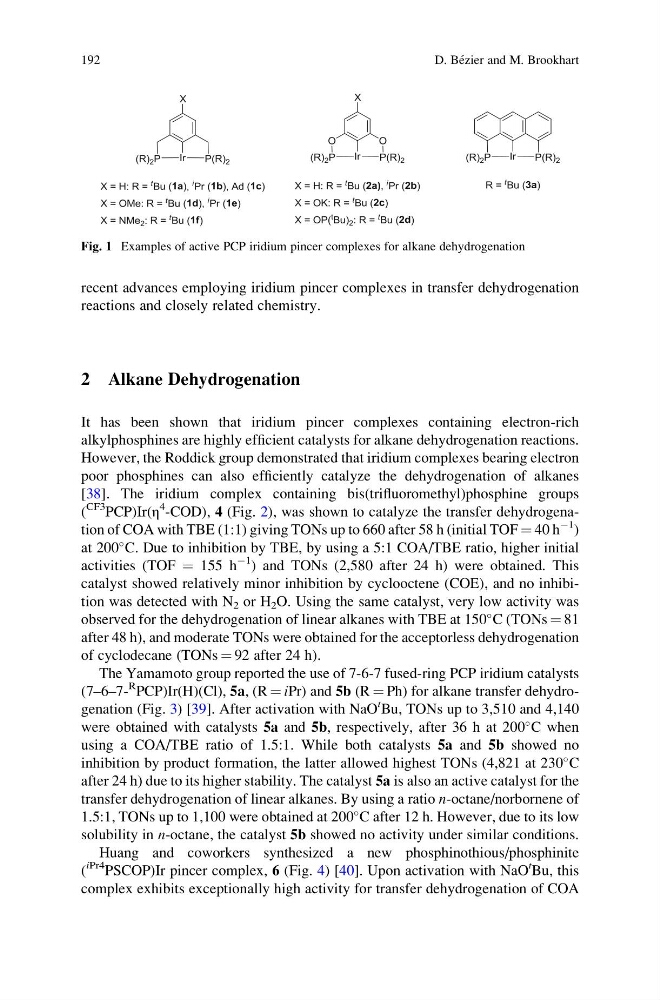
Fig. 1 Examples of active PCP iridium pincer complexes for alkane dehydrogenation
192
D. Be ´zier and M. Brookhart
reactions and closely related chemistry.
2 Alkane Dehydrogenation
It has been shown that iridium pincer complexes containing electron-rich
alkylphosphines are highly efficient catalysts for alkane dehydrogenation reactions.
However, the Roddick group demonstrated that iridium complexes bearing electron
poor phosphines can also efficiently catalyze the dehydrogenation of alkanes
[38]. The iridium complex containing bis(trifluoromethyl)phosphine groups
(
CF3
PCP)Ir(η
4 -COD), 4 (Fig. 2), was shown to catalyze the transfer dehydrogenation of COA with TBE (1:1) giving TONs up to 660 after 58 h (initial TOF ¼ 40 h
À1 )
at 200
C. Due to inhibition by TBE, by using a 5:1 COA/TBE ratio, higher initial
activities (TOF ¼ 155 h
À1 ) and TONs (2,580 after 24 h) were obtained. This
catalyst showed relatively minor inhibition by cyclooctene (COE), and no inhibition was detected with N 2 or H 2 O. Using the same catalyst, very low activity was
observed for the dehydrogenation of linear alkanes with TBE at 150
C (TONs ¼ 81
after 48 h), and moderate TONs were obtained for the acceptorless dehydrogenation
of cyclodecane (TONs ¼ 92 after 24 h).
The Yamamoto group reported the use of 7-6-7 fused-ring PCP iridium catalysts
(7–6–7R PCP)Ir(H)(Cl), 5a, (R ¼ iPr) and 5b (R ¼ Ph) for alkane transfer dehydrogenation (Fig. 3) [39]. After activation with NaO
t Bu, TONs up to 3,510 and 4,140
were obtained with catalysts 5a and 5b, respectively, after 36 h at 200
C when
using a COA/TBE ratio of 1.5:1. While both catalysts 5a and 5b showed no
inhibition by product formation, the latter allowed highest TONs (4,821 at 230
C
after 24 h) due to its higher stability. The catalyst 5a is also an active catalyst for the
transfer dehydrogenation of linear alkanes. By using a ratio n-octane/norbornene of
1.5:1, TONs up to 1,100 were obtained at 200
C after 12 h. However, due to its low
solubility in n-octane, the catalyst 5b showed no activity under similar conditions.
Huang and coworkers synthesized a new phosphinothious/phosphinite
(
iPr4 PSCOP)Ir pincer complex, 6 (Fig. 4) [40]. Upon activation with NaO
t
Bu, this
complex exhibits exceptionally high activity for transfer dehydrogenation of COA
Fig. 1 Examples of active PCP iridium pincer complexes for alkane dehydrogenation
192
D. Be ´zier and M. Brookhart