

281
9 Polyphenol Glycosides as Potential Remedies in Kidney …
9.2.2 Calcium–Carbohydrate Complexes in Solution
As mentioned above, simple carbohydrates with s-block metal ions including calcium form complexes in water but their stability is very low. NMR is probably
the most suitable method the studies of a complex formation in solution. It has
been reported long time ago that the addition of calcium chloride to the solution
of epi-inositol and some glycosides in deuterium oxide causes the downfield shift
of some or all signals in the
1
H-NMR [36, 37]. The shifts are in the same direction, similar to that caused by paramagnetic reagent, however the value of changes
are smaller. When the calcium salt is added to the solution of carbohydrates the
downfield movement of NMR signals is observed in some or all NMR signals from
dipole formed by the metal cation and the coordinated oxygen atom. The shift in
hydroxyl–proton resonances in water as a function of the concentration of added
calcium chloride yields, in general, has a linear dependence. The larger slope the
stronger is the complex formation.
Angyal was also one of the first who studied the complexes of calcium with
carbohydrates in the solution by means of NMR. He noticed that addition of paramagnetic ions like europium and praseodium shifts the signals to a greater extend,
so that better analysis can be performed [38–40].
Some chosen examples of NMR studies of calcium sugar complexes in the solution are given below.
Similar shifts were observed in 1,2,3,4,5 in the pentahydroxycyclohexanes. In
the epi-inositol the interaction was attributed to interaction with O2, O3, and O4
hydroxyl oxygen atoms. The signal shifted the most where the protons are attached
to central carbon in the three consecutive carbon atoms with the hydroxyl group in
the configuration ax–eq–ax.
α-d-Allopyranose in its more stable conformation contains ax–eq–ax configuration of hydroxyl groups but its β anomer does not. Both anomers are in dynamic
equilibrium in water at room temperature [41]. The addition of calcium ions causes
a substantial increase in concentration α-d-allopyranose with substantial downfield
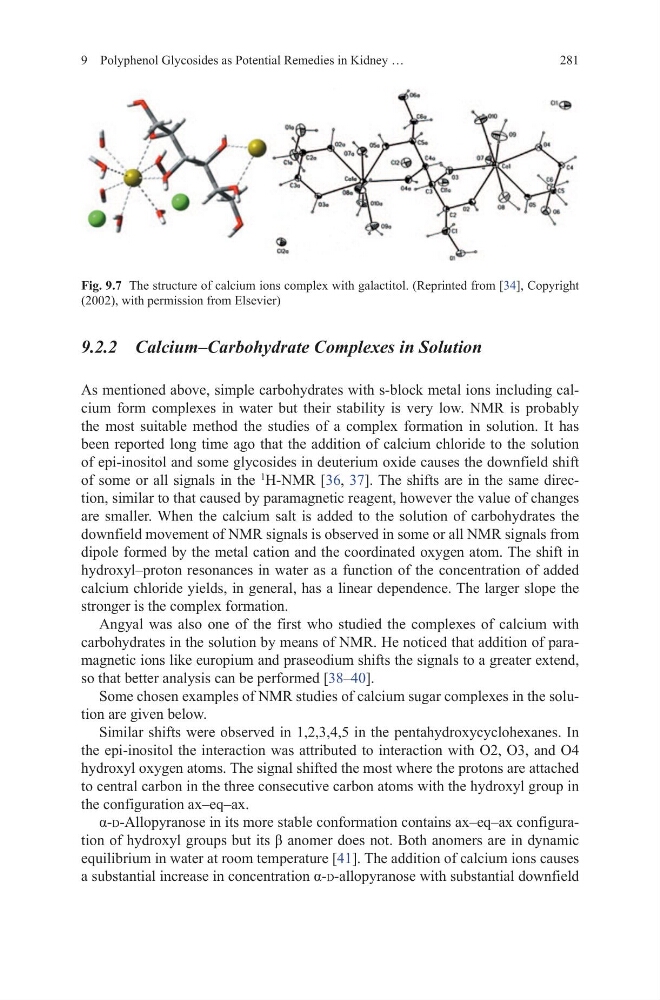
Fig. 9.7 The structure of calcium ions complex with galactitol. (Reprinted from [34], Copyright
(2002), with permission from Elsevier)
9 Polyphenol Glycosides as Potential Remedies in Kidney …
9.2.2 Calcium–Carbohydrate Complexes in Solution
As mentioned above, simple carbohydrates with s-block metal ions including calcium form complexes in water but their stability is very low. NMR is probably
the most suitable method the studies of a complex formation in solution. It has
been reported long time ago that the addition of calcium chloride to the solution
of epi-inositol and some glycosides in deuterium oxide causes the downfield shift
of some or all signals in the
1
H-NMR [36, 37]. The shifts are in the same direction, similar to that caused by paramagnetic reagent, however the value of changes
are smaller. When the calcium salt is added to the solution of carbohydrates the
downfield movement of NMR signals is observed in some or all NMR signals from
dipole formed by the metal cation and the coordinated oxygen atom. The shift in
hydroxyl–proton resonances in water as a function of the concentration of added
calcium chloride yields, in general, has a linear dependence. The larger slope the
stronger is the complex formation.
Angyal was also one of the first who studied the complexes of calcium with
carbohydrates in the solution by means of NMR. He noticed that addition of paramagnetic ions like europium and praseodium shifts the signals to a greater extend,
so that better analysis can be performed [38–40].
Some chosen examples of NMR studies of calcium sugar complexes in the solution are given below.
Similar shifts were observed in 1,2,3,4,5 in the pentahydroxycyclohexanes. In
the epi-inositol the interaction was attributed to interaction with O2, O3, and O4
hydroxyl oxygen atoms. The signal shifted the most where the protons are attached
to central carbon in the three consecutive carbon atoms with the hydroxyl group in
the configuration ax–eq–ax.
α-d-Allopyranose in its more stable conformation contains ax–eq–ax configuration of hydroxyl groups but its β anomer does not. Both anomers are in dynamic
equilibrium in water at room temperature [41]. The addition of calcium ions causes
a substantial increase in concentration α-d-allopyranose with substantial downfield
Fig. 9.7 The structure of calcium ions complex with galactitol. (Reprinted from [34], Copyright
(2002), with permission from Elsevier)