

on MgCl 2 surfaces in a monodentate fashion through the carbonyl oxygen. Diestertype donors for the fourth and sixth generations can adsorb either in a bidentate
fashion or in a bridging fashion. 1,3-Diethers (stereoregulating ones) and
alkoxysilane preferentially adsorb in a bidentate fashion because the distance
between two Lewis basic oxygens is not enough to bridge two neighboring Mg
2+
ions on the MgCl 2 surfaces [45, 46]. In terms of the lateral planes, bidentate
adsorption does not occur on the (1 0 4) surface with fivefold coordinated Mg
2+
ions exposed. Namely, 1,3-diether poorly adsorbs on the (1 0 4) surface, i.e., hardly
stabilizes the (1 0 4) surface as an internal donor. This is in contrast to ester-type
donors, which can adsorb both on the (1 1 0) and (1 0 4) surfaces [40, 44]. This fact
is consistent with the preferential growth of MgCl 2 crystal along the (1 1 0)
direction in the presence of 1,3-diether [43] and with the narrow molecular weight
<110>
<104>
2 nm
c
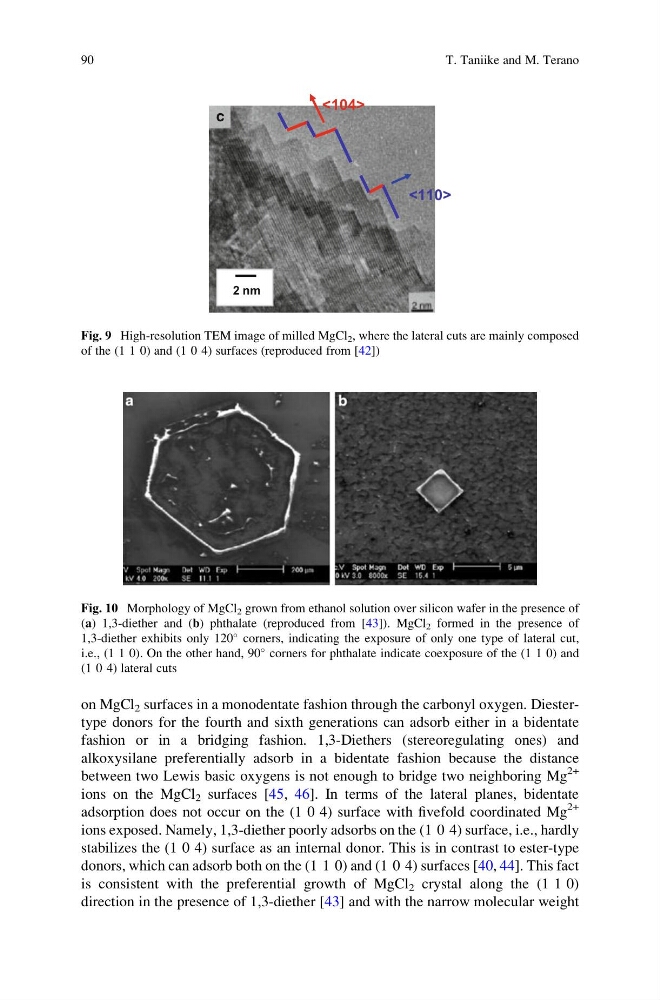
Fig. 9 High-resolution TEM image of milled MgCl 2 , where the lateral cuts are mainly composed
of the (1 1 0) and (1 0 4) surfaces (reproduced from [42])
Fig. 10 Morphology of MgCl 2 grown from ethanol solution over silicon wafer in the presence of
(a) 1,3-diether and (b) phthalate (reproduced from [43]). MgCl 2 formed in the presence of
1,3-diether exhibits only 120
corners, indicating the exposure of only one type of lateral cut,
i.e., (1 1 0). On the other hand, 90
corners for phthalate indicate coexposure of the (1 1 0) and
(1 0 4) lateral cuts
90
T. Taniike and M. Terano
fashion or in a bridging fashion. 1,3-Diethers (stereoregulating ones) and
alkoxysilane preferentially adsorb in a bidentate fashion because the distance
between two Lewis basic oxygens is not enough to bridge two neighboring Mg
2+
ions on the MgCl 2 surfaces [45, 46]. In terms of the lateral planes, bidentate
adsorption does not occur on the (1 0 4) surface with fivefold coordinated Mg
2+
ions exposed. Namely, 1,3-diether poorly adsorbs on the (1 0 4) surface, i.e., hardly
stabilizes the (1 0 4) surface as an internal donor. This is in contrast to ester-type
donors, which can adsorb both on the (1 1 0) and (1 0 4) surfaces [40, 44]. This fact
is consistent with the preferential growth of MgCl 2 crystal along the (1 1 0)
direction in the presence of 1,3-diether [43] and with the narrow molecular weight
<110>
<104>
2 nm
c
Fig. 9 High-resolution TEM image of milled MgCl 2 , where the lateral cuts are mainly composed
of the (1 1 0) and (1 0 4) surfaces (reproduced from [42])
Fig. 10 Morphology of MgCl 2 grown from ethanol solution over silicon wafer in the presence of
(a) 1,3-diether and (b) phthalate (reproduced from [43]). MgCl 2 formed in the presence of
1,3-diether exhibits only 120
corners, indicating the exposure of only one type of lateral cut,
i.e., (1 1 0). On the other hand, 90
corners for phthalate indicate coexposure of the (1 1 0) and
(1 0 4) lateral cuts
90
T. Taniike and M. Terano