

serendipity is only one part in a cocktail [51] that also includes the ability to
recognize the importance and the possible implications of an unexpected result,
the availability of adequate human and material resources to elaborate on such
implications, and a chain-of-knowledge approach spanning all elements from initial
discovery to practical application.
In my opinion, the progress of technology will greatly speed up the process of
discovery [16], but is not likely to change its mechanisms in the short or medium
term. If I am correct, then Natta’s success story is not only of purely historical
concern and should rather be looked at by scientists and managers in industry and
academia as a valid model and source of inspiration for a brighter future.
Acknowledgements I am grateful to Prof. Walter Kaminsky, editor of this book, for the invitation
to write the present chapter. For me, it was an opportunity to take a pause and look back, enjoying
many nice memories of a time vibrant with passion and expectations. I like to thank my coworkers,
and in particular Roberta Cipullo and Luca Rongo, for helping me to assemble the material and
compose parts of the chapter.
Appendix: Some Biographic Notes on Giulio Natta
Whoever goes through the numerous biographies (see for example [52]) of Giulio
Natta (Fig. 14) cannot but realize that the discovery of iPP and stereoselective olefin
polymerization was diligently prepared by Fate. Born in 1903 in a family of judges and
lawyers, Natta developed a passion for chemistry that made him build, during his
studies in chemical engineering at the Milan Polytechnic, a small laboratory in his
apartment to carry out “private” experiments in his spare time. The Milan Poly was in
the 1920s a world-leading center in X-ray diffraction, which set the stage for Natta’s
interest in the still-young chemical crystallography (key to interpretation of the events
of March 1954). Subsequently, he worked on electron diffraction in Freiburg; that
Hermann Staudinger was a professor there was certainly more than influential on
Natta’s formation. Back in Italy, he went through a rapid academic career that saw him
Professor of General Chemistry in Pavia, of Physical Chemistry in Rome, and of
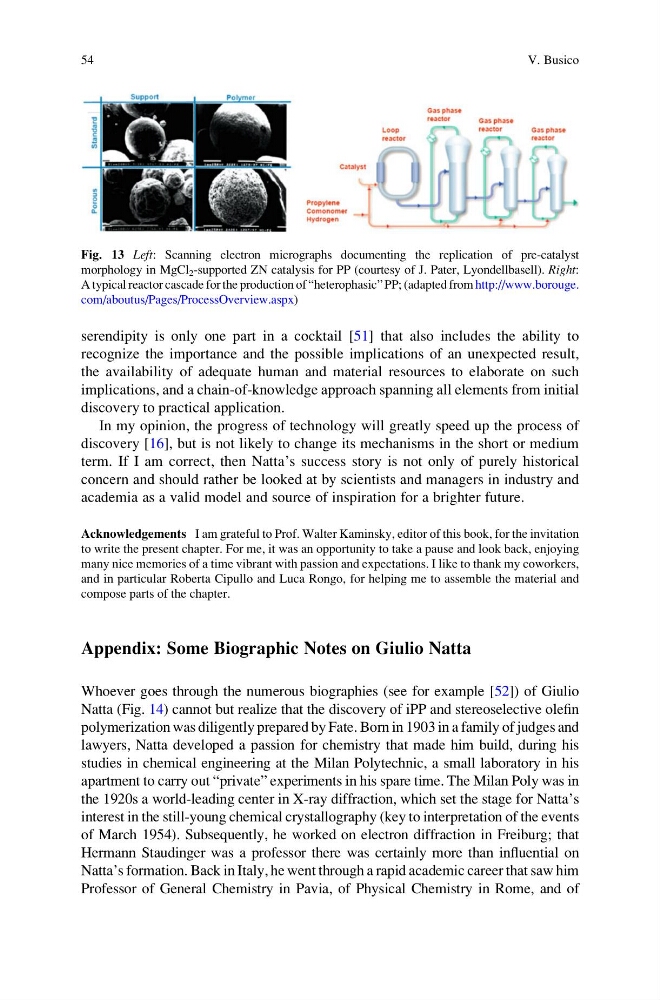
Fig. 13 Left: Scanning electron micrographs documenting the replication of pre-catalyst
morphology in MgCl 2 -supported ZN catalysis for PP (courtesy of J. Pater, Lyondellbasell). Right:
A typical reactor cascade for the production of “heterophasic” PP; (adapted from http://www.borouge.
com/aboutus/Pages/ProcessOverview.aspx)
54
V. Busico
recognize the importance and the possible implications of an unexpected result,
the availability of adequate human and material resources to elaborate on such
implications, and a chain-of-knowledge approach spanning all elements from initial
discovery to practical application.
In my opinion, the progress of technology will greatly speed up the process of
discovery [16], but is not likely to change its mechanisms in the short or medium
term. If I am correct, then Natta’s success story is not only of purely historical
concern and should rather be looked at by scientists and managers in industry and
academia as a valid model and source of inspiration for a brighter future.
Acknowledgements I am grateful to Prof. Walter Kaminsky, editor of this book, for the invitation
to write the present chapter. For me, it was an opportunity to take a pause and look back, enjoying
many nice memories of a time vibrant with passion and expectations. I like to thank my coworkers,
and in particular Roberta Cipullo and Luca Rongo, for helping me to assemble the material and
compose parts of the chapter.
Appendix: Some Biographic Notes on Giulio Natta
Whoever goes through the numerous biographies (see for example [52]) of Giulio
Natta (Fig. 14) cannot but realize that the discovery of iPP and stereoselective olefin
polymerization was diligently prepared by Fate. Born in 1903 in a family of judges and
lawyers, Natta developed a passion for chemistry that made him build, during his
studies in chemical engineering at the Milan Polytechnic, a small laboratory in his
apartment to carry out “private” experiments in his spare time. The Milan Poly was in
the 1920s a world-leading center in X-ray diffraction, which set the stage for Natta’s
interest in the still-young chemical crystallography (key to interpretation of the events
of March 1954). Subsequently, he worked on electron diffraction in Freiburg; that
Hermann Staudinger was a professor there was certainly more than influential on
Natta’s formation. Back in Italy, he went through a rapid academic career that saw him
Professor of General Chemistry in Pavia, of Physical Chemistry in Rome, and of
Fig. 13 Left: Scanning electron micrographs documenting the replication of pre-catalyst
morphology in MgCl 2 -supported ZN catalysis for PP (courtesy of J. Pater, Lyondellbasell). Right:
A typical reactor cascade for the production of “heterophasic” PP; (adapted from http://www.borouge.
com/aboutus/Pages/ProcessOverview.aspx)
54
V. Busico