

chain branches (LCB) and the possibility of incorporating polar comonomers
like vinyl acetate are features of the free radical polymerization process. The
measurement of the MMD and the LCB distribution are the most important
characterization tasks in these complex LDPE resins.
2.2 Polypropylene Microstructure
Polypropylene homopolymers besides the measurement of the MMD need further
characterization to fully describe their microstructure due to the existence of the
tertiary carbon in the propylene molecule.
When the insertion of propylene molecules in the growing chain is such that
all methyl branches are on the same hand, the regularity of the chain allows
it to crystallize; this is the isotactic polypropylene (iPP), synthesized by Natta
[8, 9] and the most commercial type obtained by the Ziegler–Natta stereoregular
polymerization process. When the monomer insertion is consistently in the opposite
hand to previous monomer insertion, the polymer obtained is syndiotactic polypropylene (sPP), which achieves lower crystallinity and today has less commercial
interest. The random stereo incorporation of monomer units results in an amorphous resin, atactic polypropylene (aPP).
Besides the three types discussed above and represented schematically in
Fig. 3a, there may happen undesired stereo errors in the growing chain which
will reduce the tacticity or, regio errors when instead of inserting the new monomer
head to tail, it does head to head or tail to tail, disrupting the methyl sequence.
These features have been extensively investigated by NMR and in all cases result in
modification of the stereoregularity and crystallinity.
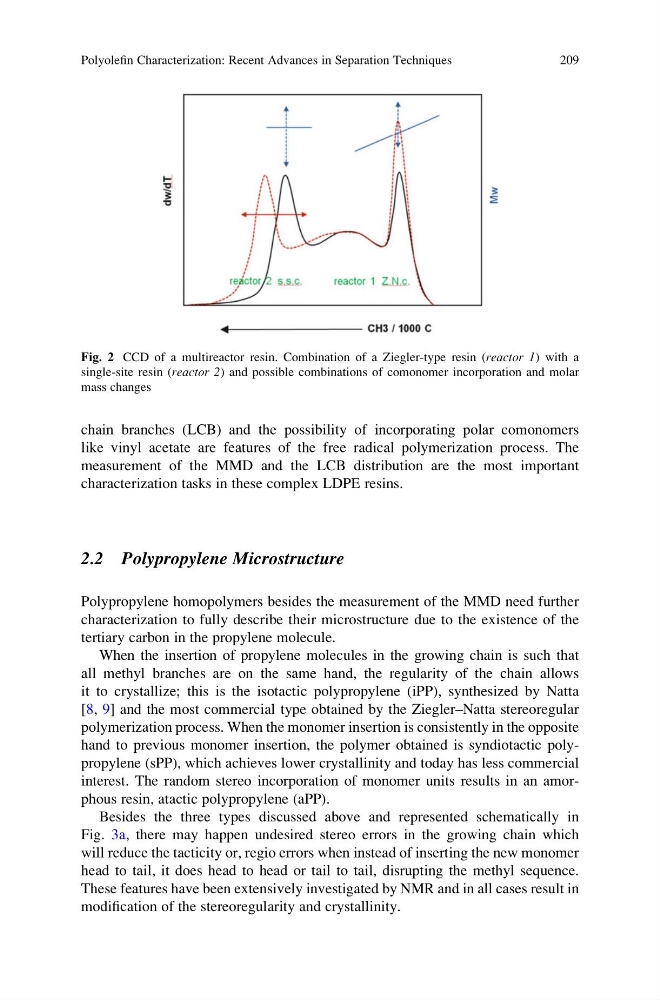
Fig. 2 CCD of a multireactor resin. Combination of a Ziegler-type resin (reactor 1) with a
single-site resin (reactor 2) and possible combinations of comonomer incorporation and molar
mass changes
Polyolefin Characterization: Recent Advances in Separation Techniques
209
like vinyl acetate are features of the free radical polymerization process. The
measurement of the MMD and the LCB distribution are the most important
characterization tasks in these complex LDPE resins.
2.2 Polypropylene Microstructure
Polypropylene homopolymers besides the measurement of the MMD need further
characterization to fully describe their microstructure due to the existence of the
tertiary carbon in the propylene molecule.
When the insertion of propylene molecules in the growing chain is such that
all methyl branches are on the same hand, the regularity of the chain allows
it to crystallize; this is the isotactic polypropylene (iPP), synthesized by Natta
[8, 9] and the most commercial type obtained by the Ziegler–Natta stereoregular
polymerization process. When the monomer insertion is consistently in the opposite
hand to previous monomer insertion, the polymer obtained is syndiotactic polypropylene (sPP), which achieves lower crystallinity and today has less commercial
interest. The random stereo incorporation of monomer units results in an amorphous resin, atactic polypropylene (aPP).
Besides the three types discussed above and represented schematically in
Fig. 3a, there may happen undesired stereo errors in the growing chain which
will reduce the tacticity or, regio errors when instead of inserting the new monomer
head to tail, it does head to head or tail to tail, disrupting the methyl sequence.
These features have been extensively investigated by NMR and in all cases result in
modification of the stereoregularity and crystallinity.
Fig. 2 CCD of a multireactor resin. Combination of a Ziegler-type resin (reactor 1) with a
single-site resin (reactor 2) and possible combinations of comonomer incorporation and molar
mass changes
Polyolefin Characterization: Recent Advances in Separation Techniques
209