

distinguished from those from the Ti-Me or Al-Me carbons on the basis of their
signal intensities. Whereas
13
C–
13 C spin–spin couplings are observed in natural
abundance
13 C NMR spectra only as very weak satellites, in enriched samples
they can cause the signals to appear as multiplets. The proton-decoupled spectrum
of enriched free ethylene in solution is a singlet because the two
13 C nuclei are
magnetically equivalent. Once incorporated into a chain, these carbons are no
longer chemically equivalent and the coupling between neighboring
13 C nuclei is
observed.
For details of the preparation of the NMR samples in an all-glass dosing and filling
apparatus constructed for these experiments and of the difficult polymerizations
in the NMR tube see [12, 18].
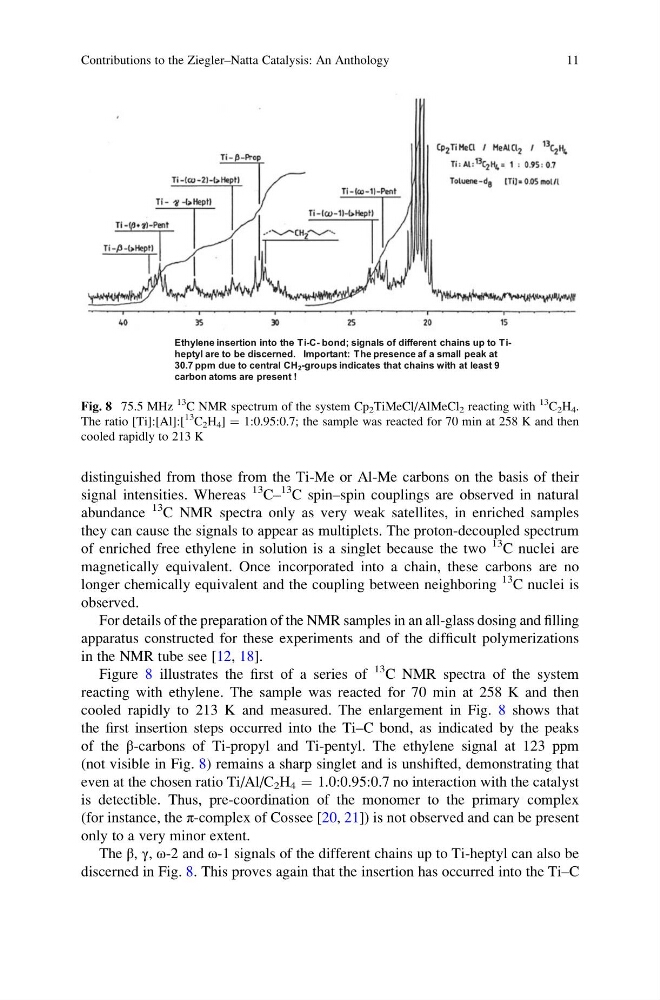
Figure 8 illustrates the first of a series of
13 C NMR spectra of the system
reacting with ethylene. The sample was reacted for 70 min at 258 K and then
cooled rapidly to 213 K and measured. The enlargement in Fig. 8 shows that
the first insertion steps occurred into the Ti–C bond, as indicated by the peaks
of the β-carbons of Ti-propyl and Ti-pentyl. The ethylene signal at 123 ppm
(not visible in Fig. 8) remains a sharp singlet and is unshifted, demonstrating that
even at the chosen ratio Ti/Al/C 2 H 4 ¼ 1.0:0.95:0.7 no interaction with the catalyst
is detectible. Thus, pre-coordination of the monomer to the primary complex
(for instance, the π-complex of Cossee [20, 21]) is not observed and can be present
only to a very minor extent.
The β, γ, ω-2 and ω-1 signals of the different chains up to Ti-heptyl can also be
discerned in Fig. 8. This proves again that the insertion has occurred into the Ti–C
Ethylene insertion into the Ti-C- bond; signals of different chains up to Tiheptyl are to be discerned. Important: The presence af a small peak at
30.7 ppm due to central CH 2 -groups indicates that chains with at least 9
carbon atoms are present !
Fig. 8 75.5 MHz
13
C NMR spectrum of the system Cp 2 TiMeCl/AlMeCl 2 reacting with
13
C 2 H 4 .
The ratio [Ti]:[Al]:[
13
C 2 H 4 ] ¼ 1:0.95:0.7; the sample was reacted for 70 min at 258 K and then
cooled rapidly to 213 K
Contributions to the Ziegler–Natta Catalysis: An Anthology
11
signal intensities. Whereas
13
C–
13 C spin–spin couplings are observed in natural
abundance
13 C NMR spectra only as very weak satellites, in enriched samples
they can cause the signals to appear as multiplets. The proton-decoupled spectrum
of enriched free ethylene in solution is a singlet because the two
13 C nuclei are
magnetically equivalent. Once incorporated into a chain, these carbons are no
longer chemically equivalent and the coupling between neighboring
13 C nuclei is
observed.
For details of the preparation of the NMR samples in an all-glass dosing and filling
apparatus constructed for these experiments and of the difficult polymerizations
in the NMR tube see [12, 18].
Figure 8 illustrates the first of a series of
13 C NMR spectra of the system
reacting with ethylene. The sample was reacted for 70 min at 258 K and then
cooled rapidly to 213 K and measured. The enlargement in Fig. 8 shows that
the first insertion steps occurred into the Ti–C bond, as indicated by the peaks
of the β-carbons of Ti-propyl and Ti-pentyl. The ethylene signal at 123 ppm
(not visible in Fig. 8) remains a sharp singlet and is unshifted, demonstrating that
even at the chosen ratio Ti/Al/C 2 H 4 ¼ 1.0:0.95:0.7 no interaction with the catalyst
is detectible. Thus, pre-coordination of the monomer to the primary complex
(for instance, the π-complex of Cossee [20, 21]) is not observed and can be present
only to a very minor extent.
The β, γ, ω-2 and ω-1 signals of the different chains up to Ti-heptyl can also be
discerned in Fig. 8. This proves again that the insertion has occurred into the Ti–C
Ethylene insertion into the Ti-C- bond; signals of different chains up to Tiheptyl are to be discerned. Important: The presence af a small peak at
30.7 ppm due to central CH 2 -groups indicates that chains with at least 9
carbon atoms are present !
Fig. 8 75.5 MHz
13
C NMR spectrum of the system Cp 2 TiMeCl/AlMeCl 2 reacting with
13
C 2 H 4 .
The ratio [Ti]:[Al]:[
13
C 2 H 4 ] ¼ 1:0.95:0.7; the sample was reacted for 70 min at 258 K and then
cooled rapidly to 213 K
Contributions to the Ziegler–Natta Catalysis: An Anthology
11