

Figure 7 summarize the kinetic results of this analysis and the conclusions
concerning the mechanistic course. The primary complex formation occurs in
a diffusion (i.e., physically) controlled reaction with a rate constant of about
10
10 –10
11 L mol
À1 s
À1 . The reverse reaction, the primary complex dissociation,
has a rate constant of 10
6 –10
7 s
À1 . This means that K 1 , the equilibrium constant
of the primary complex, has a value of about 1 Â 10
4 L mol
À1 and proves that
0.4
0.3
0.2
0.1
5
10
Vp . 10 3 / mol . l -1 s -1
[Al] . 10 3 / mol . l -1
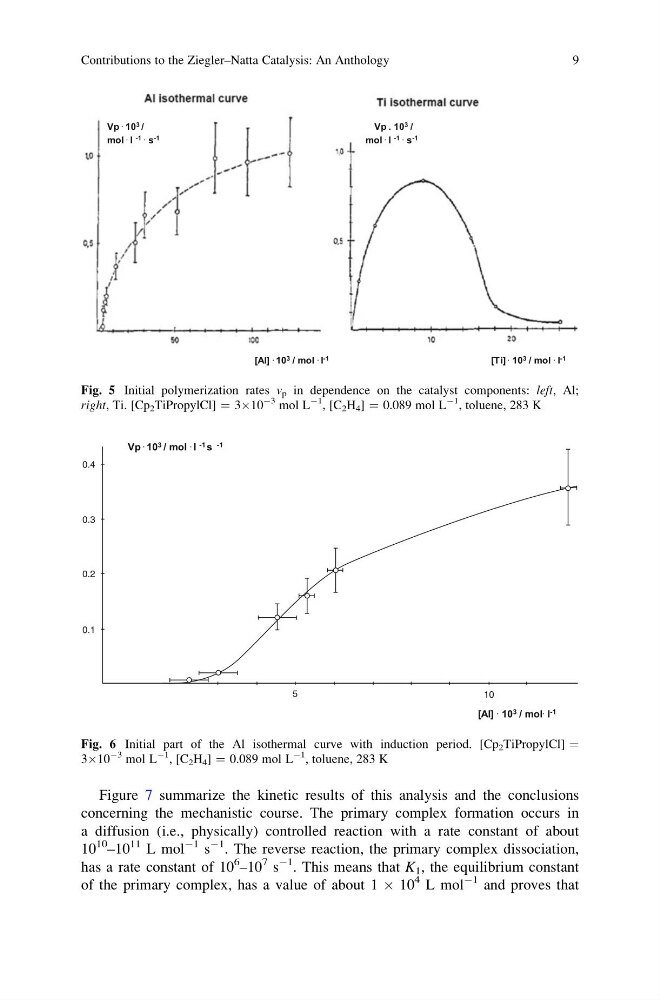
Fig. 6 Initial part of the Al isothermal curve with induction period. [Cp 2 TiPropylCl] ¼
3Â10
À3 mol L
À1
, [C 2 H 4 ] ¼ 0.089 mol L
À1
, toluene, 283 K
Vp . 10 3 /
mol . l -1 . s -1
mol . l -1 . s -1
Vp . 10 3 /
[Al] . 10 3 / mol . l -1
[Ti] . 10 3 / mol . l -1
Fig. 5 Initial polymerization rates v p in dependence on the catalyst components: left, Al;
right, Ti. [Cp 2 TiPropylCl] ¼ 3Â10
À3 mol L
À1
, [C 2 H 4 ] ¼ 0.089 mol L
À1
, toluene, 283 K
Contributions to the Ziegler–Natta Catalysis: An Anthology
9
concerning the mechanistic course. The primary complex formation occurs in
a diffusion (i.e., physically) controlled reaction with a rate constant of about
10
10 –10
11 L mol
À1 s
À1 . The reverse reaction, the primary complex dissociation,
has a rate constant of 10
6 –10
7 s
À1 . This means that K 1 , the equilibrium constant
of the primary complex, has a value of about 1 Â 10
4 L mol
À1 and proves that
0.4
0.3
0.2
0.1
5
10
Vp . 10 3 / mol . l -1 s -1
[Al] . 10 3 / mol . l -1
Fig. 6 Initial part of the Al isothermal curve with induction period. [Cp 2 TiPropylCl] ¼
3Â10
À3 mol L
À1
, [C 2 H 4 ] ¼ 0.089 mol L
À1
, toluene, 283 K
Vp . 10 3 /
mol . l -1 . s -1
mol . l -1 . s -1
Vp . 10 3 /
[Al] . 10 3 / mol . l -1
[Ti] . 10 3 / mol . l -1
Fig. 5 Initial polymerization rates v p in dependence on the catalyst components: left, Al;
right, Ti. [Cp 2 TiPropylCl] ¼ 3Â10
À3 mol L
À1
, [C 2 H 4 ] ¼ 0.089 mol L
À1
, toluene, 283 K
Contributions to the Ziegler–Natta Catalysis: An Anthology
9