

and three for Cr(II)/S948-800 (ca. 2,190, 2,187, and 2,180 cm
À1
), shown in Fig. 17.
After deconvolution of the IR spectrum of Cr(II)/S948-500 catalyst, a third peak
at 2,187 cm
À1 was also observed. Furthermore, the results of the IR deconvolution
showed that the area ratio of the peaks at ca. 2,190 and 2,180 cm
À1 was constant at
2.0 for both catalysts, which was not related to the variations in the pretreating
temperature for silica or the evacuation time of adsorbed CO. We assumed that
these two peaks (ca. 2,190 and 2,180 cm
À1
) can be attributed to the symmetric and
asymmetric stretching of the dicarbonyl species (SiO) 2 Cr(CO) 2 while the other
peak at ca. 2,187 cm
À1 was assigned to the monocarbonyl species (SiO) 2 Cr(CO).
The speculated presence of dicarbonyl and monocarbonyl species on the silica
surface was further confirmed by ONIOM calculations. The model cut from the
(100) face of β-cristobalite was applied to mimic the local structures of the silica
surface. Two different molecular models with replaceable and irreplaceable siloxane ligand were built for the dicarbonyl and monocarbonyl species, respectively, as
shown in Fig. 18. The calculated relative shifting for the symmetric and asymmetric
CO stretching was 11 cm
À1 , very close to the experimental value of 12 cm
À1 , which
revealed information on the local coordination environment of the Cr(II) site (see
structures 5e and 6e in Scheme 11).
For more direct evidence, an EXAFS analysis was performed for the model
catalysts. Figure 19 shows that the fitting in k and R space was quite good, and the
detailed structural parameters of the model for this fitting are presented in
Scheme 11. The main difference between the catalysts was that the coordination
numbers for the first shell of Cr(II) were four for Cr(II)/S948-500 and three for Cr
(II)/S948-800, varying in the coordination number of siloxane ligand from the silica
surface. A smaller average number of coordinated siloxane ligands, resulting in a
great difference in the bonding of the two silanolate ligands, might be the key to the
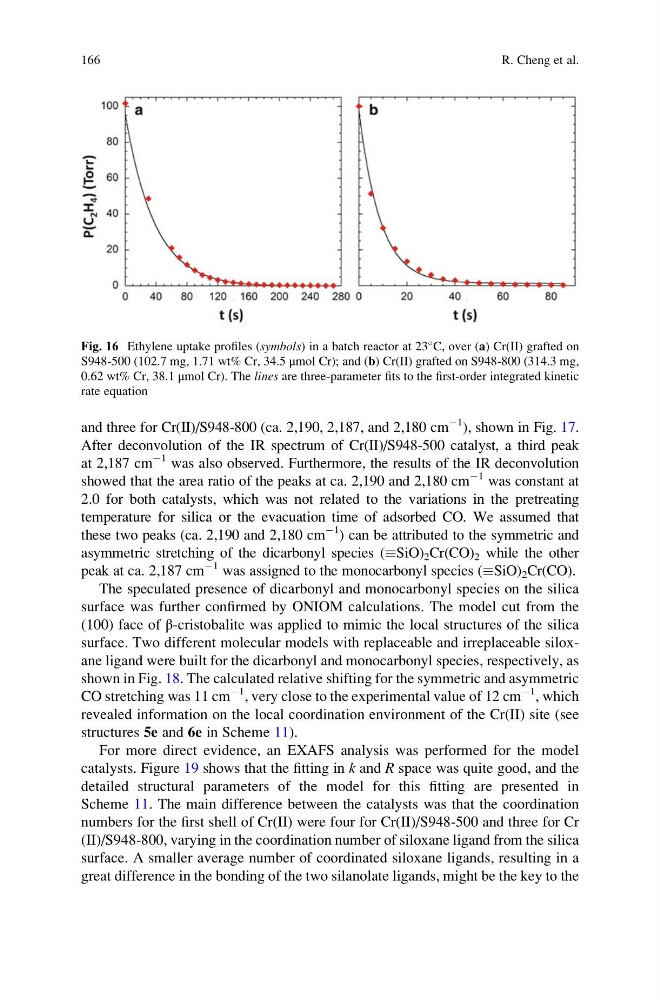
Fig. 16 Ethylene uptake profiles (symbols) in a batch reactor at 23
C, over (a) Cr(II) grafted on
S948-500 (102.7 mg, 1.71 wt% Cr, 34.5 μmol Cr); and (b) Cr(II) grafted on S948-800 (314.3 mg,
0.62 wt% Cr, 38.1 μmol Cr). The lines are three-parameter fits to the first-order integrated kinetic
rate equation
166
R. Cheng et al.
À1
), shown in Fig. 17.
After deconvolution of the IR spectrum of Cr(II)/S948-500 catalyst, a third peak
at 2,187 cm
À1 was also observed. Furthermore, the results of the IR deconvolution
showed that the area ratio of the peaks at ca. 2,190 and 2,180 cm
À1 was constant at
2.0 for both catalysts, which was not related to the variations in the pretreating
temperature for silica or the evacuation time of adsorbed CO. We assumed that
these two peaks (ca. 2,190 and 2,180 cm
À1
) can be attributed to the symmetric and
asymmetric stretching of the dicarbonyl species (SiO) 2 Cr(CO) 2 while the other
peak at ca. 2,187 cm
À1 was assigned to the monocarbonyl species (SiO) 2 Cr(CO).
The speculated presence of dicarbonyl and monocarbonyl species on the silica
surface was further confirmed by ONIOM calculations. The model cut from the
(100) face of β-cristobalite was applied to mimic the local structures of the silica
surface. Two different molecular models with replaceable and irreplaceable siloxane ligand were built for the dicarbonyl and monocarbonyl species, respectively, as
shown in Fig. 18. The calculated relative shifting for the symmetric and asymmetric
CO stretching was 11 cm
À1 , very close to the experimental value of 12 cm
À1 , which
revealed information on the local coordination environment of the Cr(II) site (see
structures 5e and 6e in Scheme 11).
For more direct evidence, an EXAFS analysis was performed for the model
catalysts. Figure 19 shows that the fitting in k and R space was quite good, and the
detailed structural parameters of the model for this fitting are presented in
Scheme 11. The main difference between the catalysts was that the coordination
numbers for the first shell of Cr(II) were four for Cr(II)/S948-500 and three for Cr
(II)/S948-800, varying in the coordination number of siloxane ligand from the silica
surface. A smaller average number of coordinated siloxane ligands, resulting in a
great difference in the bonding of the two silanolate ligands, might be the key to the
Fig. 16 Ethylene uptake profiles (symbols) in a batch reactor at 23
C, over (a) Cr(II) grafted on
S948-500 (102.7 mg, 1.71 wt% Cr, 34.5 μmol Cr); and (b) Cr(II) grafted on S948-800 (314.3 mg,
0.62 wt% Cr, 38.1 μmol Cr). The lines are three-parameter fits to the first-order integrated kinetic
rate equation
166
R. Cheng et al.