

23.1
can be obtained by combining all those efficiencies.
Many different methods can be used for water splitting. In this chapter we will
discuss two methods: electrolysis of water and photoelectrochemical water splitting.
Electrolysis of water
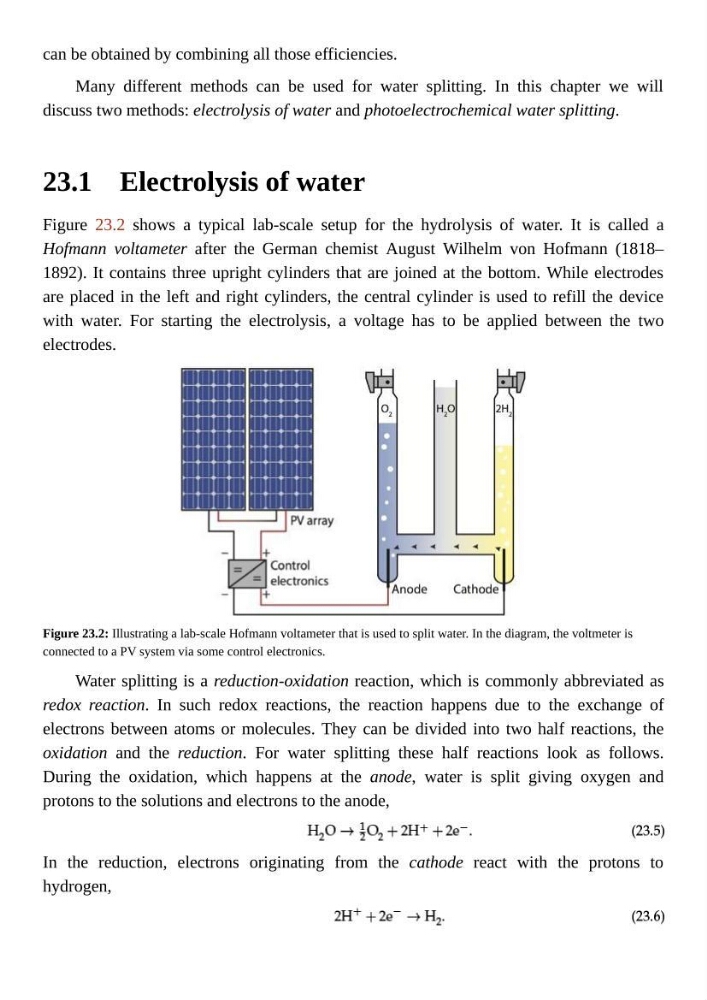
Figure 23.2 shows a typical lab-scale setup for the hydrolysis of water. It is called a
Hofmann voltameter after the German chemist August Wilhelm von Hofmann (1818–
1892). It contains three upright cylinders that are joined at the bottom. While electrodes
are placed in the left and right cylinders, the central cylinder is used to refill the device
with water. For starting the electrolysis, a voltage has to be applied between the two
electrodes.
Figure 23.2: Illustrating a lab-scale Hofmann voltameter that is used to split water. In the diagram, the voltmeter is
connected to a PV system via some control electronics.
Water splitting is a reduction-oxidation reaction, which is commonly abbreviated as
redox reaction. In such redox reactions, the reaction happens due to the exchange of
electrons between atoms or molecules. They can be divided into two half reactions, the
oxidation and the reduction. For water splitting these half reactions look as follows.
During the oxidation, which happens at the anode, water is split giving oxygen and
protons to the solutions and electrons to the anode,
In the reduction, electrons originating from the cathode react with the protons to
hydrogen,
can be obtained by combining all those efficiencies.
Many different methods can be used for water splitting. In this chapter we will
discuss two methods: electrolysis of water and photoelectrochemical water splitting.
Electrolysis of water
Figure 23.2 shows a typical lab-scale setup for the hydrolysis of water. It is called a
Hofmann voltameter after the German chemist August Wilhelm von Hofmann (1818–
1892). It contains three upright cylinders that are joined at the bottom. While electrodes
are placed in the left and right cylinders, the central cylinder is used to refill the device
with water. For starting the electrolysis, a voltage has to be applied between the two
electrodes.
Figure 23.2: Illustrating a lab-scale Hofmann voltameter that is used to split water. In the diagram, the voltmeter is
connected to a PV system via some control electronics.
Water splitting is a reduction-oxidation reaction, which is commonly abbreviated as
redox reaction. In such redox reactions, the reaction happens due to the exchange of
electrons between atoms or molecules. They can be divided into two half reactions, the
oxidation and the reduction. For water splitting these half reactions look as follows.
During the oxidation, which happens at the anode, water is split giving oxygen and
protons to the solutions and electrons to the anode,
In the reduction, electrons originating from the cathode react with the protons to
hydrogen,