

22.2.1
or used directly. The amount of hot water produced by a solar water heater throughout the
year depends on the type and size of the solar collector array, the size of the water storage,
the amount of sunshine available at the site and the seasonal hot water demand pattern.
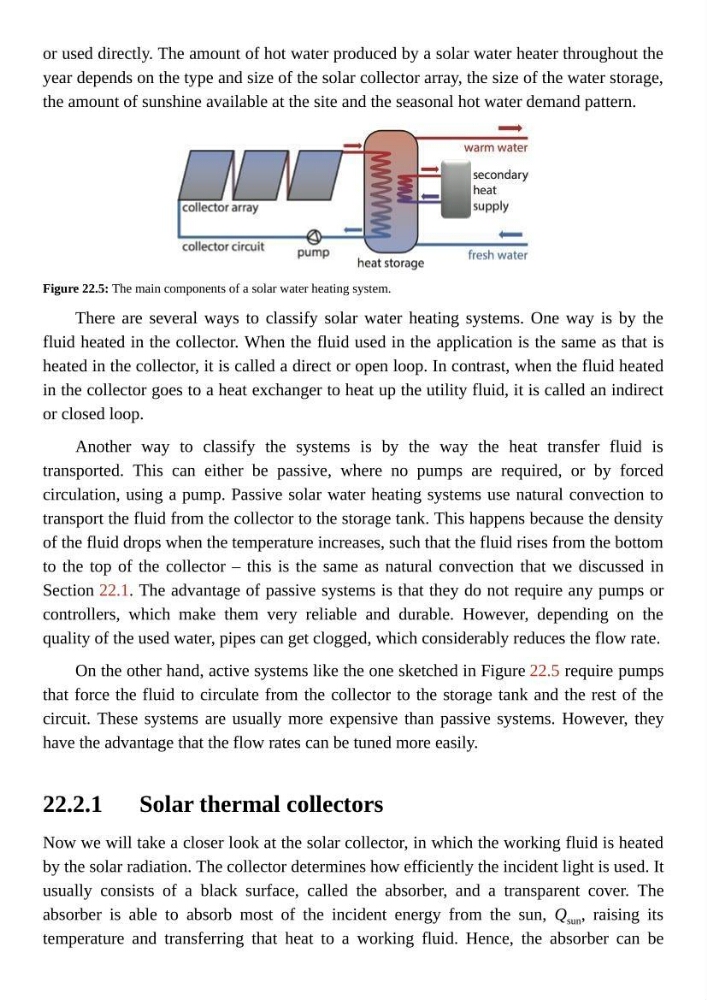
Figure 22.5: The main components of a solar water heating system.
There are several ways to classify solar water heating systems. One way is by the
fluid heated in the collector. When the fluid used in the application is the same as that is
heated in the collector, it is called a direct or open loop. In contrast, when the fluid heated
in the collector goes to a heat exchanger to heat up the utility fluid, it is called an indirect
or closed loop.
Another way to classify the systems is by the way the heat transfer fluid is
transported. This can either be passive, where no pumps are required, or by forced
circulation, using a pump. Passive solar water heating systems use natural convection to
transport the fluid from the collector to the storage tank. This happens because the density
of the fluid drops when the temperature increases, such that the fluid rises from the bottom
to the top of the collector – this is the same as natural convection that we discussed in
Section 22.1. The advantage of passive systems is that they do not require any pumps or
controllers, which make them very reliable and durable. However, depending on the
quality of the used water, pipes can get clogged, which considerably reduces the flow rate.
On the other hand, active systems like the one sketched in Figure 22.5 require pumps
that force the fluid to circulate from the collector to the storage tank and the rest of the
circuit. These systems are usually more expensive than passive systems. However, they
have the advantage that the flow rates can be tuned more easily.
Solar thermal collectors
Now we will take a closer look at the solar collector, in which the working fluid is heated
by the solar radiation. The collector determines how efficiently the incident light is used. It
usually consists of a black surface, called the absorber, and a transparent cover. The
absorber is able to absorb most of the incident energy from the sun, Q sun , raising its
temperature and transferring that heat to a working fluid. Hence, the absorber can be
or used directly. The amount of hot water produced by a solar water heater throughout the
year depends on the type and size of the solar collector array, the size of the water storage,
the amount of sunshine available at the site and the seasonal hot water demand pattern.
Figure 22.5: The main components of a solar water heating system.
There are several ways to classify solar water heating systems. One way is by the
fluid heated in the collector. When the fluid used in the application is the same as that is
heated in the collector, it is called a direct or open loop. In contrast, when the fluid heated
in the collector goes to a heat exchanger to heat up the utility fluid, it is called an indirect
or closed loop.
Another way to classify the systems is by the way the heat transfer fluid is
transported. This can either be passive, where no pumps are required, or by forced
circulation, using a pump. Passive solar water heating systems use natural convection to
transport the fluid from the collector to the storage tank. This happens because the density
of the fluid drops when the temperature increases, such that the fluid rises from the bottom
to the top of the collector – this is the same as natural convection that we discussed in
Section 22.1. The advantage of passive systems is that they do not require any pumps or
controllers, which make them very reliable and durable. However, depending on the
quality of the used water, pipes can get clogged, which considerably reduces the flow rate.
On the other hand, active systems like the one sketched in Figure 22.5 require pumps
that force the fluid to circulate from the collector to the storage tank and the rest of the
circuit. These systems are usually more expensive than passive systems. However, they
have the advantage that the flow rates can be tuned more easily.
Solar thermal collectors
Now we will take a closer look at the solar collector, in which the working fluid is heated
by the solar radiation. The collector determines how efficiently the incident light is used. It
usually consists of a black surface, called the absorber, and a transparent cover. The
absorber is able to absorb most of the incident energy from the sun, Q sun , raising its
temperature and transferring that heat to a working fluid. Hence, the absorber can be