

21.2.4
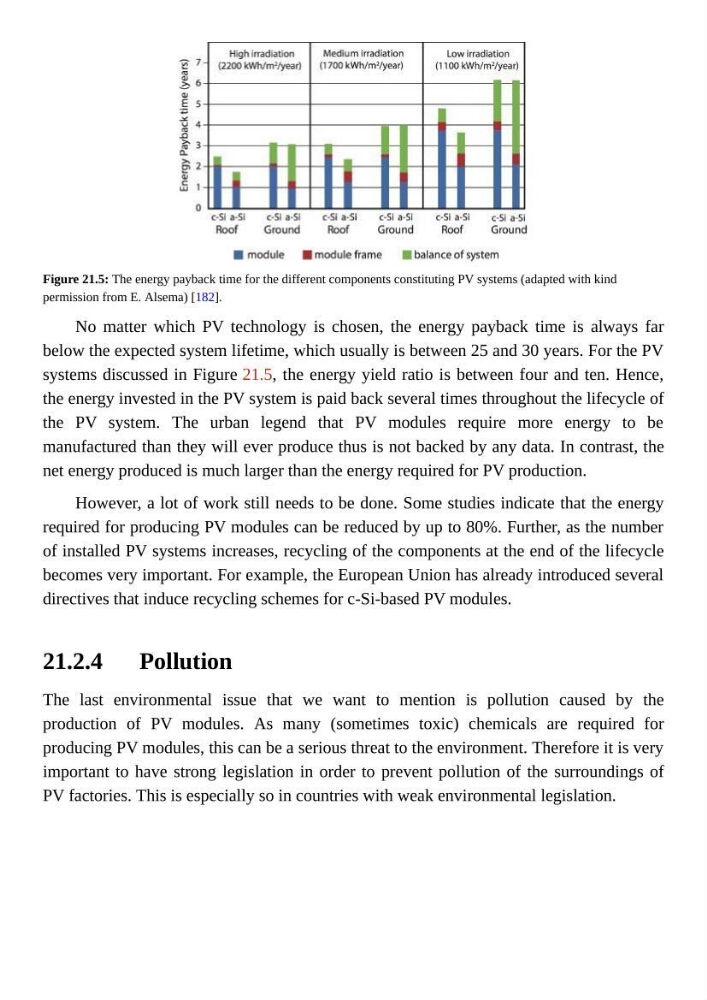
Figure 21.5: The energy payback time for the different components constituting PV systems (adapted with kind
permission from E. Alsema) [182].
No matter which PV technology is chosen, the energy payback time is always far
below the expected system lifetime, which usually is between 25 and 30 years. For the PV
systems discussed in Figure 21.5, the energy yield ratio is between four and ten. Hence,
the energy invested in the PV system is paid back several times throughout the lifecycle of
the PV system. The urban legend that PV modules require more energy to be
manufactured than they will ever produce thus is not backed by any data. In contrast, the
net energy produced is much larger than the energy required for PV production.
However, a lot of work still needs to be done. Some studies indicate that the energy
required for producing PV modules can be reduced by up to 80%. Further, as the number
of installed PV systems increases, recycling of the components at the end of the lifecycle
becomes very important. For example, the European Union has already introduced several
directives that induce recycling schemes for c-Si-based PV modules.
Pollution
The last environmental issue that we want to mention is pollution caused by the
production of PV modules. As many (sometimes toxic) chemicals are required for
producing PV modules, this can be a serious threat to the environment. Therefore it is very
important to have strong legislation in order to prevent pollution of the surroundings of
PV factories. This is especially so in countries with weak environmental legislation.
Figure 21.5: The energy payback time for the different components constituting PV systems (adapted with kind
permission from E. Alsema) [182].
No matter which PV technology is chosen, the energy payback time is always far
below the expected system lifetime, which usually is between 25 and 30 years. For the PV
systems discussed in Figure 21.5, the energy yield ratio is between four and ten. Hence,
the energy invested in the PV system is paid back several times throughout the lifecycle of
the PV system. The urban legend that PV modules require more energy to be
manufactured than they will ever produce thus is not backed by any data. In contrast, the
net energy produced is much larger than the energy required for PV production.
However, a lot of work still needs to be done. Some studies indicate that the energy
required for producing PV modules can be reduced by up to 80%. Further, as the number
of installed PV systems increases, recycling of the components at the end of the lifecycle
becomes very important. For example, the European Union has already introduced several
directives that induce recycling schemes for c-Si-based PV modules.
Pollution
The last environmental issue that we want to mention is pollution caused by the
production of PV modules. As many (sometimes toxic) chemicals are required for
producing PV modules, this can be a serious threat to the environment. Therefore it is very
important to have strong legislation in order to prevent pollution of the surroundings of
PV factories. This is especially so in countries with weak environmental legislation.