

19.1.3
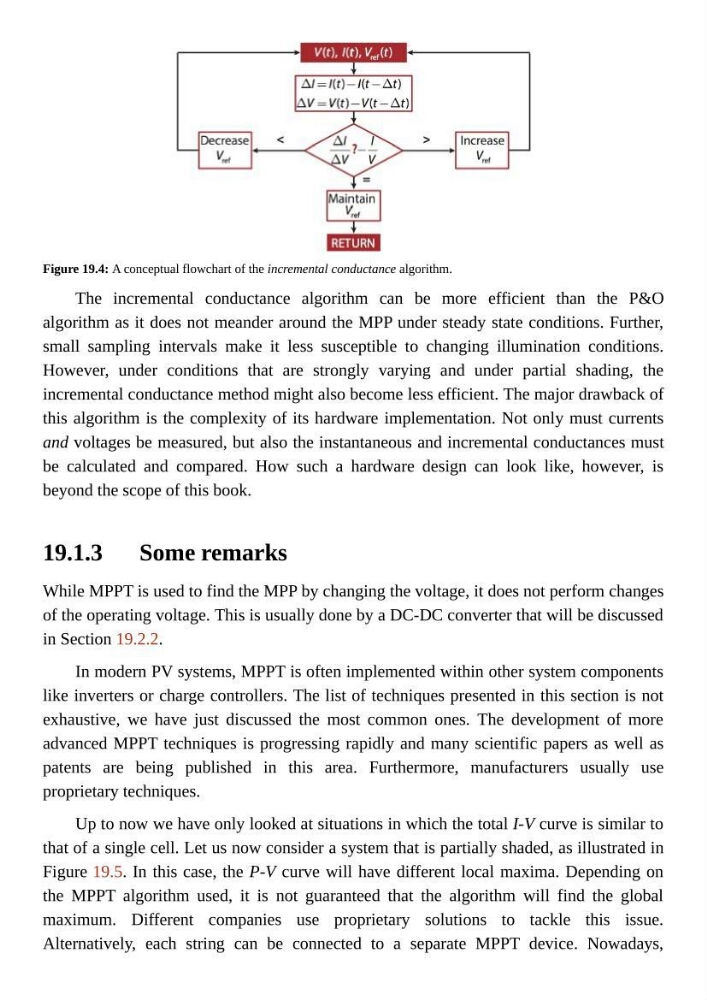
Figure 19.4: A conceptual flowchart of the incremental conductance algorithm.
The incremental conductance algorithm can be more efficient than the P&O
algorithm as it does not meander around the MPP under steady state conditions. Further,
small sampling intervals make it less susceptible to changing illumination conditions.
However, under conditions that are strongly varying and under partial shading, the
incremental conductance method might also become less efficient. The major drawback of
this algorithm is the complexity of its hardware implementation. Not only must currents
and voltages be measured, but also the instantaneous and incremental conductances must
be calculated and compared. How such a hardware design can look like, however, is
beyond the scope of this book.
Some remarks
While MPPT is used to find the MPP by changing the voltage, it does not perform changes
of the operating voltage. This is usually done by a DC-DC converter that will be discussed
in Section 19.2.2.
In modern PV systems, MPPT is often implemented within other system components
like inverters or charge controllers. The list of techniques presented in this section is not
exhaustive, we have just discussed the most common ones. The development of more
advanced MPPT techniques is progressing rapidly and many scientific papers as well as
patents are being published in this area. Furthermore, manufacturers usually use
proprietary techniques.
Up to now we have only looked at situations in which the total I-V curve is similar to
that of a single cell. Let us now consider a system that is partially shaded, as illustrated in
Figure 19.5. In this case, the P-V curve will have different local maxima. Depending on
the MPPT algorithm used, it is not guaranteed that the algorithm will find the global
maximum. Different companies use proprietary solutions to tackle this issue.
Alternatively, each string can be connected to a separate MPPT device. Nowadays,
Figure 19.4: A conceptual flowchart of the incremental conductance algorithm.
The incremental conductance algorithm can be more efficient than the P&O
algorithm as it does not meander around the MPP under steady state conditions. Further,
small sampling intervals make it less susceptible to changing illumination conditions.
However, under conditions that are strongly varying and under partial shading, the
incremental conductance method might also become less efficient. The major drawback of
this algorithm is the complexity of its hardware implementation. Not only must currents
and voltages be measured, but also the instantaneous and incremental conductances must
be calculated and compared. How such a hardware design can look like, however, is
beyond the scope of this book.
Some remarks
While MPPT is used to find the MPP by changing the voltage, it does not perform changes
of the operating voltage. This is usually done by a DC-DC converter that will be discussed
in Section 19.2.2.
In modern PV systems, MPPT is often implemented within other system components
like inverters or charge controllers. The list of techniques presented in this section is not
exhaustive, we have just discussed the most common ones. The development of more
advanced MPPT techniques is progressing rapidly and many scientific papers as well as
patents are being published in this area. Furthermore, manufacturers usually use
proprietary techniques.
Up to now we have only looked at situations in which the total I-V curve is similar to
that of a single cell. Let us now consider a system that is partially shaded, as illustrated in
Figure 19.5. In this case, the P-V curve will have different local maxima. Depending on
the MPPT algorithm used, it is not guaranteed that the algorithm will find the global
maximum. Different companies use proprietary solutions to tackle this issue.
Alternatively, each string can be connected to a separate MPPT device. Nowadays,