

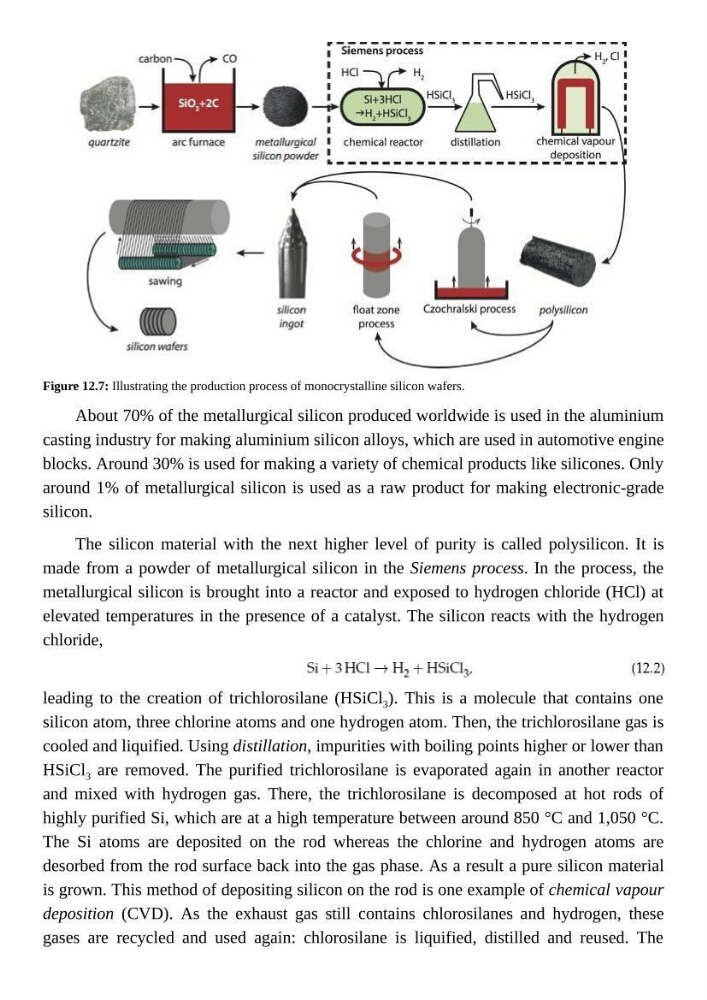
Figure 12.7: Illustrating the production process of monocrystalline silicon wafers.
About 70% of the metallurgical silicon produced worldwide is used in the aluminium
casting industry for making aluminium silicon alloys, which are used in automotive engine
blocks. Around 30% is used for making a variety of chemical products like silicones. Only
around 1% of metallurgical silicon is used as a raw product for making electronic-grade
silicon.
The silicon material with the next higher level of purity is called polysilicon. It is
made from a powder of metallurgical silicon in the Siemens process. In the process, the
metallurgical silicon is brought into a reactor and exposed to hydrogen chloride (HCl) at
elevated temperatures in the presence of a catalyst. The silicon reacts with the hydrogen
chloride,
leading to the creation of trichlorosilane (HSiCl 3 ). This is a molecule that contains one
silicon atom, three chlorine atoms and one hydrogen atom. Then, the trichlorosilane gas is
cooled and liquified. Using distillation, impurities with boiling points higher or lower than
HSiCl 3 are removed. The purified trichlorosilane is evaporated again in another reactor
and mixed with hydrogen gas. There, the trichlorosilane is decomposed at hot rods of
highly purified Si, which are at a high temperature between around 850 °C and 1,050 °C.
The Si atoms are deposited on the rod whereas the chlorine and hydrogen atoms are
desorbed from the rod surface back into the gas phase. As a result a pure silicon material
is grown. This method of depositing silicon on the rod is one example of chemical vapour
deposition (CVD). As the exhaust gas still contains chlorosilanes and hydrogen, these
gases are recycled and used again: chlorosilane is liquified, distilled and reused. The
About 70% of the metallurgical silicon produced worldwide is used in the aluminium
casting industry for making aluminium silicon alloys, which are used in automotive engine
blocks. Around 30% is used for making a variety of chemical products like silicones. Only
around 1% of metallurgical silicon is used as a raw product for making electronic-grade
silicon.
The silicon material with the next higher level of purity is called polysilicon. It is
made from a powder of metallurgical silicon in the Siemens process. In the process, the
metallurgical silicon is brought into a reactor and exposed to hydrogen chloride (HCl) at
elevated temperatures in the presence of a catalyst. The silicon reacts with the hydrogen
chloride,
leading to the creation of trichlorosilane (HSiCl 3 ). This is a molecule that contains one
silicon atom, three chlorine atoms and one hydrogen atom. Then, the trichlorosilane gas is
cooled and liquified. Using distillation, impurities with boiling points higher or lower than
HSiCl 3 are removed. The purified trichlorosilane is evaporated again in another reactor
and mixed with hydrogen gas. There, the trichlorosilane is decomposed at hot rods of
highly purified Si, which are at a high temperature between around 850 °C and 1,050 °C.
The Si atoms are deposited on the rod whereas the chlorine and hydrogen atoms are
desorbed from the rod surface back into the gas phase. As a result a pure silicon material
is grown. This method of depositing silicon on the rod is one example of chemical vapour
deposition (CVD). As the exhaust gas still contains chlorosilanes and hydrogen, these
gases are recycled and used again: chlorosilane is liquified, distilled and reused. The