

210
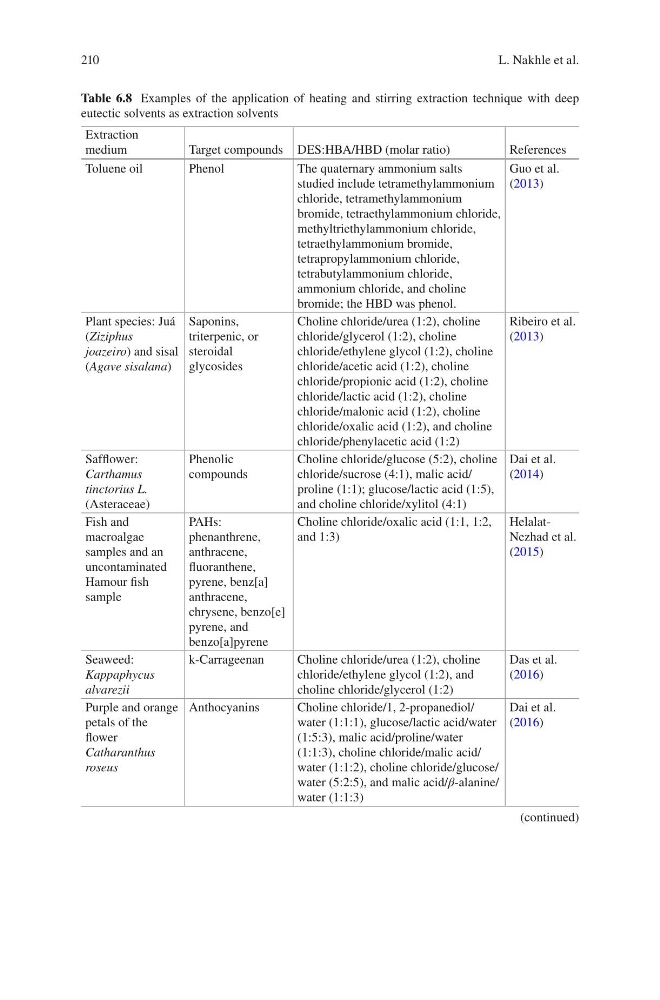
Table 6.8 Examples of the application of heating and stirring extraction technique with deep
eutectic solvents as extraction solvents
Extraction
medium
Target compounds DES:HBA/HBD (molar ratio)
References
Toluene oil
Phenol
The quaternary ammonium salts
studied include tetramethylammonium
chloride, tetramethylammonium
bromide, tetraethylammonium chloride,
methyltriethylammonium chloride,
tetraethylammonium bromide,
tetrapropylammonium chloride,
tetrabutylammonium chloride,
ammonium chloride, and choline
bromide; the HBD was phenol.
Guo et al.
(2013)
Plant species: Juá
(Ziziphus
joazeiro) and sisal
(Agave sisalana)
Saponins,
triterpenic, or
steroidal
glycosides
Choline chloride/urea (1:2), choline
chloride/glycerol (1:2), choline
chloride/ethylene glycol (1:2), choline
chloride/acetic acid (1:2), choline
chloride/propionic acid (1:2), choline
chloride/lactic acid (1:2), choline
chloride/malonic acid (1:2), choline
chloride/oxalic acid (1:2), and choline
chloride/phenylacetic acid (1:2)
Ribeiro et al.
(2013)
Safflower:
Carthamus
tinctorius L.
(Asteraceae)
Phenolic
compounds
Choline chloride/glucose (5:2), choline
chloride/sucrose (4:1), malic acid/
proline (1:1); glucose/lactic acid (1:5),
and choline chloride/xylitol (4:1)
Dai et al.
(2014)
Fish and
macroalgae
samples and an
uncontaminated
Hamour fish
sample
PAHs:
phenanthrene,
anthracene,
fluoranthene,
pyrene, benz[a]
anthracene,
chrysene, benzo[e]
pyrene, and
benzo[a]pyrene
Choline chloride/oxalic acid (1:1, 1:2,
and 1:3)
HelalatNezhad et al.
(2015)
Seaweed:
Kappaphycus
alvarezii
k-Carrageenan
Choline chloride/urea (1:2), choline
chloride/ethylene glycol (1:2), and
choline chloride/glycerol (1:2)
Das et al.
(2016)
Purple and orange
petals of the
flower
Catharanthus
roseus
Anthocyanins
Choline chloride/1, 2-propanediol/
water (1:1:1), glucose/lactic acid/water
(1:5:3), malic acid/proline/water
(1:1:3), choline chloride/malic acid/
water (1:1:2), choline chloride/glucose/
water (5:2:5), and malic acid/β-alanine/
water (1:1:3)
Dai et al.
(2016)
(continued)
L. Nakhle et al.
Table 6.8 Examples of the application of heating and stirring extraction technique with deep
eutectic solvents as extraction solvents
Extraction
medium
Target compounds DES:HBA/HBD (molar ratio)
References
Toluene oil
Phenol
The quaternary ammonium salts
studied include tetramethylammonium
chloride, tetramethylammonium
bromide, tetraethylammonium chloride,
methyltriethylammonium chloride,
tetraethylammonium bromide,
tetrapropylammonium chloride,
tetrabutylammonium chloride,
ammonium chloride, and choline
bromide; the HBD was phenol.
Guo et al.
(2013)
Plant species: Juá
(Ziziphus
joazeiro) and sisal
(Agave sisalana)
Saponins,
triterpenic, or
steroidal
glycosides
Choline chloride/urea (1:2), choline
chloride/glycerol (1:2), choline
chloride/ethylene glycol (1:2), choline
chloride/acetic acid (1:2), choline
chloride/propionic acid (1:2), choline
chloride/lactic acid (1:2), choline
chloride/malonic acid (1:2), choline
chloride/oxalic acid (1:2), and choline
chloride/phenylacetic acid (1:2)
Ribeiro et al.
(2013)
Safflower:
Carthamus
tinctorius L.
(Asteraceae)
Phenolic
compounds
Choline chloride/glucose (5:2), choline
chloride/sucrose (4:1), malic acid/
proline (1:1); glucose/lactic acid (1:5),
and choline chloride/xylitol (4:1)
Dai et al.
(2014)
Fish and
macroalgae
samples and an
uncontaminated
Hamour fish
sample
PAHs:
phenanthrene,
anthracene,
fluoranthene,
pyrene, benz[a]
anthracene,
chrysene, benzo[e]
pyrene, and
benzo[a]pyrene
Choline chloride/oxalic acid (1:1, 1:2,
and 1:3)
HelalatNezhad et al.
(2015)
Seaweed:
Kappaphycus
alvarezii
k-Carrageenan
Choline chloride/urea (1:2), choline
chloride/ethylene glycol (1:2), and
choline chloride/glycerol (1:2)
Das et al.
(2016)
Purple and orange
petals of the
flower
Catharanthus
roseus
Anthocyanins
Choline chloride/1, 2-propanediol/
water (1:1:1), glucose/lactic acid/water
(1:5:3), malic acid/proline/water
(1:1:3), choline chloride/malic acid/
water (1:1:2), choline chloride/glucose/
water (5:2:5), and malic acid/β-alanine/
water (1:1:3)
Dai et al.
(2016)
(continued)
L. Nakhle et al.