

205
Dai et al. (2016) used natural deep eutectic solvent to extract anthocyanins from
purple and orange petals of Catharanthus roseus. This method was compared with
ultrasound extraction and ultrasound extraction with heating. Among these three
methods, the least efficient one was the ultrasound extraction method at 25 °C. But
with ultrasound extraction with heating, an improvement of the yield of 2–20% was
observed. The best extraction yield was obtained by heating and stirring at 40 °C,
and it was 35–55% greater than that obtained with sonication at 25 °C (Dai et al.
2016). Also, Peng et al. (2018) obtained an improved yield of extracted rutin using
deep eutectic solvent and water (18.1%) compared with the methanol-water solution or ethanol-water solution (60% water). The yellow rutin powder was obtained
with a yield of 62.7% with purity higher than 95%. The extracted rutin has an excellent antioxidant activity (Peng et al. 2018).
6.2.6 Solid-Phase Microextraction
Solid-phase microextraction is based on the partition of the analytes between a liquid solution (sample matrix or extract) and a viscous liquid immobilized on a solid
support (sorbent phase). Different types of sorbents are used for the extraction of a
wide range of volatile compounds, via absorption/adsorption mechanism. The
choice of the sorbent depends on the target analytes and the type of interactions. It
should have large surface area, high purity, and chemical stability in the conditions
of extraction. This technique is rapid, simple, safe, efficient with good recoveries,
and reproducible, and it combines the extraction and the preconcentration steps into
a single step (Karimi et al. 2017). It can be automated and the solvent can be reused.
The solid-phase microextraction is limited for a specific number of commercially
available cartridges, used as sorbents, that are expensive and demand a
Microwave oven
SPME fiber
MAE process
SPME process
GC-MS analysis
Time
Headspace vial
Cambridge pod
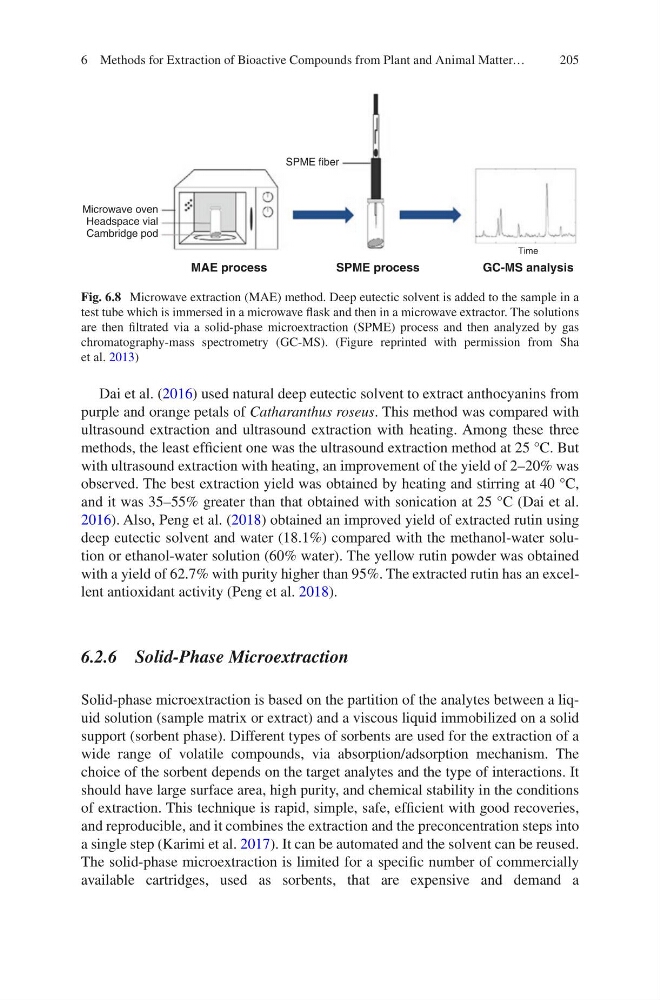
Fig. 6.8 Microwave extraction (MAE) method. Deep eutectic solvent is added to the sample in a
test tube which is immersed in a microwave flask and then in a microwave extractor. The solutions
are then filtrated via a solid-phase microextraction (SPME) process and then analyzed by gas
chromatography-mass spectrometry (GC-MS). (Figure reprinted with permission from Sha
et al. 2013)
6 Methods for Extraction of Bioactive Compounds from Plant and Animal Matter…
Dai et al. (2016) used natural deep eutectic solvent to extract anthocyanins from
purple and orange petals of Catharanthus roseus. This method was compared with
ultrasound extraction and ultrasound extraction with heating. Among these three
methods, the least efficient one was the ultrasound extraction method at 25 °C. But
with ultrasound extraction with heating, an improvement of the yield of 2–20% was
observed. The best extraction yield was obtained by heating and stirring at 40 °C,
and it was 35–55% greater than that obtained with sonication at 25 °C (Dai et al.
2016). Also, Peng et al. (2018) obtained an improved yield of extracted rutin using
deep eutectic solvent and water (18.1%) compared with the methanol-water solution or ethanol-water solution (60% water). The yellow rutin powder was obtained
with a yield of 62.7% with purity higher than 95%. The extracted rutin has an excellent antioxidant activity (Peng et al. 2018).
6.2.6 Solid-Phase Microextraction
Solid-phase microextraction is based on the partition of the analytes between a liquid solution (sample matrix or extract) and a viscous liquid immobilized on a solid
support (sorbent phase). Different types of sorbents are used for the extraction of a
wide range of volatile compounds, via absorption/adsorption mechanism. The
choice of the sorbent depends on the target analytes and the type of interactions. It
should have large surface area, high purity, and chemical stability in the conditions
of extraction. This technique is rapid, simple, safe, efficient with good recoveries,
and reproducible, and it combines the extraction and the preconcentration steps into
a single step (Karimi et al. 2017). It can be automated and the solvent can be reused.
The solid-phase microextraction is limited for a specific number of commercially
available cartridges, used as sorbents, that are expensive and demand a
Microwave oven
SPME fiber
MAE process
SPME process
GC-MS analysis
Time
Headspace vial
Cambridge pod
Fig. 6.8 Microwave extraction (MAE) method. Deep eutectic solvent is added to the sample in a
test tube which is immersed in a microwave flask and then in a microwave extractor. The solutions
are then filtrated via a solid-phase microextraction (SPME) process and then analyzed by gas
chromatography-mass spectrometry (GC-MS). (Figure reprinted with permission from Sha
et al. 2013)
6 Methods for Extraction of Bioactive Compounds from Plant and Animal Matter…