

197
6.2.2 Ultrasound Microextraction
Ultrasound microextraction technique is performed under ultrasonic energy that
increases the contact between the sample and the extraction solvent (Fig. 6.7).
Ultrasounds radiation can be applied via water baths or ultrasonic probes. Mainly,
cavitation phenomenon is observed with the generation of bubbles, leading to
increase in pressure and temperature. This allows the disruption of the cell walls,
facilitating solvent penetration into the material and allowing the release of the target compounds (Chanioti and Tzia 2018). The extraction efficiency depends on different factors like ultrasonic conditions (temperature, amplitude, time) and sample
features (matrix, amount, particle size) (Yilmaz and Soylak 2015; Huang et al.
2017; Bosiljkov et al. 2017; Zhou et al. 2018). Advantageously, no dispersive solvent is needed. This technique involves lower volume of deep eutectic solvent
(<500 μL) and shorter time of extraction (<15 min) than liquid-phase microextraction techniques (Bakirtzi et al. 2016; Khezeli et al. 2016; Mouratoglou et al. 2016).
Examples of the application of ultrasound microextraction technique with deep
eutectic solvents as extraction solvents are summarized in Table 6.5.
Similar or larger amounts of flavonoids were extracted using this method with
deep eutectic solvent with relatively low cost, low vapor pressure, and low toxicity
compared to other extraction methods (heating and stirring) using conventional
organic solvents (Bi et al. 2013). Also, higher extraction yield of polysaccharides
was obtained using this method in the optimized conditions in comparison to hot
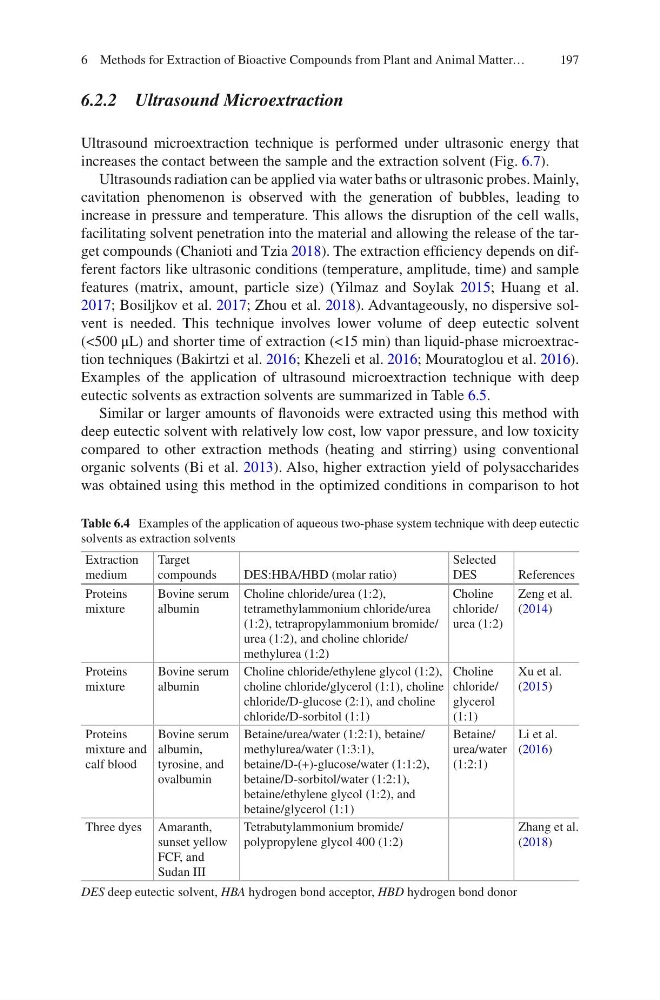
Table 6.4 Examples of the application of aqueous two-phase system technique with deep eutectic
solvents as extraction solvents
Extraction
medium
Target
compounds
DES:HBA/HBD (molar ratio)
Selected
DES
References
Proteins
mixture
Bovine serum
albumin
Choline chloride/urea (1:2),
tetramethylammonium chloride/urea
(1:2), tetrapropylammonium bromide/
urea (1:2), and choline chloride/
methylurea (1:2)
Choline
chloride/
urea (1:2)
Zeng et al.
(2014)
Proteins
mixture
Bovine serum
albumin
Choline chloride/ethylene glycol (1:2),
choline chloride/glycerol (1:1), choline
chloride/D-glucose (2:1), and choline
chloride/D-sorbitol (1:1)
Choline
chloride/
glycerol
(1:1)
Xu et al.
(2015)
Proteins
mixture and
calf blood
Bovine serum
albumin,
tyrosine, and
ovalbumin
Betaine/urea/water (1:2:1), betaine/
methylurea/water (1:3:1),
betaine/D-(+)-glucose/water (1:1:2),
betaine/D-sorbitol/water (1:2:1),
betaine/ethylene glycol (1:2), and
betaine/glycerol (1:1)
Betaine/
urea/water
(1:2:1)
Li et al.
(2016)
Three dyes Amaranth,
sunset yellow
FCF, and
Sudan III
Tetrabutylammonium bromide/
polypropylene glycol 400 (1:2)
Zhang et al.
(2018)
DES deep eutectic solvent, HBA hydrogen bond acceptor, HBD hydrogen bond donor
6 Methods for Extraction of Bioactive Compounds from Plant and Animal Matter…
6.2.2 Ultrasound Microextraction
Ultrasound microextraction technique is performed under ultrasonic energy that
increases the contact between the sample and the extraction solvent (Fig. 6.7).
Ultrasounds radiation can be applied via water baths or ultrasonic probes. Mainly,
cavitation phenomenon is observed with the generation of bubbles, leading to
increase in pressure and temperature. This allows the disruption of the cell walls,
facilitating solvent penetration into the material and allowing the release of the target compounds (Chanioti and Tzia 2018). The extraction efficiency depends on different factors like ultrasonic conditions (temperature, amplitude, time) and sample
features (matrix, amount, particle size) (Yilmaz and Soylak 2015; Huang et al.
2017; Bosiljkov et al. 2017; Zhou et al. 2018). Advantageously, no dispersive solvent is needed. This technique involves lower volume of deep eutectic solvent
(<500 μL) and shorter time of extraction (<15 min) than liquid-phase microextraction techniques (Bakirtzi et al. 2016; Khezeli et al. 2016; Mouratoglou et al. 2016).
Examples of the application of ultrasound microextraction technique with deep
eutectic solvents as extraction solvents are summarized in Table 6.5.
Similar or larger amounts of flavonoids were extracted using this method with
deep eutectic solvent with relatively low cost, low vapor pressure, and low toxicity
compared to other extraction methods (heating and stirring) using conventional
organic solvents (Bi et al. 2013). Also, higher extraction yield of polysaccharides
was obtained using this method in the optimized conditions in comparison to hot
Table 6.4 Examples of the application of aqueous two-phase system technique with deep eutectic
solvents as extraction solvents
Extraction
medium
Target
compounds
DES:HBA/HBD (molar ratio)
Selected
DES
References
Proteins
mixture
Bovine serum
albumin
Choline chloride/urea (1:2),
tetramethylammonium chloride/urea
(1:2), tetrapropylammonium bromide/
urea (1:2), and choline chloride/
methylurea (1:2)
Choline
chloride/
urea (1:2)
Zeng et al.
(2014)
Proteins
mixture
Bovine serum
albumin
Choline chloride/ethylene glycol (1:2),
choline chloride/glycerol (1:1), choline
chloride/D-glucose (2:1), and choline
chloride/D-sorbitol (1:1)
Choline
chloride/
glycerol
(1:1)
Xu et al.
(2015)
Proteins
mixture and
calf blood
Bovine serum
albumin,
tyrosine, and
ovalbumin
Betaine/urea/water (1:2:1), betaine/
methylurea/water (1:3:1),
betaine/D-(+)-glucose/water (1:1:2),
betaine/D-sorbitol/water (1:2:1),
betaine/ethylene glycol (1:2), and
betaine/glycerol (1:1)
Betaine/
urea/water
(1:2:1)
Li et al.
(2016)
Three dyes Amaranth,
sunset yellow
FCF, and
Sudan III
Tetrabutylammonium bromide/
polypropylene glycol 400 (1:2)
Zhang et al.
(2018)
DES deep eutectic solvent, HBA hydrogen bond acceptor, HBD hydrogen bond donor
6 Methods for Extraction of Bioactive Compounds from Plant and Animal Matter…