

191
Also, Moghadam et al. (2018) developed a similar microextraction procedure,
air-agitated emulsification microextraction, based on a low-density deep eutectic
solvent for the extraction of antidepressant drugs from human plasma samples and
pharmaceutical wastewater samples by three types of deep eutectic solvents.
Compared to other conventional techniques, this method proved its ability for accurate analysis of trace levels of drugs close to the therapeutic/toxic ranges (Moghadam
et al. 2018).
For the extraction of rhodamine B, recoveries experiments showed a minimal
efficacy of this method using the optimal deep eutectic solvent (97% extraction
efficacy) compared to solid-phase extraction, magnetic solid-phase extraction methods, and magnetic stirring-assisted dispersive liquid-liquid microextraction using
1-octanol as extraction solvent (Yilmaz and Soylak 2018).
Dispersive liquid-liquid microextraction based on the solidified deep eutectic
solvent method developed by Habibollahi et al. (2018) consists on the rapid addition
of deep eutectic solvent (50 μL): 1-octyl-3-methylimidazolium chloride/1undecanol (1:2 molar ratio) to the sample solution; this forms an emulsion. Next,
NaCl was added to break the emulsion. After vortexing and centrifuging, the fine
droplets of deep eutectic solvent were extracted from the upper phase and subjected
finally to a graphite furnace atomic absorption spectrophotometry analysis.
Compared to other techniques (wet digestion extraction, solid-phase extraction,
cloud point extraction, persistent sample circulation microextraction, continuous
sample drop flow-based microextraction, and dispersive liquid-liquid microextraction using solidified 1-undecanol organic solvent drop), this method, when extracting metals, offers a higher advantage because no disperser solvents are necessary,
which prevents a decrease in the partition coefficients of the metals into the
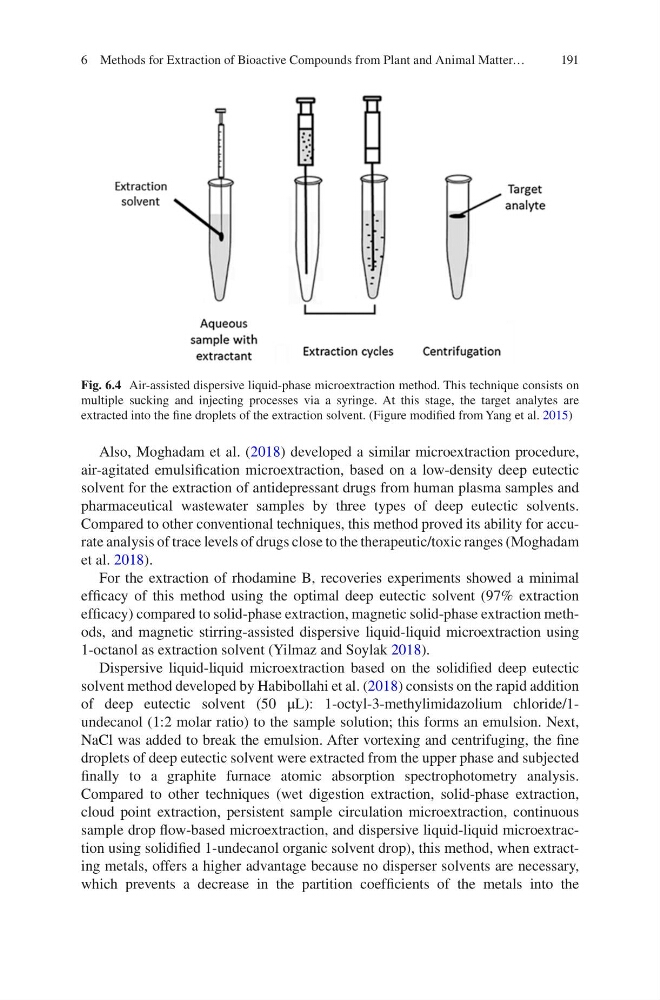
Fig. 6.4 Air-assisted dispersive liquid-phase microextraction method. This technique consists on
multiple sucking and injecting processes via a syringe. At this stage, the target analytes are
extracted into the fine droplets of the extraction solvent. (Figure modified from Yang et al. 2015)
6 Methods for Extraction of Bioactive Compounds from Plant and Animal Matter…
Also, Moghadam et al. (2018) developed a similar microextraction procedure,
air-agitated emulsification microextraction, based on a low-density deep eutectic
solvent for the extraction of antidepressant drugs from human plasma samples and
pharmaceutical wastewater samples by three types of deep eutectic solvents.
Compared to other conventional techniques, this method proved its ability for accurate analysis of trace levels of drugs close to the therapeutic/toxic ranges (Moghadam
et al. 2018).
For the extraction of rhodamine B, recoveries experiments showed a minimal
efficacy of this method using the optimal deep eutectic solvent (97% extraction
efficacy) compared to solid-phase extraction, magnetic solid-phase extraction methods, and magnetic stirring-assisted dispersive liquid-liquid microextraction using
1-octanol as extraction solvent (Yilmaz and Soylak 2018).
Dispersive liquid-liquid microextraction based on the solidified deep eutectic
solvent method developed by Habibollahi et al. (2018) consists on the rapid addition
of deep eutectic solvent (50 μL): 1-octyl-3-methylimidazolium chloride/1undecanol (1:2 molar ratio) to the sample solution; this forms an emulsion. Next,
NaCl was added to break the emulsion. After vortexing and centrifuging, the fine
droplets of deep eutectic solvent were extracted from the upper phase and subjected
finally to a graphite furnace atomic absorption spectrophotometry analysis.
Compared to other techniques (wet digestion extraction, solid-phase extraction,
cloud point extraction, persistent sample circulation microextraction, continuous
sample drop flow-based microextraction, and dispersive liquid-liquid microextraction using solidified 1-undecanol organic solvent drop), this method, when extracting metals, offers a higher advantage because no disperser solvents are necessary,
which prevents a decrease in the partition coefficients of the metals into the
Fig. 6.4 Air-assisted dispersive liquid-phase microextraction method. This technique consists on
multiple sucking and injecting processes via a syringe. At this stage, the target analytes are
extracted into the fine droplets of the extraction solvent. (Figure modified from Yang et al. 2015)
6 Methods for Extraction of Bioactive Compounds from Plant and Animal Matter…