

190
After centrifugation, the deep eutectic solvent can be found in either the upper or the
bottom phase of the tube depending on its density. Being simple, fast, and cheap,
this method has been highly used (Ribeiro et al. 2015).
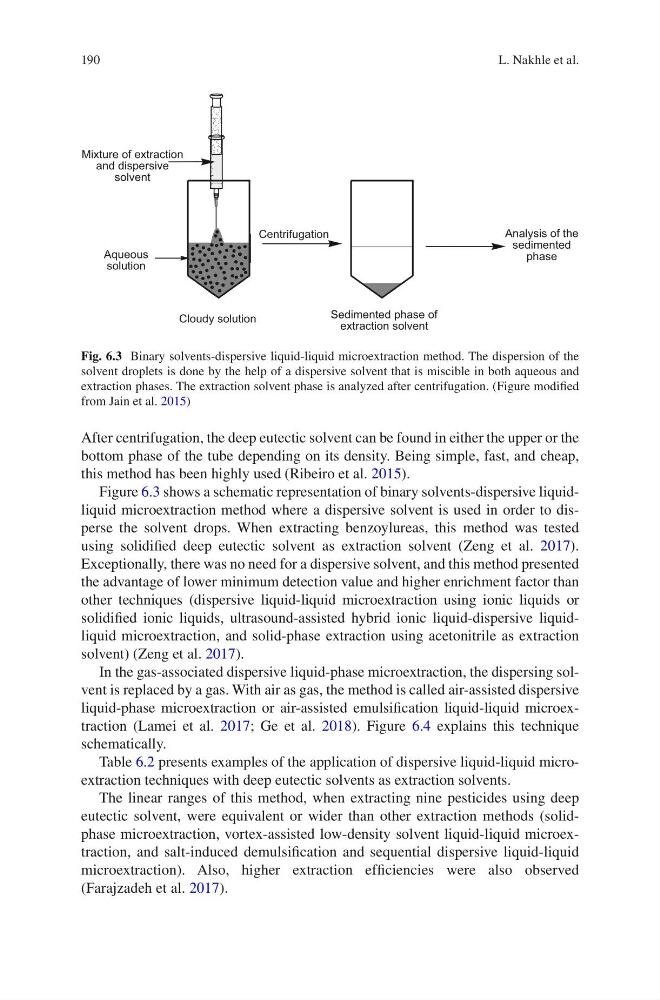
Figure 6.3 shows a schematic representation of binary solvents-dispersive liquidliquid microextraction method where a dispersive solvent is used in order to disperse the solvent drops. When extracting benzoylureas, this method was tested
using solidified deep eutectic solvent as extraction solvent (Zeng et al. 2017).
Exceptionally, there was no need for a dispersive solvent, and this method presented
the advantage of lower minimum detection value and higher enrichment factor than
other techniques (dispersive liquid-liquid microextraction using ionic liquids or
solidified ionic liquids, ultrasound-assisted hybrid ionic liquid-dispersive liquidliquid microextraction, and solid-phase extraction using acetonitrile as extraction
solvent) (Zeng et al. 2017).
In the gas-associated dispersive liquid-phase microextraction, the dispersing solvent is replaced by a gas. With air as gas, the method is called air-assisted dispersive
liquid-phase microextraction or air-assisted emulsification liquid-liquid microextraction (Lamei et al. 2017; Ge et al. 2018). Figure 6.4 explains this technique
schematically.
Table 6.2 presents examples of the application of dispersive liquid-liquid microextraction techniques with deep eutectic solvents as extraction solvents.
The linear ranges of this method, when extracting nine pesticides using deep
eutectic solvent, were equivalent or wider than other extraction methods (solidphase microextraction, vortex-assisted low-density solvent liquid-liquid microextraction, and salt-induced demulsification and sequential dispersive liquid-liquid
microextraction). Also, higher extraction efficiencies were also observed
(Farajzadeh et al. 2017).
Aqueous
solution
Cloudy solution
Mixture of extraction
and dispersive
solvent
Centrifugation
Sedimented phase of
extraction solvent
Analysis of the
sedimented
phase
Fig. 6.3 Binary solvents-dispersive liquid-liquid microextraction method. The dispersion of the
solvent droplets is done by the help of a dispersive solvent that is miscible in both aqueous and
extraction phases. The extraction solvent phase is analyzed after centrifugation. (Figure modified
from Jain et al. 2015)
L. Nakhle et al.
After centrifugation, the deep eutectic solvent can be found in either the upper or the
bottom phase of the tube depending on its density. Being simple, fast, and cheap,
this method has been highly used (Ribeiro et al. 2015).
Figure 6.3 shows a schematic representation of binary solvents-dispersive liquidliquid microextraction method where a dispersive solvent is used in order to disperse the solvent drops. When extracting benzoylureas, this method was tested
using solidified deep eutectic solvent as extraction solvent (Zeng et al. 2017).
Exceptionally, there was no need for a dispersive solvent, and this method presented
the advantage of lower minimum detection value and higher enrichment factor than
other techniques (dispersive liquid-liquid microextraction using ionic liquids or
solidified ionic liquids, ultrasound-assisted hybrid ionic liquid-dispersive liquidliquid microextraction, and solid-phase extraction using acetonitrile as extraction
solvent) (Zeng et al. 2017).
In the gas-associated dispersive liquid-phase microextraction, the dispersing solvent is replaced by a gas. With air as gas, the method is called air-assisted dispersive
liquid-phase microextraction or air-assisted emulsification liquid-liquid microextraction (Lamei et al. 2017; Ge et al. 2018). Figure 6.4 explains this technique
schematically.
Table 6.2 presents examples of the application of dispersive liquid-liquid microextraction techniques with deep eutectic solvents as extraction solvents.
The linear ranges of this method, when extracting nine pesticides using deep
eutectic solvent, were equivalent or wider than other extraction methods (solidphase microextraction, vortex-assisted low-density solvent liquid-liquid microextraction, and salt-induced demulsification and sequential dispersive liquid-liquid
microextraction). Also, higher extraction efficiencies were also observed
(Farajzadeh et al. 2017).
Aqueous
solution
Cloudy solution
Mixture of extraction
and dispersive
solvent
Centrifugation
Sedimented phase of
extraction solvent
Analysis of the
sedimented
phase
Fig. 6.3 Binary solvents-dispersive liquid-liquid microextraction method. The dispersion of the
solvent droplets is done by the help of a dispersive solvent that is miscible in both aqueous and
extraction phases. The extraction solvent phase is analyzed after centrifugation. (Figure modified
from Jain et al. 2015)
L. Nakhle et al.