

172
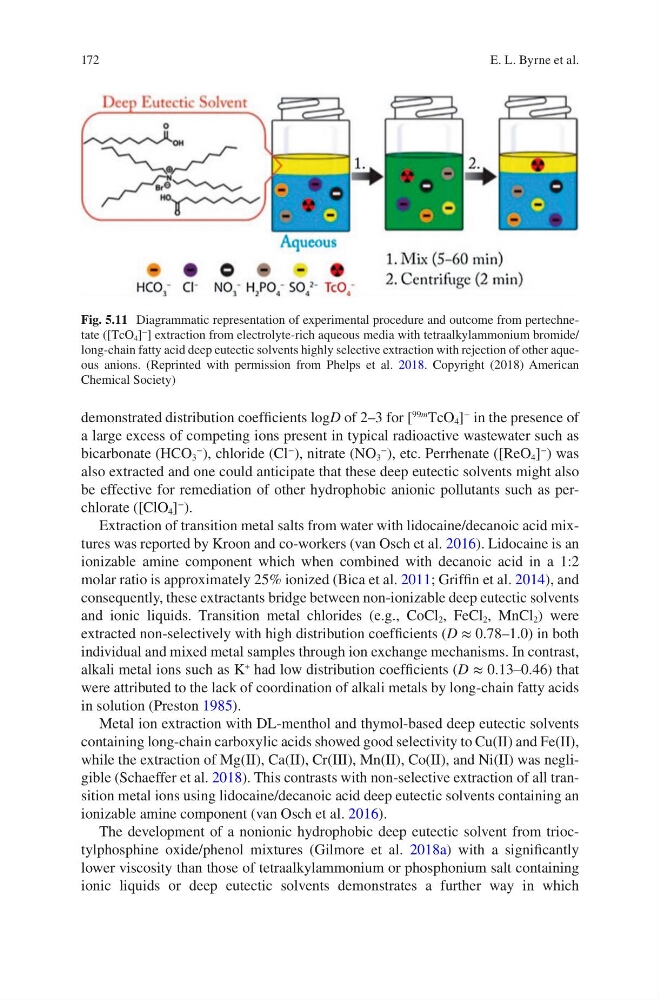
Fig. 5.11 Diagrammatic representation of experimental procedure and outcome from pertechnetate ([TcO 4 ]
−
] extraction from electrolyte-rich aqueous media with tetraalkylammonium bromide/
long-chain fatty acid deep eutectic solvents highly selective extraction with rejection of other aqueous anions. (Reprinted with permission from Phelps et al. 2018. Copyright (2018) American
Chemical Society)
demonstrated distribution coefficients logD of 2–3 for [
99m
TcO 4 ]
−
in the presence of
a large excess of competing ions present in typical radioactive wastewater such as
bicarbonate (HCO 3
−
), chloride (Cl
−
), nitrate (NO 3
−
), etc. Perrhenate ([ReO 4 ]
−
) was
also extracted and one could anticipate that these deep eutectic solvents might also
be effective for remediation of other hydrophobic anionic pollutants such as perchlorate ([ClO 4 ]
−
).
Extraction of transition metal salts from water with lidocaine/decanoic acid mixtures was reported by Kroon and co-workers (van Osch et al. 2016). Lidocaine is an
ionizable amine component which when combined with decanoic acid in a 1:2
molar ratio is approximately 25% ionized (Bica et al. 2011; Griffin et al. 2014), and
consequently, these extractants bridge between non-ionizable deep eutectic solvents
and ionic liquids. Transition metal chlorides (e.g., CoCl 2 , FeCl 2 , MnCl 2 ) were
extracted non-selectively with high distribution coefficients (D ≈ 0.78–1.0) in both
individual and mixed metal samples through ion exchange mechanisms. In contrast,
alkali metal ions such as K
+
had low distribution coefficients (D ≈ 0.13–0.46) that
were attributed to the lack of coordination of alkali metals by long-chain fatty acids
in solution (Preston 1985).
Metal ion extraction with DL-menthol and thymol-based deep eutectic solvents
containing long-chain carboxylic acids showed good selectivity to Cu(II) and Fe(II),
while the extraction of Mg(II), Ca(II), Cr(III), Mn(II), Co(II), and Ni(II) was negligible (Schaeffer et al. 2018). This contrasts with non-selective extraction of all transition metal ions using lidocaine/decanoic acid deep eutectic solvents containing an
ionizable amine component (van Osch et al. 2016).
The development of a nonionic hydrophobic deep eutectic solvent from trioctylphosphine oxide/phenol mixtures (Gilmore et al. 2018a) with a significantly
lower viscosity than those of tetraalkylammonium or phosphonium salt containing
ionic liquids or deep eutectic solvents demonstrates a further way in which
E. L. Byrne et al.
Fig. 5.11 Diagrammatic representation of experimental procedure and outcome from pertechnetate ([TcO 4 ]
−
] extraction from electrolyte-rich aqueous media with tetraalkylammonium bromide/
long-chain fatty acid deep eutectic solvents highly selective extraction with rejection of other aqueous anions. (Reprinted with permission from Phelps et al. 2018. Copyright (2018) American
Chemical Society)
demonstrated distribution coefficients logD of 2–3 for [
99m
TcO 4 ]
−
in the presence of
a large excess of competing ions present in typical radioactive wastewater such as
bicarbonate (HCO 3
−
), chloride (Cl
−
), nitrate (NO 3
−
), etc. Perrhenate ([ReO 4 ]
−
) was
also extracted and one could anticipate that these deep eutectic solvents might also
be effective for remediation of other hydrophobic anionic pollutants such as perchlorate ([ClO 4 ]
−
).
Extraction of transition metal salts from water with lidocaine/decanoic acid mixtures was reported by Kroon and co-workers (van Osch et al. 2016). Lidocaine is an
ionizable amine component which when combined with decanoic acid in a 1:2
molar ratio is approximately 25% ionized (Bica et al. 2011; Griffin et al. 2014), and
consequently, these extractants bridge between non-ionizable deep eutectic solvents
and ionic liquids. Transition metal chlorides (e.g., CoCl 2 , FeCl 2 , MnCl 2 ) were
extracted non-selectively with high distribution coefficients (D ≈ 0.78–1.0) in both
individual and mixed metal samples through ion exchange mechanisms. In contrast,
alkali metal ions such as K
+
had low distribution coefficients (D ≈ 0.13–0.46) that
were attributed to the lack of coordination of alkali metals by long-chain fatty acids
in solution (Preston 1985).
Metal ion extraction with DL-menthol and thymol-based deep eutectic solvents
containing long-chain carboxylic acids showed good selectivity to Cu(II) and Fe(II),
while the extraction of Mg(II), Ca(II), Cr(III), Mn(II), Co(II), and Ni(II) was negligible (Schaeffer et al. 2018). This contrasts with non-selective extraction of all transition metal ions using lidocaine/decanoic acid deep eutectic solvents containing an
ionizable amine component (van Osch et al. 2016).
The development of a nonionic hydrophobic deep eutectic solvent from trioctylphosphine oxide/phenol mixtures (Gilmore et al. 2018a) with a significantly
lower viscosity than those of tetraalkylammonium or phosphonium salt containing
ionic liquids or deep eutectic solvents demonstrates a further way in which
E. L. Byrne et al.