

165
literature benchmarks (Ribeiro et al. 2015). Tryptophan was the only molecule from
this study where the partition coefficient between a 2:1 DL-menthol/lauric acid
deep eutectic solvent and water was positive to the extractant from water (K i = 14.5),
falling within the range of other benchmark solvent that ranged from K i = 4.5 with
1-ethyl-3-methylimidazolium bis(trifluorosulfonylimide) [C 2 mim][NTf 2 ] (Tomé
et al. 2010) to K i = 124 with a 1-allyl-3-methylimidazolium chloride/tripotassium
phosphate [Amim]Cl/K 3 PO 4 aqueous biphasic extraction system (Neves et al. 2009;
Ventura et al. 2009; Ribeiro et al. 2015). Nevertheless, such hydrophobic deep
eutectic solvents based on menthol and organic acids have been reported to be superior to organic solvents (e.g., methanol, ethanol, methanol:chloroform mixtures) for
the extraction of phytocannabinoids (Krízek et al. 2018), highlighting the opportunities to use new, biodegradable, and pharmaceutically acceptable deep eutectic solvents as alternatives to organic solvents in biomolecule extraction.
Verma and co-workers examined short-chain alcohol extraction from aqueous
media with menthol/carboxylic acid deep eutectic solvents, with interest in renewable biofuel production from acetone-butanol-ethanol fermentation where waterrich azeotropes are formed (Verma and Banerjee 2018; Verma et al. 2018).
Distribution coefficients for lower alcohols followed the order butanol (8.9) > propanol (3.2) > ethanol (0.0505), consistent with the hydrophobicity of the
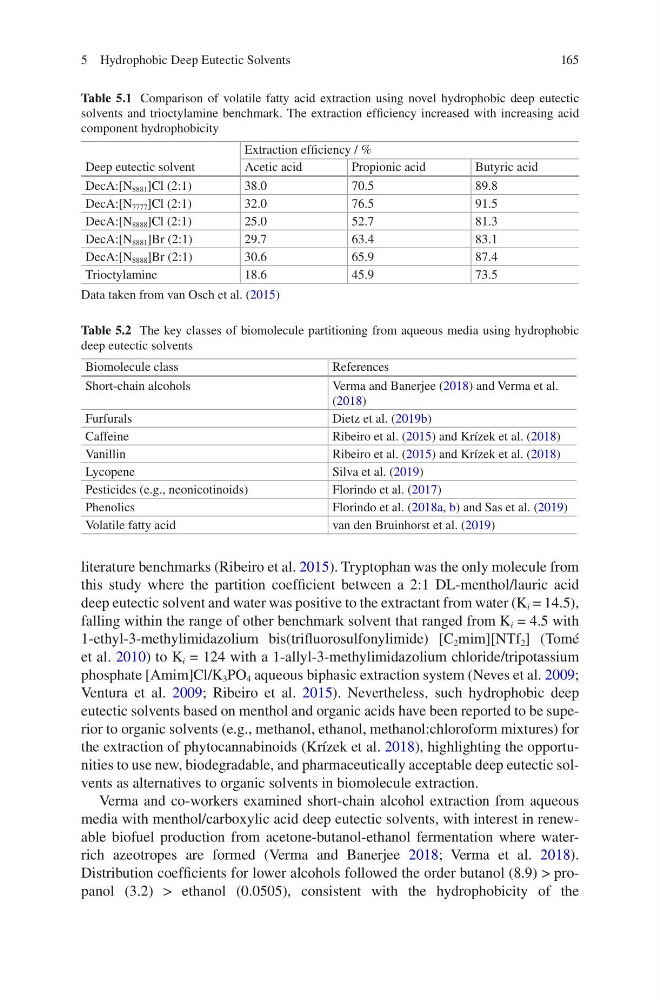
Table 5.1 Comparison of volatile fatty acid extraction using novel hydrophobic deep eutectic
solvents and trioctylamine benchmark. The extraction efficiency increased with increasing acid
component hydrophobicity
Deep eutectic solvent
Extraction efficiency / %
Acetic acid
Propionic acid
Butyric acid
DecA:[N 8881 ]Cl (2:1)
38.0
70.5
89.8
DecA:[N 7777 ]Cl (2:1)
32.0
76.5
91.5
DecA:[N 8888 ]Cl (2:1)
25.0
52.7
81.3
DecA:[N 8881 ]Br (2:1)
29.7
63.4
83.1
DecA:[N 8888 ]Br (2:1)
30.6
65.9
87.4
Trioctylamine
18.6
45.9
73.5
Data taken from van Osch et al. (2015)
Table 5.2 The key classes of biomolecule partitioning from aqueous media using hydrophobic
deep eutectic solvents
Biomolecule class
References
Short-chain alcohols
Verma and Banerjee (2018) and Verma et al.
(2018)
Furfurals
Dietz et al. (2019b)
Caffeine
Ribeiro et al. (2015) and Krízek et al. (2018)
Vanillin
Ribeiro et al. (2015) and Krízek et al. (2018)
Lycopene
Silva et al. (2019)
Pesticides (e.g., neonicotinoids)
Florindo et al. (2017)
Phenolics
Florindo et al. (2018a, b) and Sas et al. (2019)
Volatile fatty acid
van den Bruinhorst et al. (2019)
5 Hydrophobic Deep Eutectic Solvents
literature benchmarks (Ribeiro et al. 2015). Tryptophan was the only molecule from
this study where the partition coefficient between a 2:1 DL-menthol/lauric acid
deep eutectic solvent and water was positive to the extractant from water (K i = 14.5),
falling within the range of other benchmark solvent that ranged from K i = 4.5 with
1-ethyl-3-methylimidazolium bis(trifluorosulfonylimide) [C 2 mim][NTf 2 ] (Tomé
et al. 2010) to K i = 124 with a 1-allyl-3-methylimidazolium chloride/tripotassium
phosphate [Amim]Cl/K 3 PO 4 aqueous biphasic extraction system (Neves et al. 2009;
Ventura et al. 2009; Ribeiro et al. 2015). Nevertheless, such hydrophobic deep
eutectic solvents based on menthol and organic acids have been reported to be superior to organic solvents (e.g., methanol, ethanol, methanol:chloroform mixtures) for
the extraction of phytocannabinoids (Krízek et al. 2018), highlighting the opportunities to use new, biodegradable, and pharmaceutically acceptable deep eutectic solvents as alternatives to organic solvents in biomolecule extraction.
Verma and co-workers examined short-chain alcohol extraction from aqueous
media with menthol/carboxylic acid deep eutectic solvents, with interest in renewable biofuel production from acetone-butanol-ethanol fermentation where waterrich azeotropes are formed (Verma and Banerjee 2018; Verma et al. 2018).
Distribution coefficients for lower alcohols followed the order butanol (8.9) > propanol (3.2) > ethanol (0.0505), consistent with the hydrophobicity of the
Table 5.1 Comparison of volatile fatty acid extraction using novel hydrophobic deep eutectic
solvents and trioctylamine benchmark. The extraction efficiency increased with increasing acid
component hydrophobicity
Deep eutectic solvent
Extraction efficiency / %
Acetic acid
Propionic acid
Butyric acid
DecA:[N 8881 ]Cl (2:1)
38.0
70.5
89.8
DecA:[N 7777 ]Cl (2:1)
32.0
76.5
91.5
DecA:[N 8888 ]Cl (2:1)
25.0
52.7
81.3
DecA:[N 8881 ]Br (2:1)
29.7
63.4
83.1
DecA:[N 8888 ]Br (2:1)
30.6
65.9
87.4
Trioctylamine
18.6
45.9
73.5
Data taken from van Osch et al. (2015)
Table 5.2 The key classes of biomolecule partitioning from aqueous media using hydrophobic
deep eutectic solvents
Biomolecule class
References
Short-chain alcohols
Verma and Banerjee (2018) and Verma et al.
(2018)
Furfurals
Dietz et al. (2019b)
Caffeine
Ribeiro et al. (2015) and Krízek et al. (2018)
Vanillin
Ribeiro et al. (2015) and Krízek et al. (2018)
Lycopene
Silva et al. (2019)
Pesticides (e.g., neonicotinoids)
Florindo et al. (2017)
Phenolics
Florindo et al. (2018a, b) and Sas et al. (2019)
Volatile fatty acid
van den Bruinhorst et al. (2019)
5 Hydrophobic Deep Eutectic Solvents