

244
V. Poltev et al.
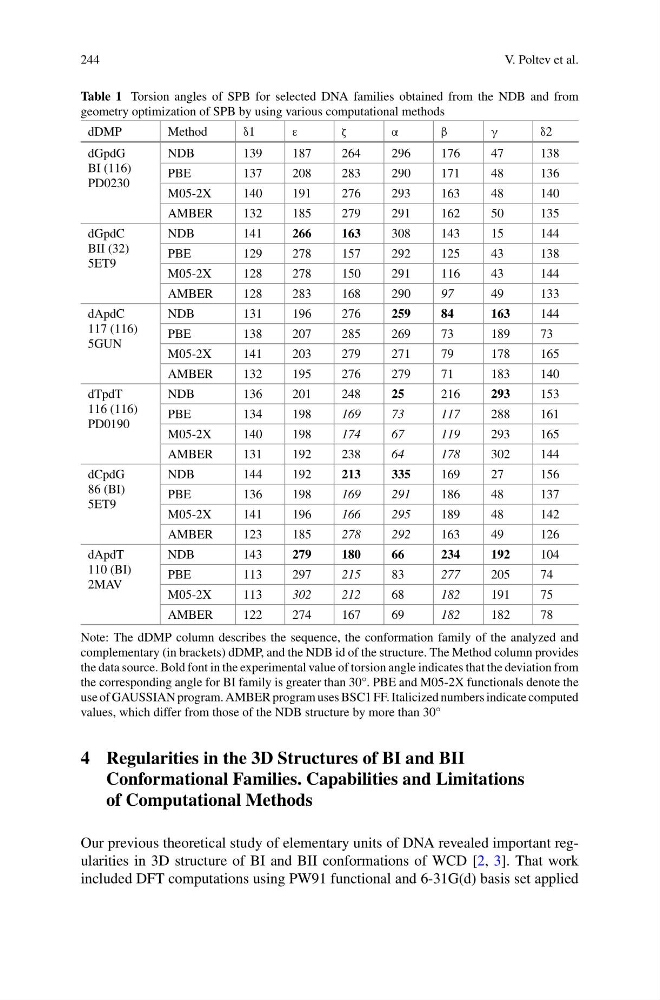
Table 1 Torsion angles of SPB for selected DNA families obtained from the NDB and from
geometry optimization of SPB by using various computational methods
dDMP
Method
δ1
ε
ζ
α
β
γ
δ2
dGpdG
BI (116)
PD0230
NDB
139
187
264
296
176
47
138
PBE
137
208
283
290
171
48
136
M05-2X
140
191
276
293
163
48
140
AMBER
132
185
279
291
162
50
135
dGpdC
BII (32)
5ET9
NDB
141
266
163
308
143
15
144
PBE
129
278
157
292
125
43
138
M05-2X
128
278
150
291
116
43
144
AMBER
128
283
168
290
97
49
133
dApdC
117 (116)
5GUN
NDB
131
196
276
259
84
163
144
PBE
138
207
285
269
73
189
73
M05-2X
141
203
279
271
79
178
165
AMBER
132
195
276
279
71
183
140
dTpdT
116 (116)
PD0190
NDB
136
201
248
25
216
293
153
PBE
134
198
169
73
117
288
161
M05-2X
140
198
174
67
119
293
165
AMBER
131
192
238
64
178
302
144
dCpdG
86 (BI)
5ET9
NDB
144
192
213
335
169
27
156
PBE
136
198
169
291
186
48
137
M05-2X
141
196
166
295
189
48
142
AMBER
123
185
278
292
163
49
126
dApdT
110 (BI)
2MAV
NDB
143
279
180
66
234
192
104
PBE
113
297
215
83
277
205
74
M05-2X
113
302
212
68
182
191
75
AMBER
122
274
167
69
182
182
78
Note: The dDMP column describes the sequence, the conformation family of the analyzed and
complementary (in brackets) dDMP, and the NDB id of the structure. The Method column provides
the data source. Bold font in the experimental value of torsion angle indicates that the deviation from
the corresponding angle for BI family is greater than 30°. PBE and M05-2X functionals denote the
use of GAUSSIAN program. AMBER program uses BSC1 FF. Italicized numbers indicate computed
values, which differ from those of the NDB structure by more than 30°
4 Regularities in the 3D Structures of BI and BII
Conformational Families. Capabilities and Limitations
of Computational Methods
Our previous theoretical study of elementary units of DNA revealed important regularities in 3D structure of BI and BII conformations of WCD [2, 3]. That work
included DFT computations using PW91 functional and 6-31G(d) basis set applied
V. Poltev et al.
Table 1 Torsion angles of SPB for selected DNA families obtained from the NDB and from
geometry optimization of SPB by using various computational methods
dDMP
Method
δ1
ε
ζ
α
β
γ
δ2
dGpdG
BI (116)
PD0230
NDB
139
187
264
296
176
47
138
PBE
137
208
283
290
171
48
136
M05-2X
140
191
276
293
163
48
140
AMBER
132
185
279
291
162
50
135
dGpdC
BII (32)
5ET9
NDB
141
266
163
308
143
15
144
PBE
129
278
157
292
125
43
138
M05-2X
128
278
150
291
116
43
144
AMBER
128
283
168
290
97
49
133
dApdC
117 (116)
5GUN
NDB
131
196
276
259
84
163
144
PBE
138
207
285
269
73
189
73
M05-2X
141
203
279
271
79
178
165
AMBER
132
195
276
279
71
183
140
dTpdT
116 (116)
PD0190
NDB
136
201
248
25
216
293
153
PBE
134
198
169
73
117
288
161
M05-2X
140
198
174
67
119
293
165
AMBER
131
192
238
64
178
302
144
dCpdG
86 (BI)
5ET9
NDB
144
192
213
335
169
27
156
PBE
136
198
169
291
186
48
137
M05-2X
141
196
166
295
189
48
142
AMBER
123
185
278
292
163
49
126
dApdT
110 (BI)
2MAV
NDB
143
279
180
66
234
192
104
PBE
113
297
215
83
277
205
74
M05-2X
113
302
212
68
182
191
75
AMBER
122
274
167
69
182
182
78
Note: The dDMP column describes the sequence, the conformation family of the analyzed and
complementary (in brackets) dDMP, and the NDB id of the structure. The Method column provides
the data source. Bold font in the experimental value of torsion angle indicates that the deviation from
the corresponding angle for BI family is greater than 30°. PBE and M05-2X functionals denote the
use of GAUSSIAN program. AMBER program uses BSC1 FF. Italicized numbers indicate computed
values, which differ from those of the NDB structure by more than 30°
4 Regularities in the 3D Structures of BI and BII
Conformational Families. Capabilities and Limitations
of Computational Methods
Our previous theoretical study of elementary units of DNA revealed important regularities in 3D structure of BI and BII conformations of WCD [2, 3]. That work
included DFT computations using PW91 functional and 6-31G(d) basis set applied