

24
1.3.5 Preparation and Separation of Schardinger Dextrins
Between 1905 and 1911, Schardinger studied the first preparation, fractionation/
separation, and purification of the two cellulosines (Schardinger 1905, 1907, 1909,
1911). In 1911, he published the first fractionation and purification scheme of the
dextrins. Later, both Freudenberg, French, and Cramer published other important
schemes: see the references French (1957a) and Thoma and Stewart (1965).
The dextrins were synthesized from several sources of starch, e.g., potatoes, rice,
and wheat, and bacteria, e.g., the formation of dextrins depended on the type of
bacteria digesting starch. About 25–30% of the starch was converted to crystalline
dextrins depending on these parameters. The yield was tenfold those reported by
Villiers (Schardinger 1907). Schardinger also based his method of separation on the
ease of crystallization of the β-dextrin from water and its low solubility, about 1.5%
at room temperature, followed by precipitation of the α-dextrin from the mother
liquor by the addition of alcohol. Schardinger’ protocol was modified by Lange in
1925 who introduced trichloroethylene as a precipitating agent for the crystalline
dextrins (Lange 1925). This protocol is described in detail in Pringsheim’s book
(Pringsheim 1932).
In 1935, Freudenberg and his student Jacobi described a method for the synthesis
of Schardinger dextrins with high purity (Freudenberg and Jacobi 1935) (Fig. 1.11).
Freudenberg is indeed recognized as the first to prepare almost pure dextrins with
high yields (Thoma and Stewart 1965; Caesar 1968; Clarke et al. 1988; Szejtli 1998;
Crini 2014). Freudenberg improved the separation of dextrins and produced a
scheme based not only on solubility differences of the dextrins themselves, as initially proposed by Schardinger, but also on the differences in solubilities and rates
of crystallization of their acetates (Freudenberg and Jacobi 1935). However, the
protocol was difficult since it involved many acetylation and saponification reactions. During more than 10 years, this protocol was studied and modified, and in
1947, Freudenberg’s group described the first scheme for the isolation of pure fractions of dextrins using bromobenzene as precipitant: α-dextrin did not precipitate,
while β-dextrin and γ-dextrin were readily precipitated (Freudenberg et al. 1947a,
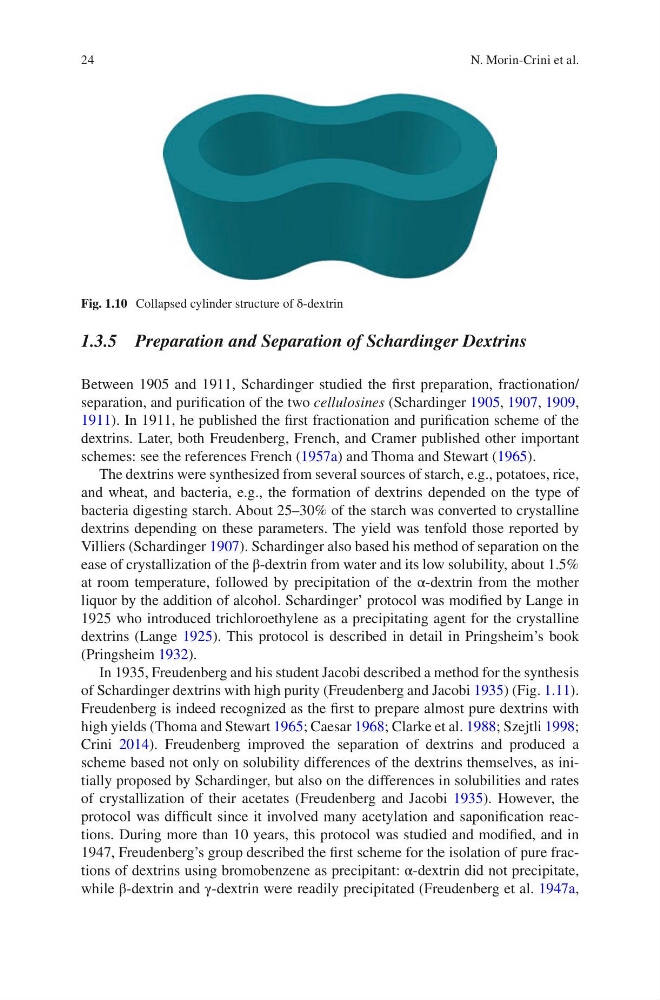
Fig. 1.10 Collapsed cylinder structure of δ-dextrin
N. Morin-Crini et al.
1.3.5 Preparation and Separation of Schardinger Dextrins
Between 1905 and 1911, Schardinger studied the first preparation, fractionation/
separation, and purification of the two cellulosines (Schardinger 1905, 1907, 1909,
1911). In 1911, he published the first fractionation and purification scheme of the
dextrins. Later, both Freudenberg, French, and Cramer published other important
schemes: see the references French (1957a) and Thoma and Stewart (1965).
The dextrins were synthesized from several sources of starch, e.g., potatoes, rice,
and wheat, and bacteria, e.g., the formation of dextrins depended on the type of
bacteria digesting starch. About 25–30% of the starch was converted to crystalline
dextrins depending on these parameters. The yield was tenfold those reported by
Villiers (Schardinger 1907). Schardinger also based his method of separation on the
ease of crystallization of the β-dextrin from water and its low solubility, about 1.5%
at room temperature, followed by precipitation of the α-dextrin from the mother
liquor by the addition of alcohol. Schardinger’ protocol was modified by Lange in
1925 who introduced trichloroethylene as a precipitating agent for the crystalline
dextrins (Lange 1925). This protocol is described in detail in Pringsheim’s book
(Pringsheim 1932).
In 1935, Freudenberg and his student Jacobi described a method for the synthesis
of Schardinger dextrins with high purity (Freudenberg and Jacobi 1935) (Fig. 1.11).
Freudenberg is indeed recognized as the first to prepare almost pure dextrins with
high yields (Thoma and Stewart 1965; Caesar 1968; Clarke et al. 1988; Szejtli 1998;
Crini 2014). Freudenberg improved the separation of dextrins and produced a
scheme based not only on solubility differences of the dextrins themselves, as initially proposed by Schardinger, but also on the differences in solubilities and rates
of crystallization of their acetates (Freudenberg and Jacobi 1935). However, the
protocol was difficult since it involved many acetylation and saponification reactions. During more than 10 years, this protocol was studied and modified, and in
1947, Freudenberg’s group described the first scheme for the isolation of pure fractions of dextrins using bromobenzene as precipitant: α-dextrin did not precipitate,
while β-dextrin and γ-dextrin were readily precipitated (Freudenberg et al. 1947a,
Fig. 1.10 Collapsed cylinder structure of δ-dextrin
N. Morin-Crini et al.