

25
b). This scheme was comprehensively discussed by French (1957a). In 1950,
Freudenberg and Cramer also confirmed the possible existence of dextrins with 9 or
10 glucose units, identified during the preparation of α-, β-, and γ-dextrins
(Freudenberg and Cramer 1950). However, these findings were only substantiated a
decade later by French (Pulley and French 1961).
French was also among the early researchers, along with Freudenberg, to focus
on improving the production of dextrins. French became a pioneer in the preparation of the compounds in a very pure state. Knowing the works of the group of
Hudson on the enzymolysis conditions which affected the yield and proportion of
the dextrins (Tilden and Hudson 1939, 1942; Tilden et al. 1942; McClenahan et al.
1942; Wilson et al. 1943) and using his own results on the solubilities of Schardinger
dextrins (French et al. 1949a), French proposed in 1949 a new protocol for the separation and purification of dextrins (French et al. 1949b), which did not require the
acetylation and saponification steps used by Freudenberg. Treatment of starch with
the amylase of Bacillus macerans gave crude starch digests containing the three
cycloamyloses, i.e., ~60% α-dextrin, ~20% β-dextrin, and ~ 20% γ-dextrin, together
with small amounts of higher cycloamyloses. Moreover, the protocol permitted the
facile separation of pure dextrins by differential precipitation using specific precipitants such as bromobenzene and propan-1-ol (French et al. 1949b). Later, French
showed that high temperature cellulose column chromatography was one of the
most effective methods for the quantitative analysis of mixtures of cycloamyloses
(Pulley and French 1961; French et al. 1965). This method was required in connection with the production of cycloamyloses since these products were simultaneously
produced from starch together with the higher series of cycloamyloses. In 1961,
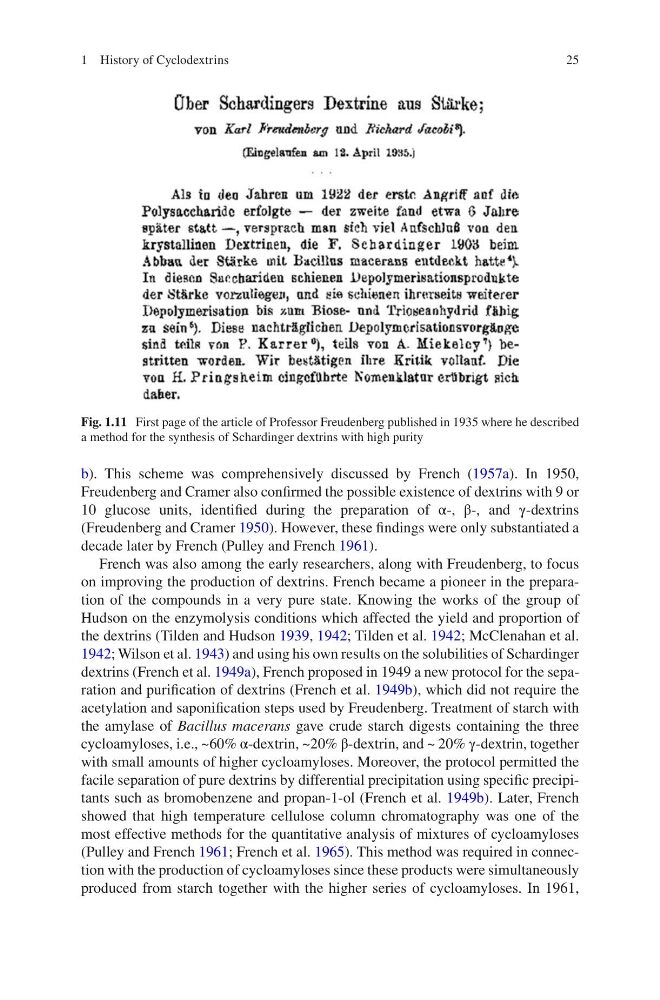
Fig. 1.11 First page of the article of Professor Freudenberg published in 1935 where he described
a method for the synthesis of Schardinger dextrins with high purity
1 History of Cyclodextrins
b). This scheme was comprehensively discussed by French (1957a). In 1950,
Freudenberg and Cramer also confirmed the possible existence of dextrins with 9 or
10 glucose units, identified during the preparation of α-, β-, and γ-dextrins
(Freudenberg and Cramer 1950). However, these findings were only substantiated a
decade later by French (Pulley and French 1961).
French was also among the early researchers, along with Freudenberg, to focus
on improving the production of dextrins. French became a pioneer in the preparation of the compounds in a very pure state. Knowing the works of the group of
Hudson on the enzymolysis conditions which affected the yield and proportion of
the dextrins (Tilden and Hudson 1939, 1942; Tilden et al. 1942; McClenahan et al.
1942; Wilson et al. 1943) and using his own results on the solubilities of Schardinger
dextrins (French et al. 1949a), French proposed in 1949 a new protocol for the separation and purification of dextrins (French et al. 1949b), which did not require the
acetylation and saponification steps used by Freudenberg. Treatment of starch with
the amylase of Bacillus macerans gave crude starch digests containing the three
cycloamyloses, i.e., ~60% α-dextrin, ~20% β-dextrin, and ~ 20% γ-dextrin, together
with small amounts of higher cycloamyloses. Moreover, the protocol permitted the
facile separation of pure dextrins by differential precipitation using specific precipitants such as bromobenzene and propan-1-ol (French et al. 1949b). Later, French
showed that high temperature cellulose column chromatography was one of the
most effective methods for the quantitative analysis of mixtures of cycloamyloses
(Pulley and French 1961; French et al. 1965). This method was required in connection with the production of cycloamyloses since these products were simultaneously
produced from starch together with the higher series of cycloamyloses. In 1961,
Fig. 1.11 First page of the article of Professor Freudenberg published in 1935 where he described
a method for the synthesis of Schardinger dextrins with high purity
1 History of Cyclodextrins