

243
Nanoparticles Stabilized by Cyclodextrin-Grafted Polymer
The first example of metal nanoparticles stabilized by a cyclodextrin-based polymer
was referenced by Shiraishi’s group (Shiraishi et al. 2007; Taylor et al. 2010).
Palladium nanoparticles were prepared by refluxing an alcohol/water solution of
palladium acetate in the presence of the cross-linked cyclodextrin-based polymer.
The catalytic activity was evaluated in the hydrogenation of unsaturated carboxylic
acids. The cavity of the cyclodextrin played a crucial role by forming inclusion
complex with the substrate. Pt nanoparticles were synthesized by the photoreduction of hexachloroplatinic acid by a UV irradiation in the presence of a cyclodextrinbased polymer. According to transmission electron micrographs, Pt colloids with
average particle size of 1–6 nm range were observed with an increase of the average
particle size with the cyclodextrin size. The Pt colloids were tested in the superoxide
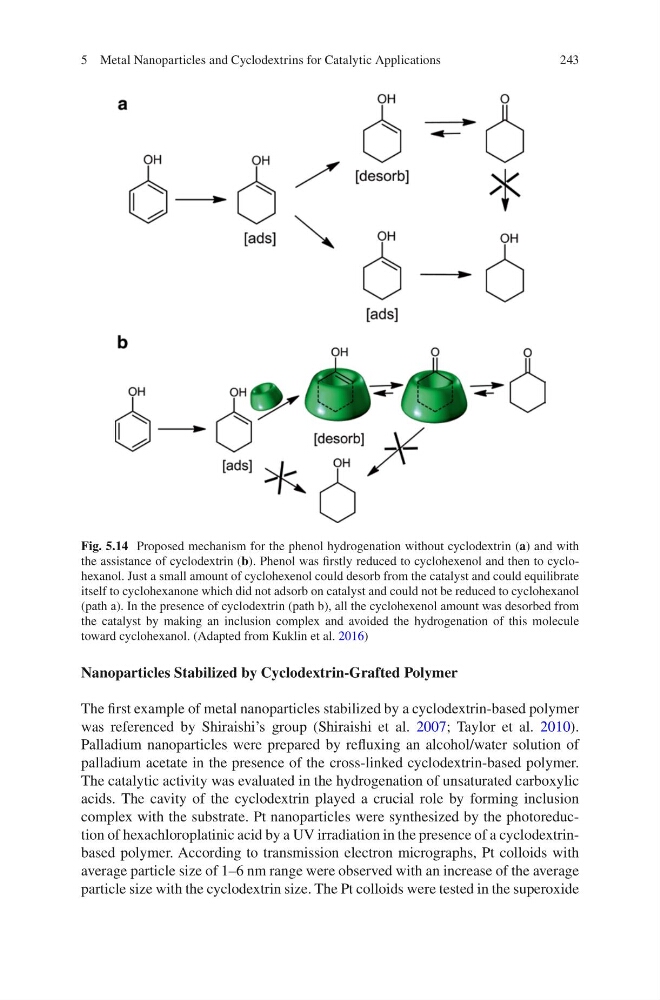
Fig. 5.14 Proposed mechanism for the phenol hydrogenation without cyclodextrin (a) and with
the assistance of cyclodextrin (b). Phenol was firstly reduced to cyclohexenol and then to cyclohexanol. Just a small amount of cyclohexenol could desorb from the catalyst and could equilibrate
itself to cyclohexanone which did not adsorb on catalyst and could not be reduced to cyclohexanol
(path a). In the presence of cyclodextrin (path b), all the cyclohexenol amount was desorbed from
the catalyst by making an inclusion complex and avoided the hydrogenation of this molecule
toward cyclohexanol. (Adapted from Kuklin et al. 2016)
5 Metal Nanoparticles and Cyclodextrins for Catalytic Applications
Nanoparticles Stabilized by Cyclodextrin-Grafted Polymer
The first example of metal nanoparticles stabilized by a cyclodextrin-based polymer
was referenced by Shiraishi’s group (Shiraishi et al. 2007; Taylor et al. 2010).
Palladium nanoparticles were prepared by refluxing an alcohol/water solution of
palladium acetate in the presence of the cross-linked cyclodextrin-based polymer.
The catalytic activity was evaluated in the hydrogenation of unsaturated carboxylic
acids. The cavity of the cyclodextrin played a crucial role by forming inclusion
complex with the substrate. Pt nanoparticles were synthesized by the photoreduction of hexachloroplatinic acid by a UV irradiation in the presence of a cyclodextrinbased polymer. According to transmission electron micrographs, Pt colloids with
average particle size of 1–6 nm range were observed with an increase of the average
particle size with the cyclodextrin size. The Pt colloids were tested in the superoxide
Fig. 5.14 Proposed mechanism for the phenol hydrogenation without cyclodextrin (a) and with
the assistance of cyclodextrin (b). Phenol was firstly reduced to cyclohexenol and then to cyclohexanol. Just a small amount of cyclohexenol could desorb from the catalyst and could equilibrate
itself to cyclohexanone which did not adsorb on catalyst and could not be reduced to cyclohexanol
(path a). In the presence of cyclodextrin (path b), all the cyclohexenol amount was desorbed from
the catalyst by making an inclusion complex and avoided the hydrogenation of this molecule
toward cyclohexanol. (Adapted from Kuklin et al. 2016)
5 Metal Nanoparticles and Cyclodextrins for Catalytic Applications