

242
reaction media. Using optimum reaction condition, 80 °C, P(H 2 ) = 10–40 bars, the
product was obtained with the yield of 100% in 1 h.
The influence of cyclodextrin derivatives X-cyclodextrins (X = OH, NH 2 or SH)
on the aerobic oxidative kinetic resolution of racemic secondary alcohols using
poly(N-vinyl-2-pyrrolidone)-stabilized Au nanoparticles was studied (Hirano et al.
2019). 1.8 ± 0.6 nm gold nanoparticles stabilized by poly(N-vinyl-2-pyrrolidone)
were obtained after the chemical reduction of HAuCl 4 by NaBH 4 . The effect of the
coordinating ability of different cyclodextrins on the catalytic performance of the
Au nanoparticles was determined by the comparison of the s factor in the case of the
oxidation of a racemic mixture of 1-(2-naphtyl)ethanol. Native β-cyclodextrin
(X = OH) brought no modification on the selectivity of the reaction. The thiolatedβ- cyclodextrin improved the selectivity but with a dramatic activity decrease.
Amino-β-cyclodextrin (X = NH 2 ) gave the best results both in activity and selectivity. The authors suggested, by comparing the size of the NH 2 -cyclodextrin and by
using a competitive guest, that the enantioselective oxidation could be explained by
an eventual inclusion of the alcohol into the chiral cavity of the cyclodextrin.
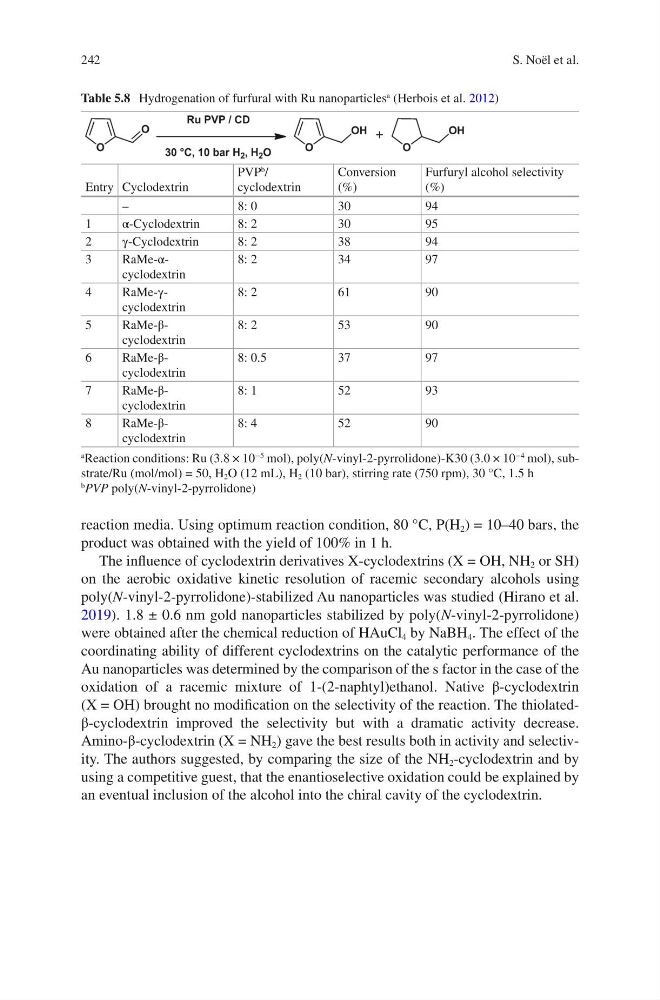
Table 5.8 Hydrogenation of furfural with Ru nanoparticles
a (Herbois et al. 2012)
Entry Cyclodextrin
PVP
b /
cyclodextrin
Conversion
(%)
Furfuryl alcohol selectivity
(%)
–
8: 0
30
94
1
α-Cyclodextrin
8: 2
30
95
2
γ-Cyclodextrin
8: 2
38
94
3
RaMe-αcyclodextrin
8: 2
34
97
4
RaMe-γcyclodextrin
8: 2
61
90
5
RaMe-βcyclodextrin
8: 2
53
90
6
RaMe-βcyclodextrin
8: 0.5
37
97
7
RaMe-βcyclodextrin
8: 1
52
93
8
RaMe-βcyclodextrin
8: 4
52
90
a
Reaction conditions: Ru (3.8 × 10
−5 mol), poly(N-vinyl-2-pyrrolidone)-K30 (3.0 × 10
−4
mol), substrate/Ru (mol/mol) = 50, H 2 O (12 mL), H 2 (10 bar), stirring rate (750 rpm), 30 °C, 1.5 h
b
PVP poly(N-vinyl-2-pyrrolidone)
S. Noël et al.
reaction media. Using optimum reaction condition, 80 °C, P(H 2 ) = 10–40 bars, the
product was obtained with the yield of 100% in 1 h.
The influence of cyclodextrin derivatives X-cyclodextrins (X = OH, NH 2 or SH)
on the aerobic oxidative kinetic resolution of racemic secondary alcohols using
poly(N-vinyl-2-pyrrolidone)-stabilized Au nanoparticles was studied (Hirano et al.
2019). 1.8 ± 0.6 nm gold nanoparticles stabilized by poly(N-vinyl-2-pyrrolidone)
were obtained after the chemical reduction of HAuCl 4 by NaBH 4 . The effect of the
coordinating ability of different cyclodextrins on the catalytic performance of the
Au nanoparticles was determined by the comparison of the s factor in the case of the
oxidation of a racemic mixture of 1-(2-naphtyl)ethanol. Native β-cyclodextrin
(X = OH) brought no modification on the selectivity of the reaction. The thiolatedβ- cyclodextrin improved the selectivity but with a dramatic activity decrease.
Amino-β-cyclodextrin (X = NH 2 ) gave the best results both in activity and selectivity. The authors suggested, by comparing the size of the NH 2 -cyclodextrin and by
using a competitive guest, that the enantioselective oxidation could be explained by
an eventual inclusion of the alcohol into the chiral cavity of the cyclodextrin.
Table 5.8 Hydrogenation of furfural with Ru nanoparticles
a (Herbois et al. 2012)
Entry Cyclodextrin
PVP
b /
cyclodextrin
Conversion
(%)
Furfuryl alcohol selectivity
(%)
–
8: 0
30
94
1
α-Cyclodextrin
8: 2
30
95
2
γ-Cyclodextrin
8: 2
38
94
3
RaMe-αcyclodextrin
8: 2
34
97
4
RaMe-γcyclodextrin
8: 2
61
90
5
RaMe-βcyclodextrin
8: 2
53
90
6
RaMe-βcyclodextrin
8: 0.5
37
97
7
RaMe-βcyclodextrin
8: 1
52
93
8
RaMe-βcyclodextrin
8: 4
52
90
a
Reaction conditions: Ru (3.8 × 10
−5 mol), poly(N-vinyl-2-pyrrolidone)-K30 (3.0 × 10
−4
mol), substrate/Ru (mol/mol) = 50, H 2 O (12 mL), H 2 (10 bar), stirring rate (750 rpm), 30 °C, 1.5 h
b
PVP poly(N-vinyl-2-pyrrolidone)
S. Noël et al.