

241
preparation without cyclodextrins. It is important to mention that the presence of
poly(N- vinyl- 2-pyrrolidone) was crucial in order to ensure long-term stability of the
Ru nanoparticles, knowing that a ratio of poly(N-vinyl-2-pyrrolidone) to Ru higher
than 8 was absolutely required.
The influence of the quantity of cyclodextrin on the catalytic activity of the
resulting Ru nanoparticles was studied, performing for the hydrogenation of furfural, a biosourced substrate, under mild experimental conditions (30 °C, 10 bar of H 2 )
(Table 5.8). Whatever the poly(N-vinyl-2-pyrrolidone)/cyclodextrin ratio, the Ru
nanoparticles were visually stable, and no sedimentation was observed at the end of
the catalytic test. According to the results gathered in Table 5.8, only a small amount
of cyclodextrin was required to get an activity improvement. The obtained results
were rationalized in terms of size and morphology control of the Ru nanoparticles.
In line with what is generally observed in nanocatalysis, the decrease in the particle
size resulted in the increase of the number of available surface active sites and, consequently, increased the catalytic efficiency.
In another study, Kuklin et al. (2016) investigated the role of free and supported
cyclodextrin on the selective hydrogenation of phenol to cyclohexanone in aqueous
media and a n-hexyltriethylammonium bromide ionic liquid (N 6222 Br) using Rh
nanoparticles stabilized by polyacrylic acid. Noteworthy, the catalytic activity and
selectivity of the Rh nanoparticles depended on the presence of cyclodextrin. It was
attributed to the fact that both substrate and the cyclohexenol, which was formed as
an intermediate, could form inclusion complexes with cyclodextrin (Fig. 5.14).
Upon formation of inclusion complex with the intermediate, it would be desorbed
from Rh nanoparticles. High stability of this complex made the repeated adsorption
of cyclohexenol unlikely (Fig. 5.14). The presence of ionic liquid was also crucial
as it could form inclusion complexes with cyclodextrin and fix it in the surface layer
and facilitate the desorption of cyclohexenol from the surface of Rh nanoparticles.
Other factors which affect the reaction were the nature of the cyclodextrin and the
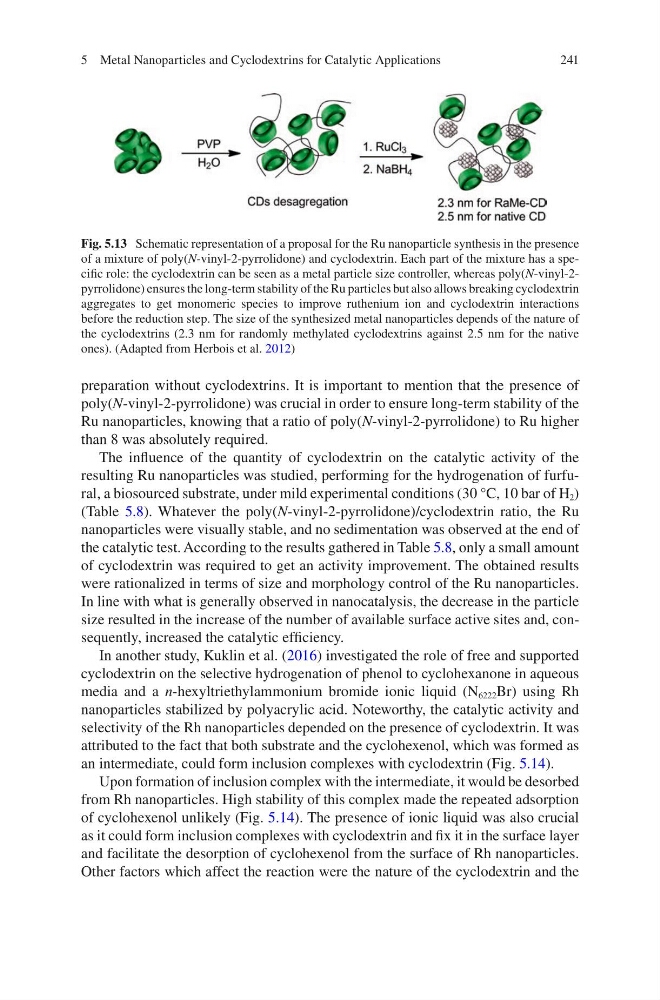
Fig. 5.13 Schematic representation of a proposal for the Ru nanoparticle synthesis in the presence
of a mixture of poly(N-vinyl-2-pyrrolidone) and cyclodextrin. Each part of the mixture has a specific role: the cyclodextrin can be seen as a metal particle size controller, whereas poly(N-vinyl- 2pyrrolidone) ensures the long-term stability of the Ru particles but also allows breaking cyclodextrin
aggregates to get monomeric species to improve ruthenium ion and cyclodextrin interactions
before the reduction step. The size of the synthesized metal nanoparticles depends of the nature of
the cyclodextrins (2.3 nm for randomly methylated cyclodextrins against 2.5 nm for the native
ones). (Adapted from Herbois et al. 2012)
5 Metal Nanoparticles and Cyclodextrins for Catalytic Applications
preparation without cyclodextrins. It is important to mention that the presence of
poly(N- vinyl- 2-pyrrolidone) was crucial in order to ensure long-term stability of the
Ru nanoparticles, knowing that a ratio of poly(N-vinyl-2-pyrrolidone) to Ru higher
than 8 was absolutely required.
The influence of the quantity of cyclodextrin on the catalytic activity of the
resulting Ru nanoparticles was studied, performing for the hydrogenation of furfural, a biosourced substrate, under mild experimental conditions (30 °C, 10 bar of H 2 )
(Table 5.8). Whatever the poly(N-vinyl-2-pyrrolidone)/cyclodextrin ratio, the Ru
nanoparticles were visually stable, and no sedimentation was observed at the end of
the catalytic test. According to the results gathered in Table 5.8, only a small amount
of cyclodextrin was required to get an activity improvement. The obtained results
were rationalized in terms of size and morphology control of the Ru nanoparticles.
In line with what is generally observed in nanocatalysis, the decrease in the particle
size resulted in the increase of the number of available surface active sites and, consequently, increased the catalytic efficiency.
In another study, Kuklin et al. (2016) investigated the role of free and supported
cyclodextrin on the selective hydrogenation of phenol to cyclohexanone in aqueous
media and a n-hexyltriethylammonium bromide ionic liquid (N 6222 Br) using Rh
nanoparticles stabilized by polyacrylic acid. Noteworthy, the catalytic activity and
selectivity of the Rh nanoparticles depended on the presence of cyclodextrin. It was
attributed to the fact that both substrate and the cyclohexenol, which was formed as
an intermediate, could form inclusion complexes with cyclodextrin (Fig. 5.14).
Upon formation of inclusion complex with the intermediate, it would be desorbed
from Rh nanoparticles. High stability of this complex made the repeated adsorption
of cyclohexenol unlikely (Fig. 5.14). The presence of ionic liquid was also crucial
as it could form inclusion complexes with cyclodextrin and fix it in the surface layer
and facilitate the desorption of cyclohexenol from the surface of Rh nanoparticles.
Other factors which affect the reaction were the nature of the cyclodextrin and the
Fig. 5.13 Schematic representation of a proposal for the Ru nanoparticle synthesis in the presence
of a mixture of poly(N-vinyl-2-pyrrolidone) and cyclodextrin. Each part of the mixture has a specific role: the cyclodextrin can be seen as a metal particle size controller, whereas poly(N-vinyl- 2pyrrolidone) ensures the long-term stability of the Ru particles but also allows breaking cyclodextrin
aggregates to get monomeric species to improve ruthenium ion and cyclodextrin interactions
before the reduction step. The size of the synthesized metal nanoparticles depends of the nature of
the cyclodextrins (2.3 nm for randomly methylated cyclodextrins against 2.5 nm for the native
ones). (Adapted from Herbois et al. 2012)
5 Metal Nanoparticles and Cyclodextrins for Catalytic Applications