

233
availability and had already proven to be efficient phase-transfer catalysts (Leclercq
et al. 2007) (Table 5.4).
Ru nanoparticles were synthesized by chemical reduction of ruthenium trichloride with an excess of sodium borohydride in aqueous solution of randomly methylated cyclodextrins with different sizes (α, β, γ) and substitution degrees. The best
compromise between the stability and activity was obtained with a cyclodextrin/Ru
molar ratio of 10, which had been considered as the standard ratio.
According to the transmission electron microscopy, ruthenium nanoparticles
were dispersed into non-ordered superstructures with an average particle size of
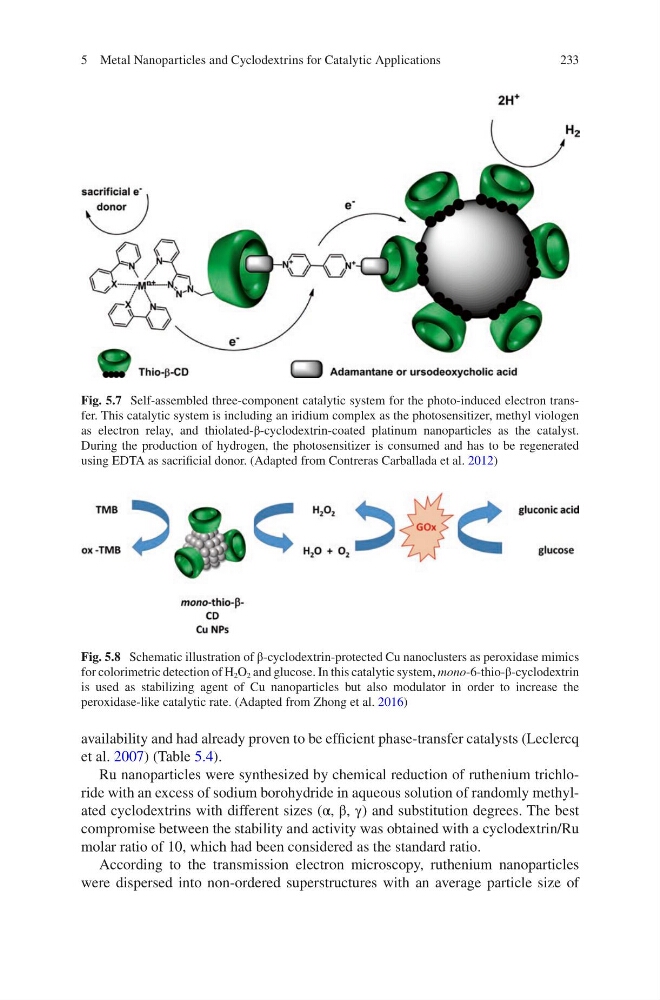
Fig. 5.7 Self-assembled three-component catalytic system for the photo-induced electron transfer. This catalytic system is including an iridium complex as the photosensitizer, methyl viologen
as electron relay, and thiolated-β-cyclodextrin-coated platinum nanoparticles as the catalyst.
During the production of hydrogen, the photosensitizer is consumed and has to be regenerated
using EDTA as sacrificial donor. (Adapted from Contreras Carballada et al. 2012)
Fig. 5.8 Schematic illustration of β-cyclodextrin-protected Cu nanoclusters as peroxidase mimics
for colorimetric detection of H 2 O 2 and glucose. In this catalytic system, mono-6-thio-β-cyclodextrin
is used as stabilizing agent of Cu nanoparticles but also modulator in order to increase the
peroxidase- like catalytic rate. (Adapted from Zhong et al. 2016)
5 Metal Nanoparticles and Cyclodextrins for Catalytic Applications
availability and had already proven to be efficient phase-transfer catalysts (Leclercq
et al. 2007) (Table 5.4).
Ru nanoparticles were synthesized by chemical reduction of ruthenium trichloride with an excess of sodium borohydride in aqueous solution of randomly methylated cyclodextrins with different sizes (α, β, γ) and substitution degrees. The best
compromise between the stability and activity was obtained with a cyclodextrin/Ru
molar ratio of 10, which had been considered as the standard ratio.
According to the transmission electron microscopy, ruthenium nanoparticles
were dispersed into non-ordered superstructures with an average particle size of
Fig. 5.7 Self-assembled three-component catalytic system for the photo-induced electron transfer. This catalytic system is including an iridium complex as the photosensitizer, methyl viologen
as electron relay, and thiolated-β-cyclodextrin-coated platinum nanoparticles as the catalyst.
During the production of hydrogen, the photosensitizer is consumed and has to be regenerated
using EDTA as sacrificial donor. (Adapted from Contreras Carballada et al. 2012)
Fig. 5.8 Schematic illustration of β-cyclodextrin-protected Cu nanoclusters as peroxidase mimics
for colorimetric detection of H 2 O 2 and glucose. In this catalytic system, mono-6-thio-β-cyclodextrin
is used as stabilizing agent of Cu nanoparticles but also modulator in order to increase the
peroxidase- like catalytic rate. (Adapted from Zhong et al. 2016)
5 Metal Nanoparticles and Cyclodextrins for Catalytic Applications