

168
In the mid-1960s, Professor Casu also studied the formation of inclusion complexes using NMR, infrared, and UV techniques (Casu 1966, 1968a; Casu and Rava
1966). These results were presented at the Consiglio Nazionale delle Ricerche,
Rome, Italy, in July 1966. At that time, NMR investigations of the complexes were
technically difficult due to the low solubility of the products in D 2 O (Higuchi and
Connors 1965; Demarco and Thakkar 1970; Wood et al. 1977; Szejtli 1982, 1988;
Crini 2014). Professor Casu was among the first to verify the idea that “if the guest
molecule is accommodated in the cyclodextrin cavity, then the hydrogen atoms
located in the interior of the cavity, i.e. C3-H and C5-H, will be significantly shielded
by the guest,” whereas “the hydrogen atoms on the outer surface, i.e. C2-H, C4-H
and C6-H of the glucose unit, will not be affected by the formation of the inclusion
complex” (Casu and Rava 1966). It was interesting to note that, at that time, only
X-ray diffraction data proved that the incorporated guest was located really in the
interior of the ring molecule (Takeo and Kuge 1969, 1970; Szejtli 1982).
Professor Casu also was the first to show that the acid dissociation constants of
substituted benzoic acids included in cyclodextrins gave a linear correlation with
Hammett’s substituent constants (Fig. 3.7). The stability of the complex became
higher with the increase of the electron donor character of the substituents of the
included guest (Casu and Rava 1966). One year later, Professor Cramer published
similar conclusions (Cramer and Hettler 1967; Cramer et al. 1967). Professor Casu,
studying the interactions between dyes and α-cyclodextrin (Fig. 3.8), showed that
complex formation with cyclodextrin altered the original UV absorption spectrum
of the guest molecule (Casu and Rava 1966). This result was in agreement with the
previous conclusions reported by Cramer’s group (Cramer 1952, 1954; Cramer and
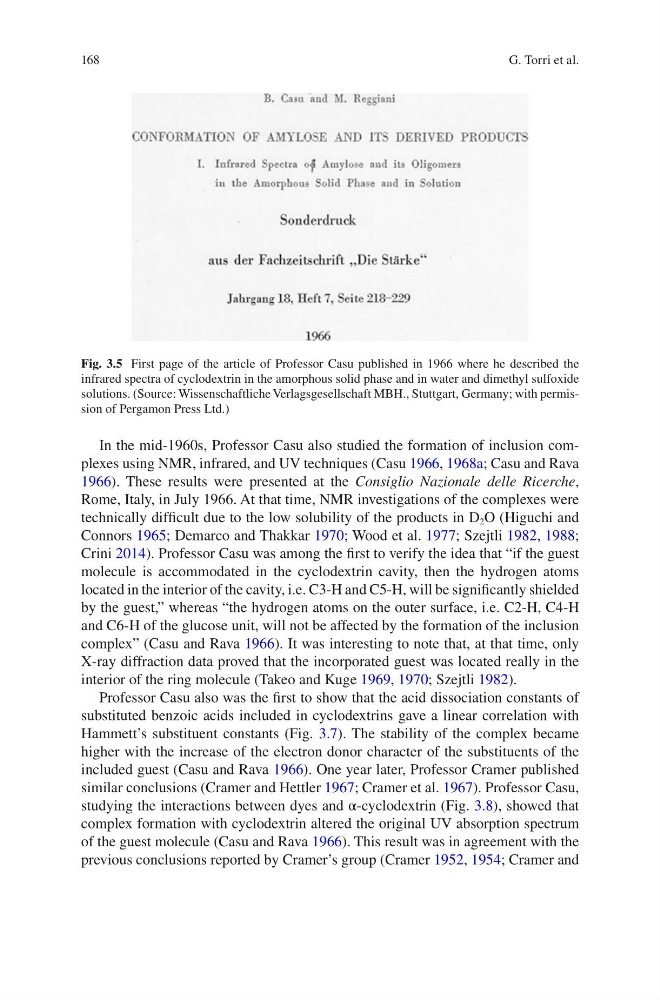
Fig. 3.5 First page of the article of Professor Casu published in 1966 where he described the
infrared spectra of cyclodextrin in the amorphous solid phase and in water and dimethyl sulfoxide
solutions. (Source: Wissenschaftliche Verlagsgesellschaft MBH., Stuttgart, Germany; with permission of Pergamon Press Ltd.)
G. Torri et al.
In the mid-1960s, Professor Casu also studied the formation of inclusion complexes using NMR, infrared, and UV techniques (Casu 1966, 1968a; Casu and Rava
1966). These results were presented at the Consiglio Nazionale delle Ricerche,
Rome, Italy, in July 1966. At that time, NMR investigations of the complexes were
technically difficult due to the low solubility of the products in D 2 O (Higuchi and
Connors 1965; Demarco and Thakkar 1970; Wood et al. 1977; Szejtli 1982, 1988;
Crini 2014). Professor Casu was among the first to verify the idea that “if the guest
molecule is accommodated in the cyclodextrin cavity, then the hydrogen atoms
located in the interior of the cavity, i.e. C3-H and C5-H, will be significantly shielded
by the guest,” whereas “the hydrogen atoms on the outer surface, i.e. C2-H, C4-H
and C6-H of the glucose unit, will not be affected by the formation of the inclusion
complex” (Casu and Rava 1966). It was interesting to note that, at that time, only
X-ray diffraction data proved that the incorporated guest was located really in the
interior of the ring molecule (Takeo and Kuge 1969, 1970; Szejtli 1982).
Professor Casu also was the first to show that the acid dissociation constants of
substituted benzoic acids included in cyclodextrins gave a linear correlation with
Hammett’s substituent constants (Fig. 3.7). The stability of the complex became
higher with the increase of the electron donor character of the substituents of the
included guest (Casu and Rava 1966). One year later, Professor Cramer published
similar conclusions (Cramer and Hettler 1967; Cramer et al. 1967). Professor Casu,
studying the interactions between dyes and α-cyclodextrin (Fig. 3.8), showed that
complex formation with cyclodextrin altered the original UV absorption spectrum
of the guest molecule (Casu and Rava 1966). This result was in agreement with the
previous conclusions reported by Cramer’s group (Cramer 1952, 1954; Cramer and
Fig. 3.5 First page of the article of Professor Casu published in 1966 where he described the
infrared spectra of cyclodextrin in the amorphous solid phase and in water and dimethyl sulfoxide
solutions. (Source: Wissenschaftliche Verlagsgesellschaft MBH., Stuttgart, Germany; with permission of Pergamon Press Ltd.)
G. Torri et al.