

135
to purchase such an equipment. Professor Szejtli also observed the business opportunities in selling cyclodextrin derivatives for chiral separations.
2.5.5 Cyclodextrin in Catalysis
Cyclodextrins and their derivatives had an enzyme-like activity (Bender and
Komiyama 1978). Considerable reaction rate enhancements, stereoselective effects,
and other catalytic phenomena can be accounted to the cyclodextrins. Inclusion
catalysis revealed several characteristics of enzyme-catalyzed reactions, e.g., saturation limit, competitive inhibition, and unproductive bonding. The correlation
between the acceleration of the reaction rate and cyclodextrin concentration was not
linear; it approached asymptotically the maximum value. This saturation feature
was characteristic of such reactions in which the rate-determining step was preceded by complex formation.
Professor Szejtli showed that cyclodextrins can accelerate or decelerate various
kinds of reactions, e.g., oxidation, hydrolysis, decarboxylation, nitrosation, and
isomerization (Szejtli 1984a, 1985a, 1988a). The reaction rates depended on the
cyclodextrin used and the kind and stability of the inclusion compound formed. His
conclusions were in accordance with those previously reported by Bender and
Komiyama (1978). Professor Szejtli described cyclodextrin-catalyzed reactions in
details in his second book Cyclodextrin Technology (Szejtli 1988a).
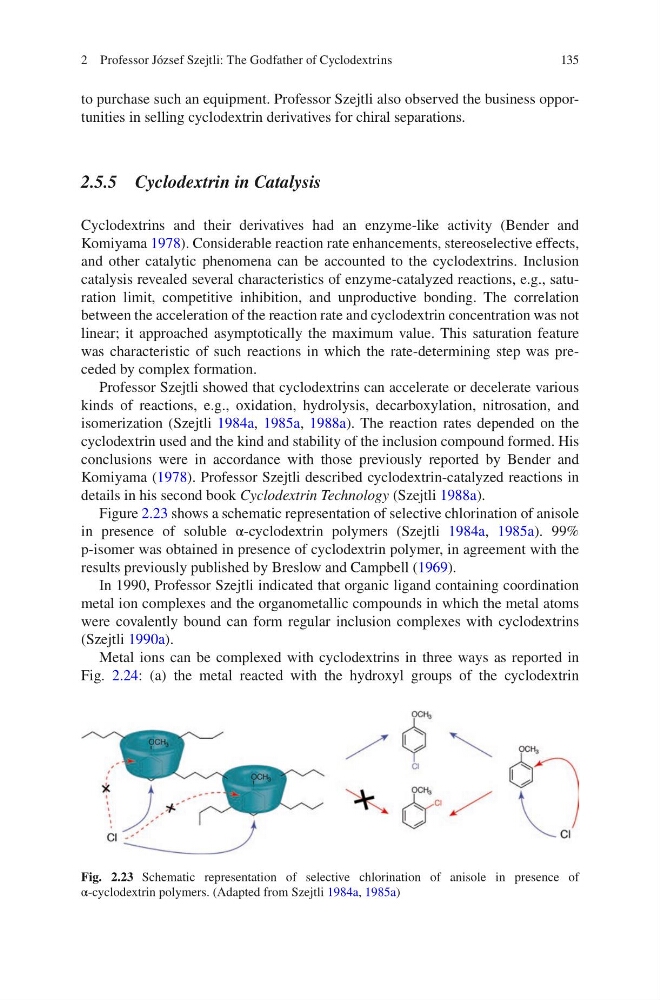
Figure 2.23 shows a schematic representation of selective chlorination of anisole
in presence of soluble α-cyclodextrin polymers (Szejtli 1984a, 1985a). 99%
p- isomer was obtained in presence of cyclodextrin polymer, in agreement with the
results previously published by Breslow and Campbell (1969).
In 1990, Professor Szejtli indicated that organic ligand containing coordination
metal ion complexes and the organometallic compounds in which the metal atoms
were covalently bound can form regular inclusion complexes with cyclodextrins
(Szejtli 1990a).
Metal ions can be complexed with cyclodextrins in three ways as reported in
Fig. 2.24: (a) the metal reacted with the hydroxyl groups of the cyclodextrin
Fig. 2.23 Schematic representation of selective chlorination of anisole in presence of
α-cyclodextrin polymers. (Adapted from Szejtli 1984a, 1985a)
2 Professor József Szejtli: The Godfather of Cyclodextrins
to purchase such an equipment. Professor Szejtli also observed the business opportunities in selling cyclodextrin derivatives for chiral separations.
2.5.5 Cyclodextrin in Catalysis
Cyclodextrins and their derivatives had an enzyme-like activity (Bender and
Komiyama 1978). Considerable reaction rate enhancements, stereoselective effects,
and other catalytic phenomena can be accounted to the cyclodextrins. Inclusion
catalysis revealed several characteristics of enzyme-catalyzed reactions, e.g., saturation limit, competitive inhibition, and unproductive bonding. The correlation
between the acceleration of the reaction rate and cyclodextrin concentration was not
linear; it approached asymptotically the maximum value. This saturation feature
was characteristic of such reactions in which the rate-determining step was preceded by complex formation.
Professor Szejtli showed that cyclodextrins can accelerate or decelerate various
kinds of reactions, e.g., oxidation, hydrolysis, decarboxylation, nitrosation, and
isomerization (Szejtli 1984a, 1985a, 1988a). The reaction rates depended on the
cyclodextrin used and the kind and stability of the inclusion compound formed. His
conclusions were in accordance with those previously reported by Bender and
Komiyama (1978). Professor Szejtli described cyclodextrin-catalyzed reactions in
details in his second book Cyclodextrin Technology (Szejtli 1988a).
Figure 2.23 shows a schematic representation of selective chlorination of anisole
in presence of soluble α-cyclodextrin polymers (Szejtli 1984a, 1985a). 99%
p- isomer was obtained in presence of cyclodextrin polymer, in agreement with the
results previously published by Breslow and Campbell (1969).
In 1990, Professor Szejtli indicated that organic ligand containing coordination
metal ion complexes and the organometallic compounds in which the metal atoms
were covalently bound can form regular inclusion complexes with cyclodextrins
(Szejtli 1990a).
Metal ions can be complexed with cyclodextrins in three ways as reported in
Fig. 2.24: (a) the metal reacted with the hydroxyl groups of the cyclodextrin
Fig. 2.23 Schematic representation of selective chlorination of anisole in presence of
α-cyclodextrin polymers. (Adapted from Szejtli 1984a, 1985a)
2 Professor József Szejtli: The Godfather of Cyclodextrins