

126
(Szejtli 1987b, 1988a; Szejtli et al. 1987), biotechnological (Szejtli 1990b, 1991a),
or medical (Szejtli 1994) applications.
2.4.6 Cyclodextrins Derivatives
Besides being “molecular capsules,” cyclodextrins were “basic materials” for the
production of derivatives and polymers, biologically active substances, and reagents
in analytical chemistry and diagnostics. Professor Szejtli prepared various cyclodextrin derivatives and polymers (Szejtli 1982a, 1984a, 1988a, 1998; Szente and
Szejtli 1999).
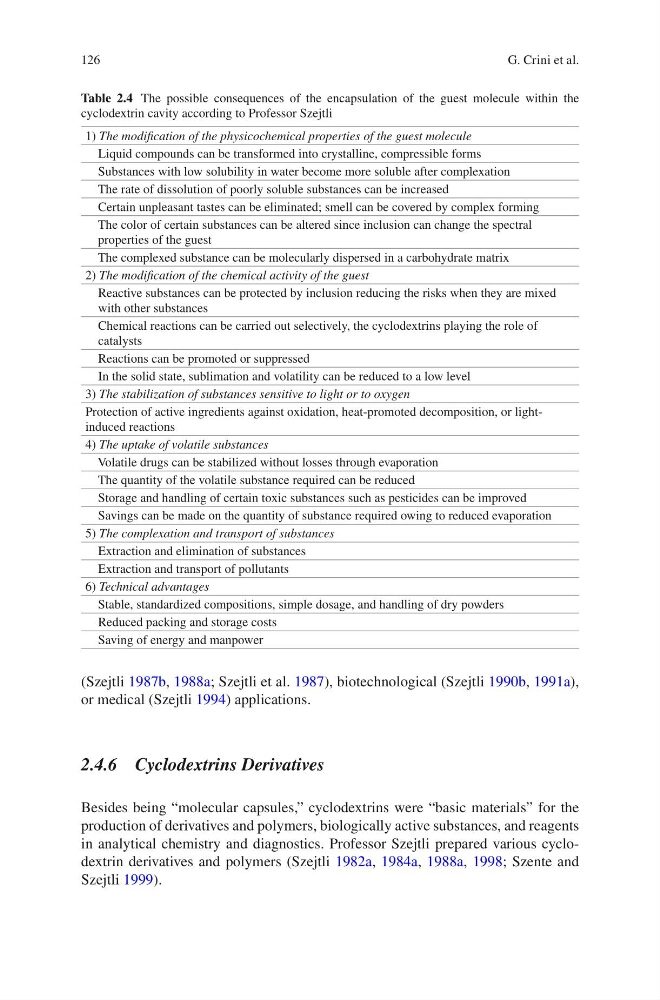
Table 2.4 The possible consequences of the encapsulation of the guest molecule within the
cyclodextrin cavity according to Professor Szejtli
1) The modification of the physicochemical properties of the guest molecule
Liquid compounds can be transformed into crystalline, compressible forms
Substances with low solubility in water become more soluble after complexation
The rate of dissolution of poorly soluble substances can be increased
Certain unpleasant tastes can be eliminated; smell can be covered by complex forming
The color of certain substances can be altered since inclusion can change the spectral
properties of the guest
The complexed substance can be molecularly dispersed in a carbohydrate matrix
2) The modification of the chemical activity of the guest
Reactive substances can be protected by inclusion reducing the risks when they are mixed
with other substances
Chemical reactions can be carried out selectively, the cyclodextrins playing the role of
catalysts
Reactions can be promoted or suppressed
In the solid state, sublimation and volatility can be reduced to a low level
3) The stabilization of substances sensitive to light or to oxygen
Protection of active ingredients against oxidation, heat-promoted decomposition, or lightinduced reactions
4) The uptake of volatile substances
Volatile drugs can be stabilized without losses through evaporation
The quantity of the volatile substance required can be reduced
Storage and handling of certain toxic substances such as pesticides can be improved
Savings can be made on the quantity of substance required owing to reduced evaporation
5) The complexation and transport of substances
Extraction and elimination of substances
Extraction and transport of pollutants
6) Technical advantages
Stable, standardized compositions, simple dosage, and handling of dry powders
Reduced packing and storage costs
Saving of energy and manpower
G. Crini et al.
(Szejtli 1987b, 1988a; Szejtli et al. 1987), biotechnological (Szejtli 1990b, 1991a),
or medical (Szejtli 1994) applications.
2.4.6 Cyclodextrins Derivatives
Besides being “molecular capsules,” cyclodextrins were “basic materials” for the
production of derivatives and polymers, biologically active substances, and reagents
in analytical chemistry and diagnostics. Professor Szejtli prepared various cyclodextrin derivatives and polymers (Szejtli 1982a, 1984a, 1988a, 1998; Szente and
Szejtli 1999).
Table 2.4 The possible consequences of the encapsulation of the guest molecule within the
cyclodextrin cavity according to Professor Szejtli
1) The modification of the physicochemical properties of the guest molecule
Liquid compounds can be transformed into crystalline, compressible forms
Substances with low solubility in water become more soluble after complexation
The rate of dissolution of poorly soluble substances can be increased
Certain unpleasant tastes can be eliminated; smell can be covered by complex forming
The color of certain substances can be altered since inclusion can change the spectral
properties of the guest
The complexed substance can be molecularly dispersed in a carbohydrate matrix
2) The modification of the chemical activity of the guest
Reactive substances can be protected by inclusion reducing the risks when they are mixed
with other substances
Chemical reactions can be carried out selectively, the cyclodextrins playing the role of
catalysts
Reactions can be promoted or suppressed
In the solid state, sublimation and volatility can be reduced to a low level
3) The stabilization of substances sensitive to light or to oxygen
Protection of active ingredients against oxidation, heat-promoted decomposition, or lightinduced reactions
4) The uptake of volatile substances
Volatile drugs can be stabilized without losses through evaporation
The quantity of the volatile substance required can be reduced
Storage and handling of certain toxic substances such as pesticides can be improved
Savings can be made on the quantity of substance required owing to reduced evaporation
5) The complexation and transport of substances
Extraction and elimination of substances
Extraction and transport of pollutants
6) Technical advantages
Stable, standardized compositions, simple dosage, and handling of dry powders
Reduced packing and storage costs
Saving of energy and manpower
G. Crini et al.