

444
The Chemistry and Technology of Petroleum
It has been generally thought that the chemistry of coke formation involves immediate condensation reactions to produce higher molecular weight, condensed aromatic species. And there is the
claim that coking is a bimolecular process. However, more recent approaches to the chemistry of
coking render the bimolecular process debatable. The rate of decomposition will vary with the
nature of the individual constituents, thereby giving rise to the perception of second-order or even
multi-order kinetics. The initial reactions of asphaltene constituents involves thermolysis of pendant
alkyl chains to form lower molecular weight higher polar species (carbenes and carboids) which
then react to form coke. Indeed, as opposed to the bimolecular approach, the initial reactions in the
coking of petroleum feedstocks that contain asphaltene constituents appear to involve unimolecular
TABLE 16.1
General Indications of Feedstock Cracking
Feedstock Type
Characterization
Factor, K
Naphtha
Yield, % v/v
Coke Yield,
% w/w
Relative Reactivity
(Relative Crackability)
Aromatic
11.0(1)
35.0
13.5
Refractory
Aromatic
11.2(2)
49.6
12.5
Refractory
Aromatic
11.2(1)
37.0
11.5
Refractory
Aromatic–naphthenic
11.4(2)
47.0
9.1
Intermediate
Aromatic–naphthenic
11.4(1)
39.0
9.0
Intermediate
Naphthenic
11.6(2)
45.0
7.1
Intermediate
Naphthenic
11.6(1)
40.0
7.2
Intermediate
Naphthenic–paraffinic
11.8(2)
43.0
5.3
High
Naphthenic–paraffinic
11.8(1)
41.0
6.0
High
Naphthenic–paraffinic
12.0(2)
41.5
4.0
High
Naphthenic–paraffinic
12.0(1)
41.5
5.3
High
Paraffinic
12.2(2)
40.0
3.0
High
1, Cycle oil/cracked feedstocks; 60% conversion.
2, Straight-run/uncracked feedstocks; 60% conversion.
Aromatics
Carbon residue, wt.%
Resins
Asphaltenes
Saturates
100
80
80
60
60
40
40
20
20
0
0
% of crude oil
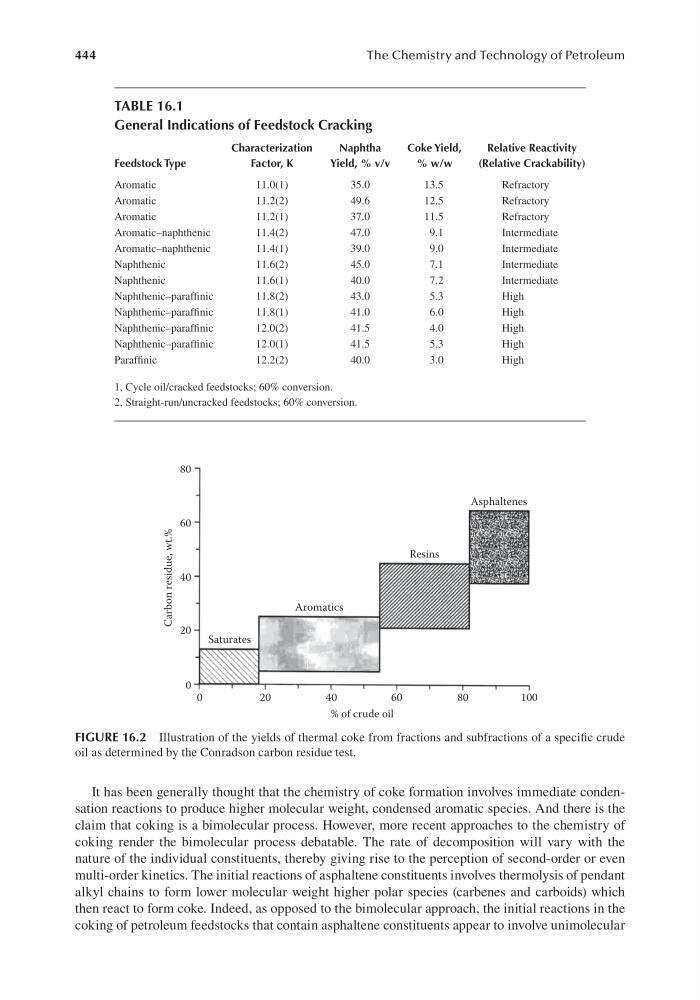
FIGURE 16.2 Illustration of the yields of thermal coke from fractions and subfractions of a specific crude
oil as determined by the Conradson carbon residue test.
The Chemistry and Technology of Petroleum
It has been generally thought that the chemistry of coke formation involves immediate condensation reactions to produce higher molecular weight, condensed aromatic species. And there is the
claim that coking is a bimolecular process. However, more recent approaches to the chemistry of
coking render the bimolecular process debatable. The rate of decomposition will vary with the
nature of the individual constituents, thereby giving rise to the perception of second-order or even
multi-order kinetics. The initial reactions of asphaltene constituents involves thermolysis of pendant
alkyl chains to form lower molecular weight higher polar species (carbenes and carboids) which
then react to form coke. Indeed, as opposed to the bimolecular approach, the initial reactions in the
coking of petroleum feedstocks that contain asphaltene constituents appear to involve unimolecular
TABLE 16.1
General Indications of Feedstock Cracking
Feedstock Type
Characterization
Factor, K
Naphtha
Yield, % v/v
Coke Yield,
% w/w
Relative Reactivity
(Relative Crackability)
Aromatic
11.0(1)
35.0
13.5
Refractory
Aromatic
11.2(2)
49.6
12.5
Refractory
Aromatic
11.2(1)
37.0
11.5
Refractory
Aromatic–naphthenic
11.4(2)
47.0
9.1
Intermediate
Aromatic–naphthenic
11.4(1)
39.0
9.0
Intermediate
Naphthenic
11.6(2)
45.0
7.1
Intermediate
Naphthenic
11.6(1)
40.0
7.2
Intermediate
Naphthenic–paraffinic
11.8(2)
43.0
5.3
High
Naphthenic–paraffinic
11.8(1)
41.0
6.0
High
Naphthenic–paraffinic
12.0(2)
41.5
4.0
High
Naphthenic–paraffinic
12.0(1)
41.5
5.3
High
Paraffinic
12.2(2)
40.0
3.0
High
1, Cycle oil/cracked feedstocks; 60% conversion.
2, Straight-run/uncracked feedstocks; 60% conversion.
Aromatics
Carbon residue, wt.%
Resins
Asphaltenes
Saturates
100
80
80
60
60
40
40
20
20
0
0
% of crude oil
FIGURE 16.2 Illustration of the yields of thermal coke from fractions and subfractions of a specific crude
oil as determined by the Conradson carbon residue test.