

categorized as a real space, although it is beyond sensorial perception. It can occur when a space
has a meaning related to the user’s spirituality. When the appreciator experiences the space, he
put(s) himself in the present as well as the past (nostalgia) on the same function or type of space.
The third characteristic is that Heterotopia space does not have a universal and consistent form,
aside from having a different shape. Heterotopia also has various functions of space, depending
on the context of time and space. In the traditional (in traditional) culture, a church has a sacred
function as a place for worship. However, in the postmodern culture, it is possible to use a church
as an art exhibition space, as exemplified by Chevalier’s digital installation art. Within this context,
two opposing characters present together: the sacred and the profane. The existence of a digital
element enables the image in the space to continuously shift. It delivers various performances that
are estranged from one another with different meanings that makes the visitors feel like being in
a temporary transit area. Heterotopia professes a continuum characteristic toward the changing
dimension of space and time. The metaphor uttered by Foucault is a sailing ship on the ocean,
where a ship has no absolute space reference. The ship’s space is an individual solitary space, but
it is a part of a universal space with no boundaries (Mirzoeff 1998).
The fourth characteristic is that perception produced is contextual toward the user’s cultural space.
Different cultural backgrounds of users produce different engagement between users and the space.
It happens when space has a digital element with changing images. In the time of advances of (in)
information, communication, and modern transportation technology, people can swiftly move from
one cultural space to another, and connect with people from various cultural spaces regardless (of)
geographic and institutional barriers. The perception generated within a space may even become
individual, unmapped, such as the ethnic culture.
The fifth characteristic is illusive. The function of Heterotopia space is creating an illusional
space contesting the real. It puts boundaries on human life and generates human values that become
the representation of artificial or superficial culture. Therefore, Heterotopia space has a critique
function toward diverse ideology, social, and cultural problems.
3.2 The heterotopia space characteristic of the Museum of the Bible
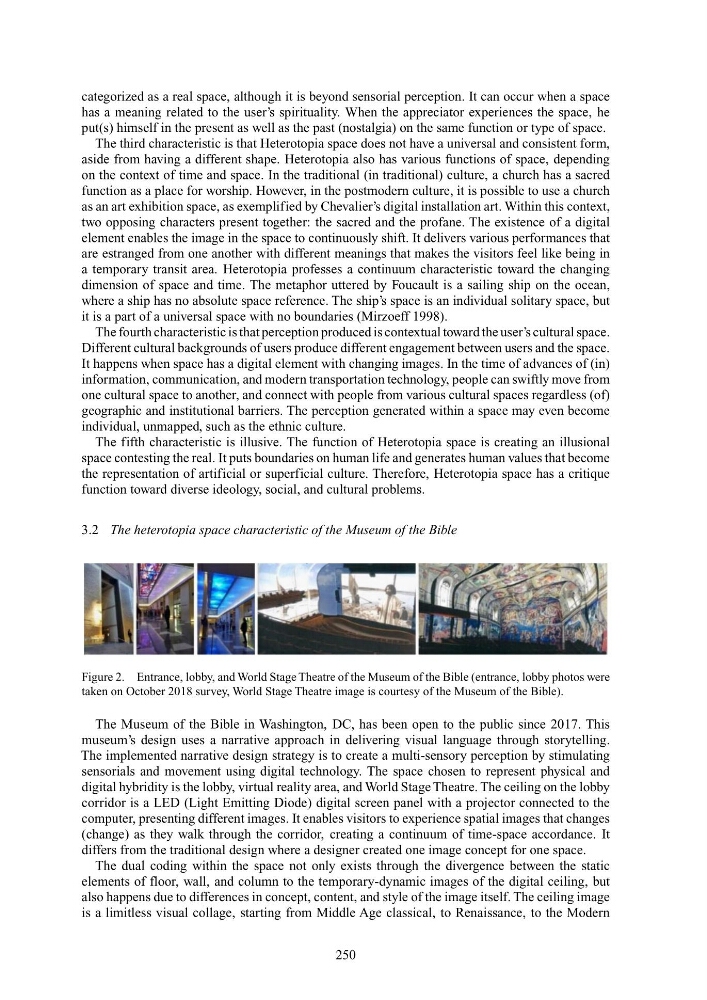
Figure 2. Entrance, lobby, and World Stage Theatre of the Museum of the Bible (entrance, lobby photos were
taken on October 2018 survey, World Stage Theatre image is courtesy of the Museum of the Bible).
The Museum of the Bible in Washington, DC, has been open to the public since 2017. This
museum’s design uses a narrative approach in delivering visual language through storytelling.
The implemented narrative design strategy is to create a multi-sensory perception by stimulating
sensorials and movement using digital technology. The space chosen to represent physical and
digital hybridity is the lobby, virtual reality area, and World Stage Theatre. The ceiling on the lobby
corridor is a LED (Light Emitting Diode) digital screen panel with a projector connected to the
computer, presenting different images. It enables visitors to experience spatial images that changes
(change) as they walk through the corridor, creating a continuum of time-space accordance. It
differs from the traditional design where a designer created one image concept for one space.
The dual coding within the space not only exists through the divergence between the static
elements of floor, wall, and column to the temporary-dynamic images of the digital ceiling, but
also happens due to differences in concept, content, and style of the image itself. The ceiling image
is a limitless visual collage, starting from Middle Age classical, to Renaissance, to the Modern
250
has a meaning related to the user’s spirituality. When the appreciator experiences the space, he
put(s) himself in the present as well as the past (nostalgia) on the same function or type of space.
The third characteristic is that Heterotopia space does not have a universal and consistent form,
aside from having a different shape. Heterotopia also has various functions of space, depending
on the context of time and space. In the traditional (in traditional) culture, a church has a sacred
function as a place for worship. However, in the postmodern culture, it is possible to use a church
as an art exhibition space, as exemplified by Chevalier’s digital installation art. Within this context,
two opposing characters present together: the sacred and the profane. The existence of a digital
element enables the image in the space to continuously shift. It delivers various performances that
are estranged from one another with different meanings that makes the visitors feel like being in
a temporary transit area. Heterotopia professes a continuum characteristic toward the changing
dimension of space and time. The metaphor uttered by Foucault is a sailing ship on the ocean,
where a ship has no absolute space reference. The ship’s space is an individual solitary space, but
it is a part of a universal space with no boundaries (Mirzoeff 1998).
The fourth characteristic is that perception produced is contextual toward the user’s cultural space.
Different cultural backgrounds of users produce different engagement between users and the space.
It happens when space has a digital element with changing images. In the time of advances of (in)
information, communication, and modern transportation technology, people can swiftly move from
one cultural space to another, and connect with people from various cultural spaces regardless (of)
geographic and institutional barriers. The perception generated within a space may even become
individual, unmapped, such as the ethnic culture.
The fifth characteristic is illusive. The function of Heterotopia space is creating an illusional
space contesting the real. It puts boundaries on human life and generates human values that become
the representation of artificial or superficial culture. Therefore, Heterotopia space has a critique
function toward diverse ideology, social, and cultural problems.
3.2 The heterotopia space characteristic of the Museum of the Bible
Figure 2. Entrance, lobby, and World Stage Theatre of the Museum of the Bible (entrance, lobby photos were
taken on October 2018 survey, World Stage Theatre image is courtesy of the Museum of the Bible).
The Museum of the Bible in Washington, DC, has been open to the public since 2017. This
museum’s design uses a narrative approach in delivering visual language through storytelling.
The implemented narrative design strategy is to create a multi-sensory perception by stimulating
sensorials and movement using digital technology. The space chosen to represent physical and
digital hybridity is the lobby, virtual reality area, and World Stage Theatre. The ceiling on the lobby
corridor is a LED (Light Emitting Diode) digital screen panel with a projector connected to the
computer, presenting different images. It enables visitors to experience spatial images that changes
(change) as they walk through the corridor, creating a continuum of time-space accordance. It
differs from the traditional design where a designer created one image concept for one space.
The dual coding within the space not only exists through the divergence between the static
elements of floor, wall, and column to the temporary-dynamic images of the digital ceiling, but
also happens due to differences in concept, content, and style of the image itself. The ceiling image
is a limitless visual collage, starting from Middle Age classical, to Renaissance, to the Modern
250