

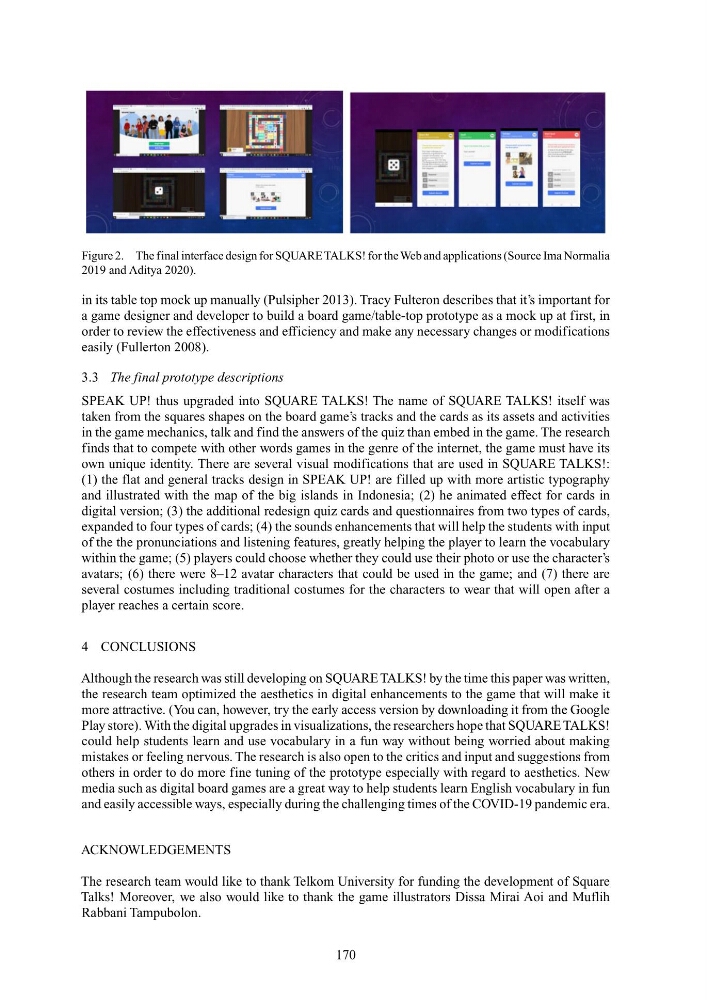
Figure 2. The final interface design for SQUARE TALKS! for the Web and applications (Source Ima Normalia
2019 and Aditya 2020).
in its table top mock up manually (Pulsipher 2013). Tracy Fulteron describes that it’s important for
a game designer and developer to build a board game/table-top prototype as a mock up at first, in
order to review the effectiveness and efficiency and make any necessary changes or modifications
easily (Fullerton 2008).
3.3 The final prototype descriptions
SPEAK UP! thus upgraded into SQUARE TALKS! The name of SQUARE TALKS! itself was
taken from the squares shapes on the board game’s tracks and the cards as its assets and activities
in the game mechanics, talk and find the answers of the quiz than embed in the game. The research
finds that to compete with other words games in the genre of the internet, the game must have its
own unique identity. There are several visual modifications that are used in SQUARE TALKS!:
(1) the flat and general tracks design in SPEAK UP! are filled up with more artistic typography
and illustrated with the map of the big islands in Indonesia; (2) he animated effect for cards in
digital version; (3) the additional redesign quiz cards and questionnaires from two types of cards,
expanded to four types of cards; (4) the sounds enhancements that will help the students with input
of the the pronunciations and listening features, greatly helping the player to learn the vocabulary
within the game; (5) players could choose whether they could use their photo or use the character’s
avatars; (6) there were 8–12 avatar characters that could be used in the game; and (7) there are
several costumes including traditional costumes for the characters to wear that will open after a
player reaches a certain score.
4 CONCLUSIONS
Although the research was still developing on SQUARE TALKS! by the time this paper was written,
the research team optimized the aesthetics in digital enhancements to the game that will make it
more attractive. (You can, however, try the early access version by downloading it from the Google
Play store). With the digital upgrades in visualizations, the researchers hope that SQUARE TALKS!
could help students learn and use vocabulary in a fun way without being worried about making
mistakes or feeling nervous. The research is also open to the critics and input and suggestions from
others in order to do more fine tuning of the prototype especially with regard to aesthetics. New
media such as digital board games are a great way to help students learn English vocabulary in fun
and easily accessible ways, especially during the challenging times of the COVID-19 pandemic era.
ACKNOWLEDGEMENTS
The research team would like to thank Telkom University for funding the development of Square
Talks! Moreover, we also would like to thank the game illustrators Dissa Mirai Aoi and Muflih
Rabbani Tampubolon.
170
2019 and Aditya 2020).
in its table top mock up manually (Pulsipher 2013). Tracy Fulteron describes that it’s important for
a game designer and developer to build a board game/table-top prototype as a mock up at first, in
order to review the effectiveness and efficiency and make any necessary changes or modifications
easily (Fullerton 2008).
3.3 The final prototype descriptions
SPEAK UP! thus upgraded into SQUARE TALKS! The name of SQUARE TALKS! itself was
taken from the squares shapes on the board game’s tracks and the cards as its assets and activities
in the game mechanics, talk and find the answers of the quiz than embed in the game. The research
finds that to compete with other words games in the genre of the internet, the game must have its
own unique identity. There are several visual modifications that are used in SQUARE TALKS!:
(1) the flat and general tracks design in SPEAK UP! are filled up with more artistic typography
and illustrated with the map of the big islands in Indonesia; (2) he animated effect for cards in
digital version; (3) the additional redesign quiz cards and questionnaires from two types of cards,
expanded to four types of cards; (4) the sounds enhancements that will help the students with input
of the the pronunciations and listening features, greatly helping the player to learn the vocabulary
within the game; (5) players could choose whether they could use their photo or use the character’s
avatars; (6) there were 8–12 avatar characters that could be used in the game; and (7) there are
several costumes including traditional costumes for the characters to wear that will open after a
player reaches a certain score.
4 CONCLUSIONS
Although the research was still developing on SQUARE TALKS! by the time this paper was written,
the research team optimized the aesthetics in digital enhancements to the game that will make it
more attractive. (You can, however, try the early access version by downloading it from the Google
Play store). With the digital upgrades in visualizations, the researchers hope that SQUARE TALKS!
could help students learn and use vocabulary in a fun way without being worried about making
mistakes or feeling nervous. The research is also open to the critics and input and suggestions from
others in order to do more fine tuning of the prototype especially with regard to aesthetics. New
media such as digital board games are a great way to help students learn English vocabulary in fun
and easily accessible ways, especially during the challenging times of the COVID-19 pandemic era.
ACKNOWLEDGEMENTS
The research team would like to thank Telkom University for funding the development of Square
Talks! Moreover, we also would like to thank the game illustrators Dissa Mirai Aoi and Muflih
Rabbani Tampubolon.
170