

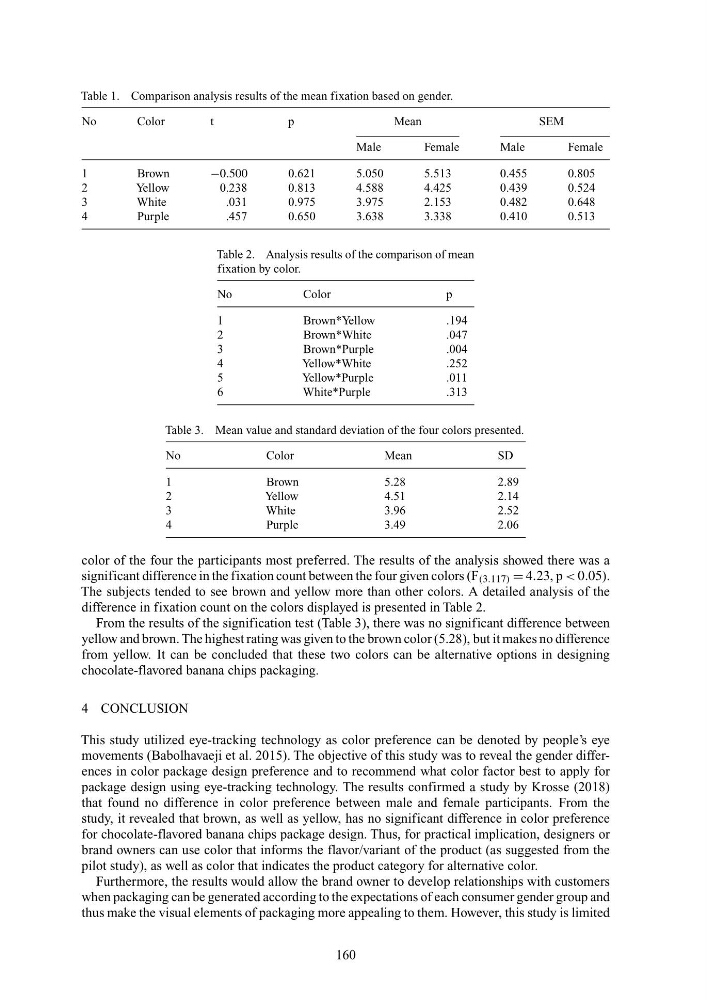
Table 1. Comparison analysis results of the mean fixation based on gender.
No
Color
t
p
Mean
SEM
Male
Female
Male
Female
1
Brown
−0.500
0.621
5.050
5.513
0.455
0.805
2
Yellow
0.238
0.813
4.588
4.425
0.439
0.524
3
White
.031
0.975
3.975
2.153
0.482
0.648
4
Purple
.457
0.650
3.638
3.338
0.410
0.513
Table 2. Analysis results of the comparison of mean
fixation by color.
No
Color
p
1
Brown*Yellow
.194
2
Brown*White
.047
3
Brown*Purple
.004
4
Yellow*White
.252
5
Yellow*Purple
.011
6
White*Purple
.313
Table 3. Mean value and standard deviation of the four colors presented.
No
Color
Mean
SD
1
Brown
5.28
2.89
2
Yellow
4.51
2.14
3
White
3.96
2.52
4
Purple
3.49
2.06
color of the four the participants most preferred. The results of the analysis showed there was a
significant difference in the fixation count between the four given colors (F (3.117) = 4.23, p < 0.05).
The subjects tended to see brown and yellow more than other colors. A detailed analysis of the
difference in fixation count on the colors displayed is presented in Table 2.
From the results of the signification test (Table 3), there was no significant difference between
yellow and brown. The highest rating was given to the brown color (5.28), but it makes no difference
from yellow. It can be concluded that these two colors can be alternative options in designing
chocolate-flavored banana chips packaging.
4 CONCLUSION
This study utilized eye-tracking technology as color preference can be denoted by people’s eye
movements (Babolhavaeji et al. 2015). The objective of this study was to reveal the gender differences in color package design preference and to recommend what color factor best to apply for
package design using eye-tracking technology. The results confirmed a study by Krosse (2018)
that found no difference in color preference between male and female participants. From the
study, it revealed that brown, as well as yellow, has no significant difference in color preference
for chocolate-flavored banana chips package design. Thus, for practical implication, designers or
brand owners can use color that informs the flavor/variant of the product (as suggested from the
pilot study), as well as color that indicates the product category for alternative color.
Furthermore, the results would allow the brand owner to develop relationships with customers
when packaging can be generated according to the expectations of each consumer gender group and
thus make the visual elements of packaging more appealing to them. However, this study is limited
160
No
Color
t
p
Mean
SEM
Male
Female
Male
Female
1
Brown
−0.500
0.621
5.050
5.513
0.455
0.805
2
Yellow
0.238
0.813
4.588
4.425
0.439
0.524
3
White
.031
0.975
3.975
2.153
0.482
0.648
4
Purple
.457
0.650
3.638
3.338
0.410
0.513
Table 2. Analysis results of the comparison of mean
fixation by color.
No
Color
p
1
Brown*Yellow
.194
2
Brown*White
.047
3
Brown*Purple
.004
4
Yellow*White
.252
5
Yellow*Purple
.011
6
White*Purple
.313
Table 3. Mean value and standard deviation of the four colors presented.
No
Color
Mean
SD
1
Brown
5.28
2.89
2
Yellow
4.51
2.14
3
White
3.96
2.52
4
Purple
3.49
2.06
color of the four the participants most preferred. The results of the analysis showed there was a
significant difference in the fixation count between the four given colors (F (3.117) = 4.23, p < 0.05).
The subjects tended to see brown and yellow more than other colors. A detailed analysis of the
difference in fixation count on the colors displayed is presented in Table 2.
From the results of the signification test (Table 3), there was no significant difference between
yellow and brown. The highest rating was given to the brown color (5.28), but it makes no difference
from yellow. It can be concluded that these two colors can be alternative options in designing
chocolate-flavored banana chips packaging.
4 CONCLUSION
This study utilized eye-tracking technology as color preference can be denoted by people’s eye
movements (Babolhavaeji et al. 2015). The objective of this study was to reveal the gender differences in color package design preference and to recommend what color factor best to apply for
package design using eye-tracking technology. The results confirmed a study by Krosse (2018)
that found no difference in color preference between male and female participants. From the
study, it revealed that brown, as well as yellow, has no significant difference in color preference
for chocolate-flavored banana chips package design. Thus, for practical implication, designers or
brand owners can use color that informs the flavor/variant of the product (as suggested from the
pilot study), as well as color that indicates the product category for alternative color.
Furthermore, the results would allow the brand owner to develop relationships with customers
when packaging can be generated according to the expectations of each consumer gender group and
thus make the visual elements of packaging more appealing to them. However, this study is limited
160