

Table 2. Respondents respond to section B (attitude) in Gedebage’s traditional market area.
N
Range
Minimum
Maximum
Mean
Std. Deviation
Section B1
50
3
2
5
3.86
.857
Section B2
50
3
2
5
3.92
.724
Section B3
50
3
2
5
3.04
.605
Section B4
50
3
2
5
3.96
.832
Section B5
50
4
1
5
2.26
1.291
Valid N (listwise)
50
Table 3. Respondents respond to section C (interest) in Gedebage’s traditional market area.
N
Range
Minimum
Maximum
Mean
Std. Deviation
Section C1
50
4
1
5
4.20
.808
Section C2
50
4
1
5
3.00
1.370
Section C3
50
4
1
5
3.36
1.241
Section C4
50
4
1
5
2.28
1.230
Section C5
50
4
1
5
3.52
1.446
Valid N (listwise)
50
Table 4. Respondents respond to section D (lifestyle) in Gedebage’s traditional market area.
N
Range
Minimum
Maximum
Mean
Std. Deviation
Section D1
50
4
1
5
3.48
1.282
Section D2
50
4
1
5
.04
1.384
Section D3
50
4
1
5
3.08
1.353
Section D4
50
4
1
5
2.30
1.182
Section D5
50
4
1
5
3.54
1.249
Valid N (listwise)
50
Table 5. Kansei words that have been collected.
Ambiance
Fit
Sense of materials
Design image
Shape
New combination
Color
Functionality & convenience
Unexpected application
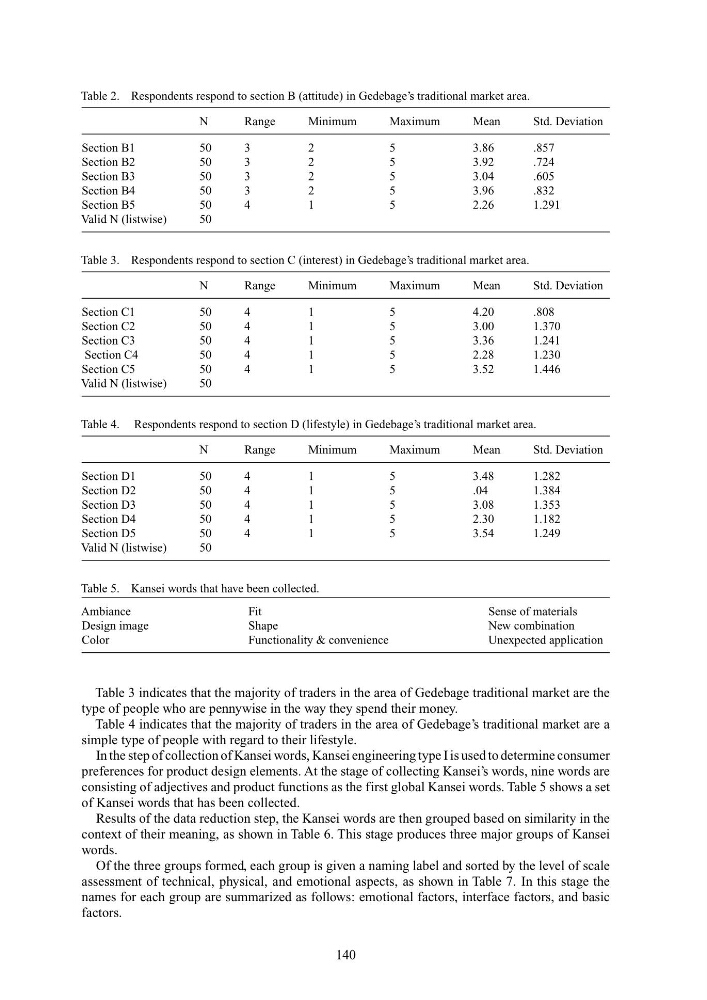
Table 3 indicates that the majority of traders in the area of Gedebage traditional market are the
type of people who are pennywise in the way they spend their money.
Table 4 indicates that the majority of traders in the area of Gedebage’s traditional market are a
simple type of people with regard to their lifestyle.
In the step of collection of Kansei words, Kansei engineering type I is used to determine consumer
preferences for product design elements. At the stage of collecting Kansei’s words, nine words are
consisting of adjectives and product functions as the first global Kansei words. Table 5 shows a set
of Kansei words that has been collected.
Results of the data reduction step, the Kansei words are then grouped based on similarity in the
context of their meaning, as shown in Table 6. This stage produces three major groups of Kansei
words.
Of the three groups formed, each group is given a naming label and sorted by the level of scale
assessment of technical, physical, and emotional aspects, as shown in Table 7. In this stage the
names for each group are summarized as follows: emotional factors, interface factors, and basic
factors.
140
N
Range
Minimum
Maximum
Mean
Std. Deviation
Section B1
50
3
2
5
3.86
.857
Section B2
50
3
2
5
3.92
.724
Section B3
50
3
2
5
3.04
.605
Section B4
50
3
2
5
3.96
.832
Section B5
50
4
1
5
2.26
1.291
Valid N (listwise)
50
Table 3. Respondents respond to section C (interest) in Gedebage’s traditional market area.
N
Range
Minimum
Maximum
Mean
Std. Deviation
Section C1
50
4
1
5
4.20
.808
Section C2
50
4
1
5
3.00
1.370
Section C3
50
4
1
5
3.36
1.241
Section C4
50
4
1
5
2.28
1.230
Section C5
50
4
1
5
3.52
1.446
Valid N (listwise)
50
Table 4. Respondents respond to section D (lifestyle) in Gedebage’s traditional market area.
N
Range
Minimum
Maximum
Mean
Std. Deviation
Section D1
50
4
1
5
3.48
1.282
Section D2
50
4
1
5
.04
1.384
Section D3
50
4
1
5
3.08
1.353
Section D4
50
4
1
5
2.30
1.182
Section D5
50
4
1
5
3.54
1.249
Valid N (listwise)
50
Table 5. Kansei words that have been collected.
Ambiance
Fit
Sense of materials
Design image
Shape
New combination
Color
Functionality & convenience
Unexpected application
Table 3 indicates that the majority of traders in the area of Gedebage traditional market are the
type of people who are pennywise in the way they spend their money.
Table 4 indicates that the majority of traders in the area of Gedebage’s traditional market are a
simple type of people with regard to their lifestyle.
In the step of collection of Kansei words, Kansei engineering type I is used to determine consumer
preferences for product design elements. At the stage of collecting Kansei’s words, nine words are
consisting of adjectives and product functions as the first global Kansei words. Table 5 shows a set
of Kansei words that has been collected.
Results of the data reduction step, the Kansei words are then grouped based on similarity in the
context of their meaning, as shown in Table 6. This stage produces three major groups of Kansei
words.
Of the three groups formed, each group is given a naming label and sorted by the level of scale
assessment of technical, physical, and emotional aspects, as shown in Table 7. In this stage the
names for each group are summarized as follows: emotional factors, interface factors, and basic
factors.
140