

Table 1. Brand references for home living textile products.
No Brand
Materials
Technique
Price Range
1
Bermock Acrylic & Polyester Woven
IDR 600.000 – IDR 800.000
2
Naratisa
Canvas & Blacu
Pattern Making & Digital Printing IDR 60.000 – IDR 200.000
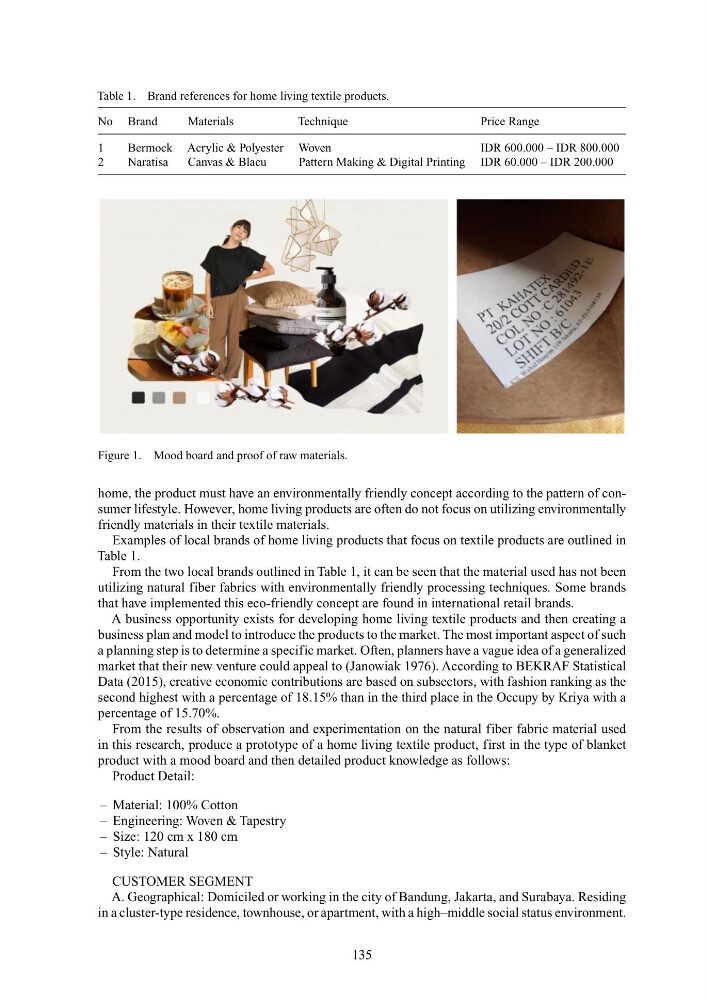
Figure 1. Mood board and proof of raw materials.
home, the product must have an environmentally friendly concept according to the pattern of consumer lifestyle. However, home living products are often do not focus on utilizing environmentally
friendly materials in their textile materials.
Examples of local brands of home living products that focus on textile products are outlined in
Table 1.
From the two local brands outlined in Table 1, it can be seen that the material used has not been
utilizing natural fiber fabrics with environmentally friendly processing techniques. Some brands
that have implemented this eco-friendly concept are found in international retail brands.
A business opportunity exists for developing home living textile products and then creating a
business plan and model to introduce the products to the market. The most important aspect of such
a planning step is to determine a specific market. Often, planners have a vague idea of a generalized
market that their new venture could appeal to (Janowiak 1976). According to BEKRAF Statistical
Data (2015), creative economic contributions are based on subsectors, with fashion ranking as the
second highest with a percentage of 18.15% than in the third place in the Occupy by Kriya with a
percentage of 15.70%.
From the results of observation and experimentation on the natural fiber fabric material used
in this research, produce a prototype of a home living textile product, first in the type of blanket
product with a mood board and then detailed product knowledge as follows:
Product Detail:
– Material: 100% Cotton
– Engineering: Woven & Tapestry
– Size: 120 cm x 180 cm
– Style: Natural
CUSTOMER SEGMENT
A. Geographical: Domiciled or working in the city of Bandung, Jakarta, and Surabaya. Residing
in a cluster-type residence, townhouse, or apartment, with a high–middle social status environment.
135
No Brand
Materials
Technique
Price Range
1
Bermock Acrylic & Polyester Woven
IDR 600.000 – IDR 800.000
2
Naratisa
Canvas & Blacu
Pattern Making & Digital Printing IDR 60.000 – IDR 200.000
Figure 1. Mood board and proof of raw materials.
home, the product must have an environmentally friendly concept according to the pattern of consumer lifestyle. However, home living products are often do not focus on utilizing environmentally
friendly materials in their textile materials.
Examples of local brands of home living products that focus on textile products are outlined in
Table 1.
From the two local brands outlined in Table 1, it can be seen that the material used has not been
utilizing natural fiber fabrics with environmentally friendly processing techniques. Some brands
that have implemented this eco-friendly concept are found in international retail brands.
A business opportunity exists for developing home living textile products and then creating a
business plan and model to introduce the products to the market. The most important aspect of such
a planning step is to determine a specific market. Often, planners have a vague idea of a generalized
market that their new venture could appeal to (Janowiak 1976). According to BEKRAF Statistical
Data (2015), creative economic contributions are based on subsectors, with fashion ranking as the
second highest with a percentage of 18.15% than in the third place in the Occupy by Kriya with a
percentage of 15.70%.
From the results of observation and experimentation on the natural fiber fabric material used
in this research, produce a prototype of a home living textile product, first in the type of blanket
product with a mood board and then detailed product knowledge as follows:
Product Detail:
– Material: 100% Cotton
– Engineering: Woven & Tapestry
– Size: 120 cm x 180 cm
– Style: Natural
CUSTOMER SEGMENT
A. Geographical: Domiciled or working in the city of Bandung, Jakarta, and Surabaya. Residing
in a cluster-type residence, townhouse, or apartment, with a high–middle social status environment.
135