

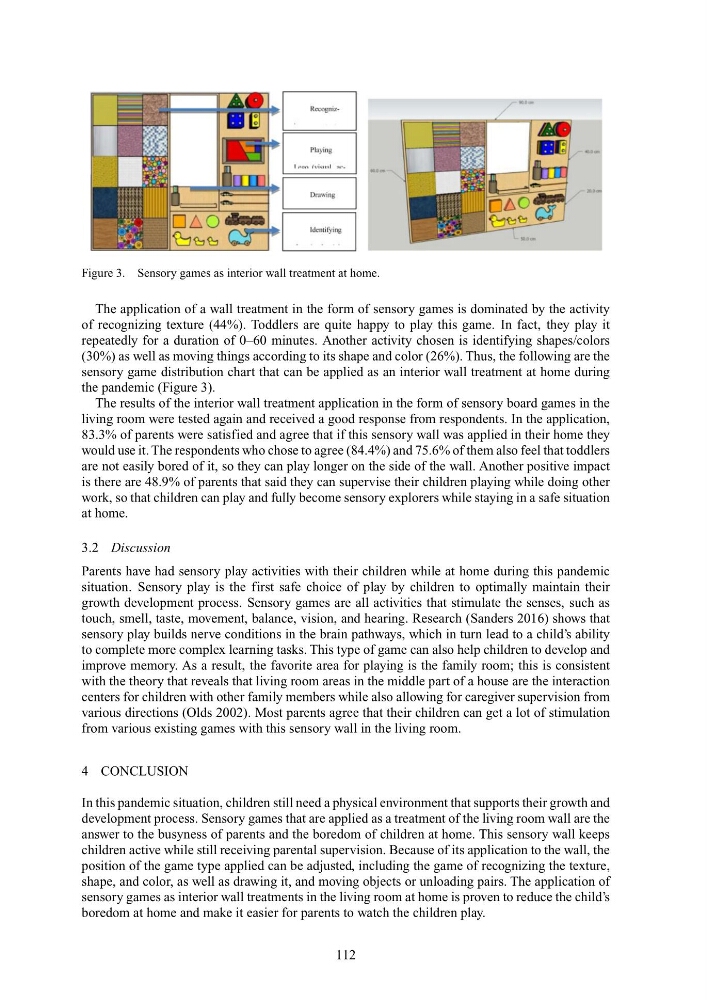
Figure 3. Sensory games as interior wall treatment at home.
The application of a wall treatment in the form of sensory games is dominated by the activity
of recognizing texture (44%). Toddlers are quite happy to play this game. In fact, they play it
repeatedly for a duration of 0–60 minutes. Another activity chosen is identifying shapes/colors
(30%) as well as moving things according to its shape and color (26%). Thus, the following are the
sensory game distribution chart that can be applied as an interior wall treatment at home during
the pandemic (Figure 3).
The results of the interior wall treatment application in the form of sensory board games in the
living room were tested again and received a good response from respondents. In the application,
83.3% of parents were satisfied and agree that if this sensory wall was applied in their home they
would use it. The respondents who chose to agree (84.4%) and 75.6% of them also feel that toddlers
are not easily bored of it, so they can play longer on the side of the wall. Another positive impact
is there are 48.9% of parents that said they can supervise their children playing while doing other
work, so that children can play and fully become sensory explorers while staying in a safe situation
at home.
3.2 Discussion
Parents have had sensory play activities with their children while at home during this pandemic
situation. Sensory play is the first safe choice of play by children to optimally maintain their
growth development process. Sensory games are all activities that stimulate the senses, such as
touch, smell, taste, movement, balance, vision, and hearing. Research (Sanders 2016) shows that
sensory play builds nerve conditions in the brain pathways, which in turn lead to a child’s ability
to complete more complex learning tasks. This type of game can also help children to develop and
improve memory. As a result, the favorite area for playing is the family room; this is consistent
with the theory that reveals that living room areas in the middle part of a house are the interaction
centers for children with other family members while also allowing for caregiver supervision from
various directions (Olds 2002). Most parents agree that their children can get a lot of stimulation
from various existing games with this sensory wall in the living room.
4 CONCLUSION
In this pandemic situation, children still need a physical environment that supports their growth and
development process. Sensory games that are applied as a treatment of the living room wall are the
answer to the busyness of parents and the boredom of children at home. This sensory wall keeps
children active while still receiving parental supervision. Because of its application to the wall, the
position of the game type applied can be adjusted, including the game of recognizing the texture,
shape, and color, as well as drawing it, and moving objects or unloading pairs. The application of
sensory games as interior wall treatments in the living room at home is proven to reduce the child’s
boredom at home and make it easier for parents to watch the children play.
112
The application of a wall treatment in the form of sensory games is dominated by the activity
of recognizing texture (44%). Toddlers are quite happy to play this game. In fact, they play it
repeatedly for a duration of 0–60 minutes. Another activity chosen is identifying shapes/colors
(30%) as well as moving things according to its shape and color (26%). Thus, the following are the
sensory game distribution chart that can be applied as an interior wall treatment at home during
the pandemic (Figure 3).
The results of the interior wall treatment application in the form of sensory board games in the
living room were tested again and received a good response from respondents. In the application,
83.3% of parents were satisfied and agree that if this sensory wall was applied in their home they
would use it. The respondents who chose to agree (84.4%) and 75.6% of them also feel that toddlers
are not easily bored of it, so they can play longer on the side of the wall. Another positive impact
is there are 48.9% of parents that said they can supervise their children playing while doing other
work, so that children can play and fully become sensory explorers while staying in a safe situation
at home.
3.2 Discussion
Parents have had sensory play activities with their children while at home during this pandemic
situation. Sensory play is the first safe choice of play by children to optimally maintain their
growth development process. Sensory games are all activities that stimulate the senses, such as
touch, smell, taste, movement, balance, vision, and hearing. Research (Sanders 2016) shows that
sensory play builds nerve conditions in the brain pathways, which in turn lead to a child’s ability
to complete more complex learning tasks. This type of game can also help children to develop and
improve memory. As a result, the favorite area for playing is the family room; this is consistent
with the theory that reveals that living room areas in the middle part of a house are the interaction
centers for children with other family members while also allowing for caregiver supervision from
various directions (Olds 2002). Most parents agree that their children can get a lot of stimulation
from various existing games with this sensory wall in the living room.
4 CONCLUSION
In this pandemic situation, children still need a physical environment that supports their growth and
development process. Sensory games that are applied as a treatment of the living room wall are the
answer to the busyness of parents and the boredom of children at home. This sensory wall keeps
children active while still receiving parental supervision. Because of its application to the wall, the
position of the game type applied can be adjusted, including the game of recognizing the texture,
shape, and color, as well as drawing it, and moving objects or unloading pairs. The application of
sensory games as interior wall treatments in the living room at home is proven to reduce the child’s
boredom at home and make it easier for parents to watch the children play.
112