

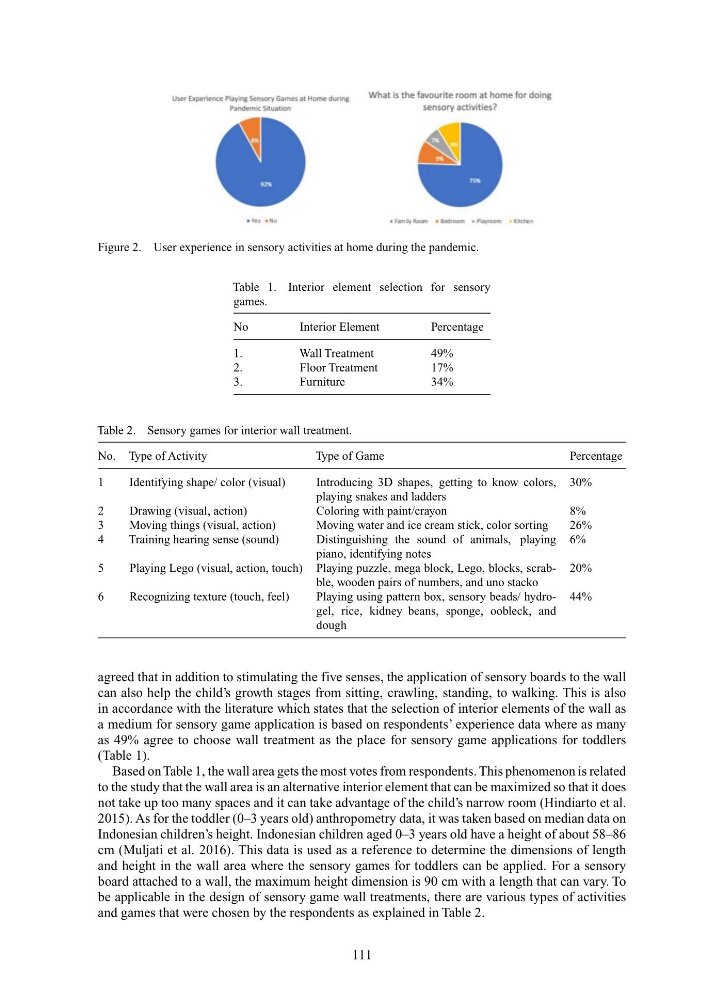
Figure 2. User experience in sensory activities at home during the pandemic.
Table 1. Interior element selection for sensory
games.
No
Interior Element
Percentage
1.
Wall Treatment
49%
2.
Floor Treatment
17%
3.
Furniture
34%
Table 2. Sensory games for interior wall treatment.
No. Type of Activity
Type of Game
Percentage
1
Identifying shape/ color (visual)
Introducing 3D shapes, getting to know colors,
playing snakes and ladders
30%
2
Drawing (visual, action)
Coloring with paint/crayon
8%
3
Moving things (visual, action)
Moving water and ice cream stick, color sorting
26%
4
Training hearing sense (sound)
Distinguishing the sound of animals, playing
piano, identifying notes
6%
5
Playing Lego (visual, action, touch) Playing puzzle, mega block, Lego, blocks, scrabble, wooden pairs of numbers, and uno stacko
20%
6
Recognizing texture (touch, feel)
Playing using pattern box, sensory beads/ hydrogel, rice, kidney beans, sponge, oobleck, and
dough
44%
agreed that in addition to stimulating the five senses, the application of sensory boards to the wall
can also help the child’s growth stages from sitting, crawling, standing, to walking. This is also
in accordance with the literature which states that the selection of interior elements of the wall as
a medium for sensory game application is based on respondents’ experience data where as many
as 49% agree to choose wall treatment as the place for sensory game applications for toddlers
(Table 1).
Based on Table 1, the wall area gets the most votes from respondents. This phenomenon is related
to the study that the wall area is an alternative interior element that can be maximized so that it does
not take up too many spaces and it can take advantage of the child’s narrow room (Hindiarto et al.
2015). As for the toddler (0–3 years old) anthropometry data, it was taken based on median data on
Indonesian children’s height. Indonesian children aged 0–3 years old have a height of about 58–86
cm (Muljati et al. 2016). This data is used as a reference to determine the dimensions of length
and height in the wall area where the sensory games for toddlers can be applied. For a sensory
board attached to a wall, the maximum height dimension is 90 cm with a length that can vary. To
be applicable in the design of sensory game wall treatments, there are various types of activities
and games that were chosen by the respondents as explained in Table 2.
111
Table 1. Interior element selection for sensory
games.
No
Interior Element
Percentage
1.
Wall Treatment
49%
2.
Floor Treatment
17%
3.
Furniture
34%
Table 2. Sensory games for interior wall treatment.
No. Type of Activity
Type of Game
Percentage
1
Identifying shape/ color (visual)
Introducing 3D shapes, getting to know colors,
playing snakes and ladders
30%
2
Drawing (visual, action)
Coloring with paint/crayon
8%
3
Moving things (visual, action)
Moving water and ice cream stick, color sorting
26%
4
Training hearing sense (sound)
Distinguishing the sound of animals, playing
piano, identifying notes
6%
5
Playing Lego (visual, action, touch) Playing puzzle, mega block, Lego, blocks, scrabble, wooden pairs of numbers, and uno stacko
20%
6
Recognizing texture (touch, feel)
Playing using pattern box, sensory beads/ hydrogel, rice, kidney beans, sponge, oobleck, and
dough
44%
agreed that in addition to stimulating the five senses, the application of sensory boards to the wall
can also help the child’s growth stages from sitting, crawling, standing, to walking. This is also
in accordance with the literature which states that the selection of interior elements of the wall as
a medium for sensory game application is based on respondents’ experience data where as many
as 49% agree to choose wall treatment as the place for sensory game applications for toddlers
(Table 1).
Based on Table 1, the wall area gets the most votes from respondents. This phenomenon is related
to the study that the wall area is an alternative interior element that can be maximized so that it does
not take up too many spaces and it can take advantage of the child’s narrow room (Hindiarto et al.
2015). As for the toddler (0–3 years old) anthropometry data, it was taken based on median data on
Indonesian children’s height. Indonesian children aged 0–3 years old have a height of about 58–86
cm (Muljati et al. 2016). This data is used as a reference to determine the dimensions of length
and height in the wall area where the sensory games for toddlers can be applied. For a sensory
board attached to a wall, the maximum height dimension is 90 cm with a length that can vary. To
be applicable in the design of sensory game wall treatments, there are various types of activities
and games that were chosen by the respondents as explained in Table 2.
111