

which the non-equilibrium state is induced indirectly, e.g. by interaction of the
trigger pulse with the solvent. One such realization that has been used extensively is
the method of temperature-jump (T-jump) 2D IR spectroscopy [260, 262, 264, 271].
In this variant, a high-energy nanosecond (1–10 ns) pump pulse is tuned to a
resonant excitation of the solvent molecules, i.e. water in most cases. During that
excitation pulse, large amounts of thermal energy are deposited in the irradiated
sample volume, which raises the temperature of the solvent molecules. T-jumps as
large as 10 K have been demonstrated experimentally [262]. The heat is generally
assumed as evenly distributed in the focus volume following the ns-interaction and
the sample temperature remains approximately constant on timescales up to the msregime, i.e. when the heat diffuses out of the focal spot. T-jump 2D IR spectroscopy
can thus probe structural dynamics on the timescale from ns to ms and has been
used to predominately study bio-molecular systems and in particular proteinunfolding reactions [260, 262], as well as tautomerization reactions [264].
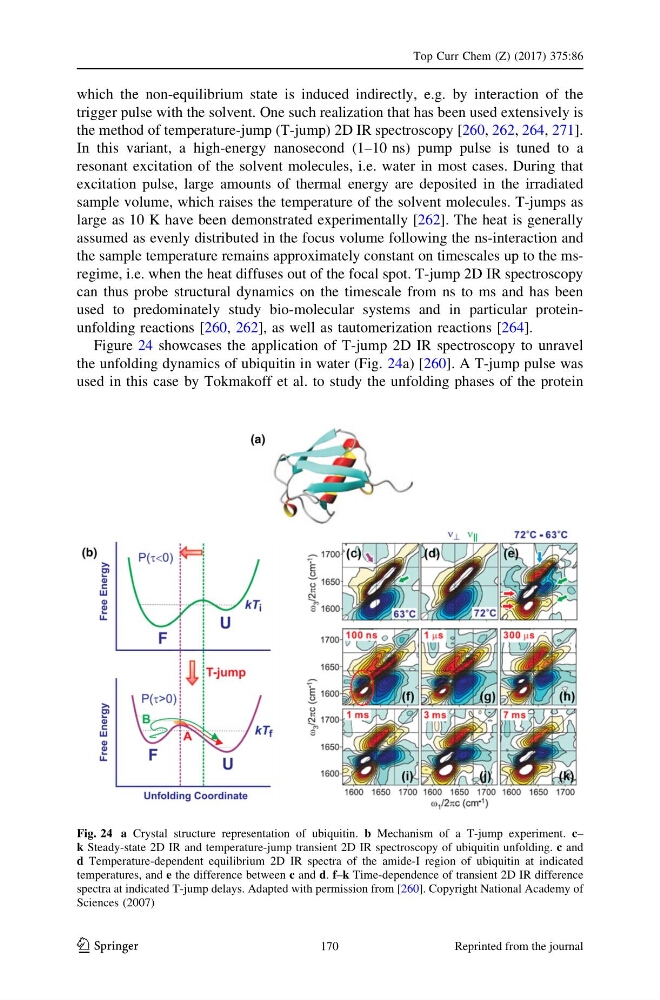
Figure 24 showcases the application of T-jump 2D IR spectroscopy to unravel
the unfolding dynamics of ubiquitin in water (Fig. 24a) [260]. A T-jump pulse was
used in this case by Tokmakoff et al. to study the unfolding phases of the protein
Fig. 24 a Crystal structure representation of ubiquitin. b Mechanism of a T-jump experiment. c–
k Steady-state 2D IR and temperature-jump transient 2D IR spectroscopy of ubiquitin unfolding. c and
d Temperature-dependent equilibrium 2D IR spectra of the amide-I region of ubiquitin at indicated
temperatures, and e the difference between c and d. f–k Time-dependence of transient 2D IR difference
spectra at indicated T-jump delays. Adapted with permission from [260]. Copyright National Academy of
Sciences (2007)
Top Curr Chem (Z) (2017) 375:86
123
170
Reprinted from the journal
trigger pulse with the solvent. One such realization that has been used extensively is
the method of temperature-jump (T-jump) 2D IR spectroscopy [260, 262, 264, 271].
In this variant, a high-energy nanosecond (1–10 ns) pump pulse is tuned to a
resonant excitation of the solvent molecules, i.e. water in most cases. During that
excitation pulse, large amounts of thermal energy are deposited in the irradiated
sample volume, which raises the temperature of the solvent molecules. T-jumps as
large as 10 K have been demonstrated experimentally [262]. The heat is generally
assumed as evenly distributed in the focus volume following the ns-interaction and
the sample temperature remains approximately constant on timescales up to the msregime, i.e. when the heat diffuses out of the focal spot. T-jump 2D IR spectroscopy
can thus probe structural dynamics on the timescale from ns to ms and has been
used to predominately study bio-molecular systems and in particular proteinunfolding reactions [260, 262], as well as tautomerization reactions [264].
Figure 24 showcases the application of T-jump 2D IR spectroscopy to unravel
the unfolding dynamics of ubiquitin in water (Fig. 24a) [260]. A T-jump pulse was
used in this case by Tokmakoff et al. to study the unfolding phases of the protein
Fig. 24 a Crystal structure representation of ubiquitin. b Mechanism of a T-jump experiment. c–
k Steady-state 2D IR and temperature-jump transient 2D IR spectroscopy of ubiquitin unfolding. c and
d Temperature-dependent equilibrium 2D IR spectra of the amide-I region of ubiquitin at indicated
temperatures, and e the difference between c and d. f–k Time-dependence of transient 2D IR difference
spectra at indicated T-jump delays. Adapted with permission from [260]. Copyright National Academy of
Sciences (2007)
Top Curr Chem (Z) (2017) 375:86
123
170
Reprinted from the journal